

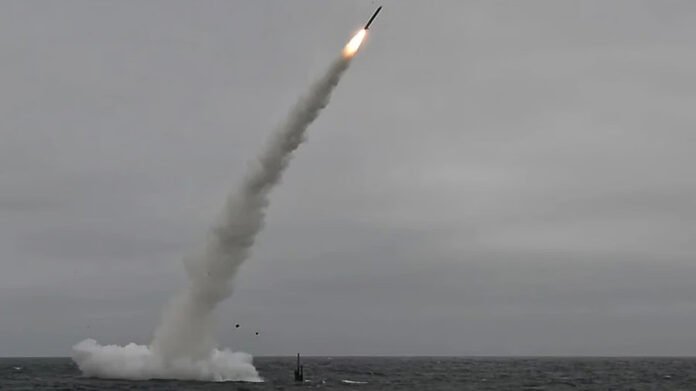
Raytheon, a subsidiary of RTX, has been selected to advance development of the Nuclear-Armed Sea-Launched Cruise Missile, or SLCM-N, under an Other Transaction Authority agreement with the US Navy. Announced November 24, the agreement moves the effort beyond early concept work into a phase focused on refining the system’s design, integrating subsystems and preparing for future prototype demonstrations. The Navy and RTX did not disclose the award’s value or provide a detailed schedule.
The company says its Advanced Technology team will use a “composable weapons” approach, combining mature, modular building blocks for the emerging system. RTX says that method could shorten development and integration timelines, but the announcement did not identify the components involved or quantify any expected time savings. Anduril Rocket Motor Systems, Divergent and Williams International are also expected to contribute, extending the project across several defence and engineering firms.

The agreement is a development step, not an announcement that the missile is ready for production or deployment. Prototype demonstrations are described as a future objective, and public reporting has not established how many prototypes are planned. The award also leaves unanswered questions about the programme’s schedule, final cost and how the weapon would be incorporated into naval operations.
The programme has a long policy history. The Navy once operated a nuclear-armed version of the Tomahawk cruise missile, but withdrew it from service after the Cold War; its retirement was completed in 2013. A new sea-launched nuclear cruise missile was proposed during the first Trump administration. The Biden administration later sought to cancel the effort, citing cost and potential effects on the Navy’s conventional weapons capacity. Congress continued funding the programme and directed its establishment as an acquisition effort.
The latest agreement arrives amid renewed congressional interest in the weapon. Naval reporting says the fiscal 2026 defence authorisation law set a September 2032 deadline for a limited operational deployment capability. That target should not be read as a confirmed fielding date: the program remains in development, and outside assessments have described its schedule as ambitious.
Estimates also vary depending on what costs are included. A July Government Accountability Office report put total acquisition costs at $15 billion to $20 billion, while a Congressional Budget Office endorsed estimate of about $10 billion through 2031, excluding later production, platform integration and lifecycle costs.

Those figures are not directly interchangeable: they cover different periods and cost categories. The Navy’s agreement with Raytheon does not, by itself, settle the programme’s total price or guarantee that the schedule will be met. The public announcement also does not specify production quantities.
Supporters frame the SLCM-N as an additional nuclear deterrence option, while critics have raised questions about expense, mission overlap and operational trade-offs. The new development phase advances the programme, but it does not resolve those broader policy questions. For now, the contract’s clearest outcome is a mandate for Raytheon and its partners to mature the design and prepare for demonstrations, work that will determine whether the Navy’s proposed capability can progress toward operational service.