

This week offers three signals of where India’s Indus policy stands. On November 18, the Bharatiya Kisan Sangh passed a resolution in Ludhiana urging the government to use Indus river system water for irrigation across four north Indian states. From November 20 to 22, Pakistan’s Climate Change Minister Musadik Malik will be in New Delhi for the SCO Civilisational Dialogue Forum. His is the first visit by a senior Pakistani minister since May 2023, and he has not ruled out raising the treaty. On the Chenab, India is close to commissioning the 1,000 MW Pakal Dul and 624 MW Kiru projects, the first on the western rivers since the treaty was put on hold.
Three Signals in One Week
Behind these signals sits the Court of Arbitration’s award of August 31, 2026, which unanimously held that the treaty remains in force. India has categorically rejected that award. On October 21, Pakistan’s Prime Minister Shehbaz Sharif called water a “red line” and said any violation would be an “act of war”.

Placing the Indus Waters Treaty on hold after the Pahalgam attack was a strong political signal, but New Delhi now needs a durable policy that serves domestic farmers without undermining its legal standing
Abeyance was a legitimate political response to the Pahalgam attack of April 22, 2025, which killed 26 people. But abeyance is a posture, not a policy. The question now is how India converts it into a durable water strategy: one that serves farmers in Jammu and Punjab, stands up to legal scrutiny, and does not weaken India’s own position as a lower riparian on the Brahmaputra.
What The Hague said, and Why India Walked Away
The award is sweeping. The tribunal, chaired by Professor Sean D Murphy, found that none of India’s grounds, namely material breach, fundamental change of circumstances, armed conflict or countermeasures, could justify suspension or termination. The treaty, it held, “remains fully in force”. In a separate order on interim measures, it barred India from concreting the Ratle dam wall and power intake above certain levels until 90 days after the Neutral Expert’s final decision. That decision is expected around July 16, 2027.
While India rejected the Court of Arbitration’s ruling that the treaty remains in force, Pakistan is leveraging the verdict globally, making India’s push to renegotiate the outdated 1960 pact more urgent than mere suspension
India’s response was swift. The Ministry of External Affairs called the body an “illegally constituted so-called Court of Arbitration”, refused to appear before it, and maintained that the treaty stays in abeyance. New Delhi’s objection is not new. It has long argued that running a Court of Arbitration and a Neutral Expert in parallel on the same questions violates the treaty’s graded mechanism for resolving differences. In September 2026, India also dismissed a Pakistani letter to the UN Security Council that cited the ruling.
Legally, the tribunal has no enforcement mechanism. Diplomatically, however, the award carries costs. Pakistan is taking it to international forums, and its reasoning will be quoted back whenever India invokes international law elsewhere.

India’s strongest argument has never been that treaties can be set aside at will. It is that a 1960 instrument has failed to keep pace with demographic, security and climatic realities. India formally sought modification in January 2023 and issued a notice under Article XII(3) on August 30, 2024. That case for renegotiation deserves to be made more loudly than the case for abeyance.
Building on the Western Rivers
Abeyance has had one concrete effect. In the government’s view, the treaty’s restrictions on the design and operation of Indian projects no longer apply while it is on hold, which should speed-up construction. The numbers explain why New Delhi sees an opportunity. The western rivers could support about 18,569 MW of hydropower, yet India has developed only about 3,500 MW. India’s permitted storage on the western rivers is 3.6 million acre-feet, but existing capacity is only about one million.

With treaty restrictions paused, India is accelerating major hydropower and storage projects like Pakal Dul and Kiru, though engineering limits and fragile Himalayan geology demand caution
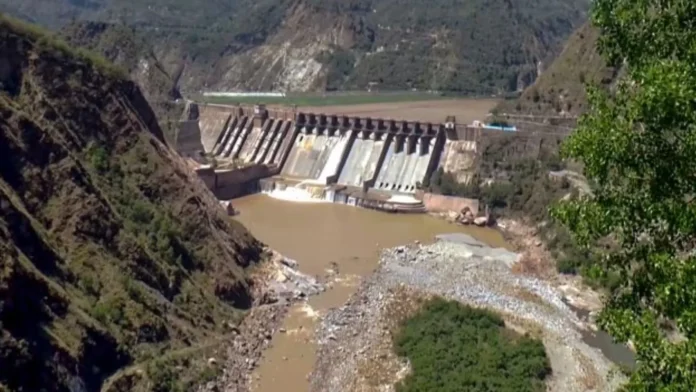
The pipeline is substantial. Pakal Dul, on the Marusudar, will be the first storage project on the Indian side of the western rivers, with a 167-metre dam and 125.4 million cubic metres of storage. Kiru is a 624 MW run-of-the-river scheme in Kishtwar. Kwar (540 MW) is likely by 2028, Ratle (850 MW) is delayed, and Sawalkot (1,856 MW) and Kirthai-II (930 MW) are in planning. A 10-12 km tunnel to carry Chenab water to the Ravi is under study. On the eastern rivers, the Shahpurkandi project on the Ravi should be operational by mid-2027, cutting unused flows to Pakistan through the Madhopur barrage.
These projects are justified on their merits. Jammu and Kashmir needs power and irrigation, and India has long under-used its treaty entitlement. But two cautions apply. First, the western rivers carry about 135 million acre-feet a year, against Indian storage of about one million. India’s ability to alter flows to Pakistan in the near term is therefore limited, and public rhetoric should not promise what engineering cannot deliver. Second, the Himalaya is young and seismically fragile. Fast-tracking projects without full environmental and safety review would be a self-inflicted wound.
The Climate Clock
The treaty’s deeper weakness is that it allocates rivers, not water. It assumes flows measured in an era of relatively stable glaciers and reliable snow. That assumption no longer holds.
Rapidly melting glaciers and shrinking snowpacks mean a 1960s-era treaty built on fixed river allocations cannot manage modern droughts or glacial floods, giving India a strong case to lead a climate-resilient rewrite
In March 2026, the International Centre for Integrated Mountain Development (ICIMOD) reported that Hindu Kush Himalaya glaciers lost about 12 per cent of their area and 9 per cent of their estimated ice reserves between 1990 and 2020. Ice-loss rates have doubled since 2000, and the largest absolute losses are in the Indus, Ganges and Brahmaputra basins. In April, ICIMOD recorded a fourth consecutive year of below-normal snow, with snow persistence in the Indus basin 18 per cent below normal and regional snow levels 28 per cent below average.
The implication is stark. The basin faces a short-term rise in melt, followed by a long-term decline, with greater variability in between. Neither India nor Pakistan can plan on the hydrology of 1960. A treaty that divides six rivers into eastern and western blocs, with fixed entitlements, has no tools to deal with drought years, glacial lake outburst floods or shifting monsoon patterns.
This is where India’s case for renegotiation is strongest, and where it should lead. As Yueming Yan of the Chinese University of Hong Kong told The Diplomat, renegotiating the treaty “does not mean starting from scratch”. A modernised framework would need real-time sharing of flow and glacier data, joint flood and glacial-hazard warning, and a periodic climate review clause. India can table such a framework on its own terms, rather than wait for a tribunal or a third party to frame the debate.
The Eastern Test: Farakka on December 12
Whatever India does on the Indus will be read closely in Dhaka. The Ganga Water Treaty, signed on December 12, 1996, lapses on December 12, 2026. No renewal, extension or replacement has been announced. The MEA says river talks continue through a “structured mechanism”, the Joint Rivers Commission. Bangladesh’s Water Resources Minister Shahiduddin Chowdhury Anee has said Dhaka wants a new treaty rather than a simple renewal, with binding guarantees on dry-season flows.
With the 1996 Ganga Water Treaty set to expire on December 12, letting it lapse amid political friction with Dhaka would erode regional trust and hand Islamabad a diplomatic talking point
The technical case for revision is strong. The Farakka sharing formula applies from January 1 to May 31, in ten-day periods, and rests on flow data from 1949 to 1988. Bangladesh is guaranteed 35,000 cusecs in alternating ten-day periods between March 11 and May 10, and consultations are triggered if flows fall below 50,000 cusecs. Dhaka wants to restore a guarantee clause, present in the 1977 agreement but dropped in 1996, that assured it at least 80 per cent of its scheduled share even in exceptionally low flows. At home, India’s own positions are divided. Bihar’s JD(U) opposes renewal in the current form, blaming Farakka for sedimentation and floods, while West Bengal wants its drinking and industrial water needs included.
Politics complicates the arithmetic. Dhaka’s demand for the extradition of Sheikh Hasina has stalled high-level contact, and a visit by Prime Minister Tarique Rahman before the deadline now looks unlikely.
Letting the treaty lapse without a successor would be a strategic error. It would hand Islamabad a ready narrative that India sets aside water agreements on both its western and eastern frontiers. It would also erode trust with a neighbour whose cooperation matters for connectivity to India’s Northeast.
Towards an Indian Water Doctrine
India’s interests across its rivers are not contradictory, but they must be stated coherently. On the Brahmaputra, India is the lower riparian, watching China build a 60 GW project at Medog in one of the world’s riskiest river gorges. There, India rightly asks for transparency, data-sharing and respect for downstream interests. On the Indus and the Ganga, India is upstream. A doctrine that asks China for standards India declines to offer its own neighbours will not survive scrutiny. Four principles could anchor a coherent approach.
To protect its own downstream interests against China on the Brahmaputra, India must balance security with upstream transparency, replacing unilateral pauses with modernised, rules-based frameworks
First, separate security from sustenance. India has said the treaty will stay in abeyance until Pakistan credibly and irrevocably ends its support for cross-border terrorism. That linkage is legitimate. India should pair it with a clear assurance that water for drinking and livelihoods will never be used as an instrument of pressure.
Second, replace abeyance with an offer. New Delhi should table a modernised Indus framework built on its 2023 and 2024 notices, covering storage rights, data-sharing and climate review. An Indian draft would shift the debate from whether India violated the old treaty to what a new one should contain.
Third, avoid a vacuum on the Ganga. If a new treaty cannot be concluded by December 12, an interim arrangement should keep the Farakka formula in force while negotiators update the hydrology and address Bihar’s and West Bengal’s concerns.
Fourth, fix the domestic plumbing. The Kisan Sangh’s resolution also called for resolving inter-state water disputes between Punjab, Haryana and Rajasthan. India’s water insecurity is as much about storage, canal losses and groundwater depletion at home as about treaties abroad.
Water and Diplomacy
The government’s maxim that “water and blood cannot flow together” is a powerful statement of resolve against terrorism. The task now is to show that water and diplomacy can flow together. A rising power that writes the rules of its river basins, rather than resisting rules written by others, will find its position stronger on the Indus, the Ganga and the Brahmaputra alike.

The writer is an independent researcher. The views expressed are of the writer and do not necessarily reflect the views of Raksha Anirveda