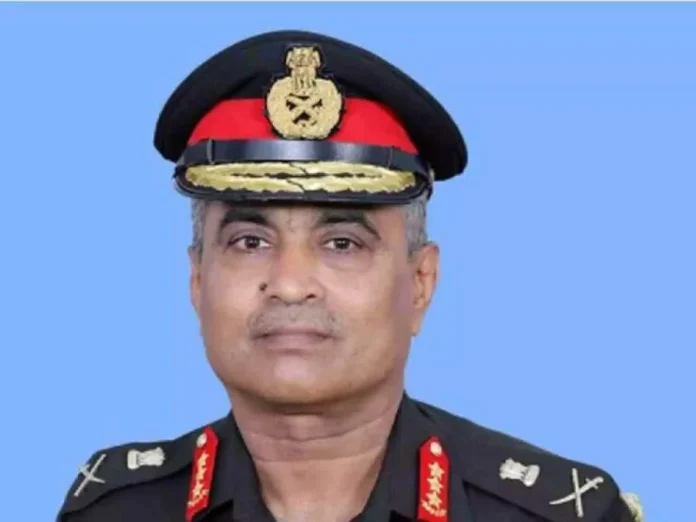
New Delhi: With tension along the Sino-Indian border continuing to simmer, Army Chief General Manoj Pande said legacy challenges of unsettled borders continue to engage the Army and it is essential to possess strategic deterrence instruments.
Speaking at the second edition of Def-Tech India—an event organised by PHD Chamber of Commerce and Vision Initiatives on India’s territorial capabilities and technology requirements, he said this marks the third year where India and China continue to remain engaged in a military standoff at the disputed Line of Actual Control (LAC) in eastern Ladakh.

“It is important to recognise that infirmities in border management can lead to wider conflict. Therefore, the first imperative that comes across is that ‘possession of strategic deterrence instruments is essential’,” the Army Chief said, adding: “Our prolonged commitment in counter insurgency operations should not dull our conventional response preparedness.”
He said the conventional capabilities get defined by demands of terrain, theatre, strategy of employment and the adversary’s capabilities and intent. “Our existing inventory has a fair mix, in terms of vintage and theatre specific requirements. The pursuit to infuse technology into our war fighting systems remains an enduring one,” he said.
He said the relevance of ‘hard power’ with land continuing to be the decisive domain of warfare and that ‘short, swift war’ may be a flawed assumption are key lessons from the war which throws the need for India to be prepared for a full spectrum conflict, for a prolonged duration. Other lessons, he said, are that long range precision fires prove that distance does not guarantee safety.
“Our endeavour to give shape to Integrated Battle Groups, finds congruence to this imperative,” he added.

The need for dedicated strategies to win the war of narratives, the need to fight grey zone warfare are other lessons from the war, he emphasised, adding that proliferation of drones, loiter munitions, advanced VSHORADS and manned-unmanned system have proved that air, no longer remains the exclusive preserve of manned aircraft. He said the most critical conclusion that we can draw for the Indian military is that self-sufficiency in critical technologies and investment in R&D is an inescapable strategic imperative.
Gen Pande highlighted the need to find the right balance between conventional and niche capabilities in defence, adding that while possession of rugged conventional systems is a need for the Indian military theatre and terrains, it is imperative to possess counter niche capabilities as well.