


Tel Aviv: The Israeli company Astroscale that is developing maintenance satellites has inaugurated two new facilities that will accelerate the program.
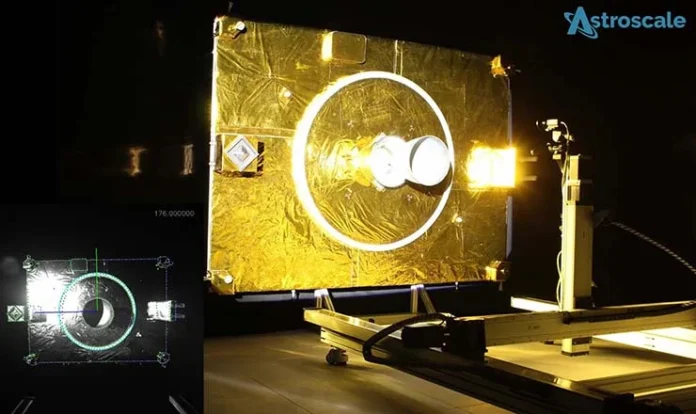
Astroscale Israel, a subsidiary of Astroscale US has opened two new state-of-the-art facilities. The new facilities include a clean room for mechanical design, production and assembly of space systems and a highly specialized computer vision robotics laboratory. These facilities will be used to develop and test algorithms for rendezvous and proximity operations (RPO) for satellite life extension and other on-orbit services offered by Astroscale.

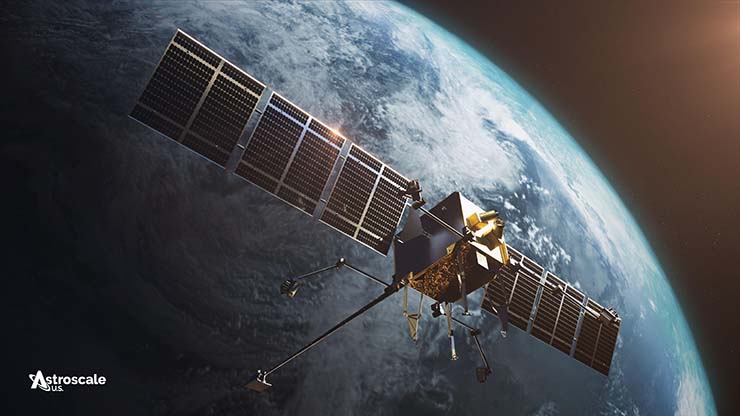
“The laboratory will simulate our LEXI (Life Extension In-orbit) servicer’s approach to client satellites in orbit,” said Arie Halsband, Managing Director of Astroscale Israel. “With this advanced testing environment now in-house, our engineering teams can regularly perform servicer and client RPO operations in simulated space conditions. This is an exciting step forward in Astroscale’s global expansion and the advancement of the LEXI servicer.”
Astroscale is the first private company with a vision to secure the safe and sustainable development of space for the benefit of future generations, and the only company dedicated to on-orbit servicing across all orbits.
Founded in 2013, Astroscale is developing innovative and scalable solutions across the spectrum of on-orbit servicing, including life extension, in situ space situational awareness, end-of-life, and active debris removal, to create sustainable space systems and mitigate the growing and hazardous build-up of debris in space.

Astroscale is also defining business cases and working with government and commercial stakeholders to develop norms, regulations, and incentives for the responsible use of space.
There are an unprecedented number of satellites due to launch over the next decade, the majority into LEO, (250 km to 2000 km above Earth). The US Federal Communications Commission has approved 16,447 satellites within constellations to date and has applications pending for an additional 64,816 satellites. The potential for high-velocity, high impact collisions is likely to increase unless disposal of satellites becomes part of everyday space operations.

Astroscale’s Docking Plate can be compared to a car ‘tow hook’ — a standardized interface that enables future servicing. Docking plates are designed to be discrete during satellite operations but robust and reliable if required. They’re customizable for different satellite designs and will enable both robotic or magnetic capture mechanisms to securely attach a servicer to a satellite.

-The writer is an Israel-based freelance journalist. The views expressed are of the writer and do not necessarily reflect the views of Raksha Anirveda





