


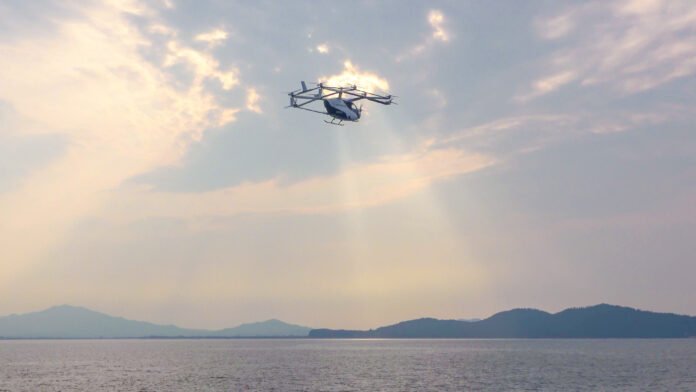
TOYOTA, Japan. SkyDrive Inc. (SkyDrive), a leading Compact eVTOL aircraft developer based in Japan, announced the completion of 300 flights of the SKYDRIVE (SkyDrive model SD-05), having reached this milestone over a period of 20 months from November 2024 and June 2026.
Through these demonstration flights, SkyDrive not only assessed the aircraft’s performance, they have also amassed a large volume of flight data which will, once the aircraft is on the market, help support regular, on-time, commercial operations and decisions over when the aircraft can fly.

While SkyDrive has test facilities both in Toyota City, Aichi Prefecture, and at the Yamaguchi Kirara Expo Memorial Park in Yamaguchi Prefecture, SkyDrive has flown its aircraft in a wide range of different environments to gain experience outside their facilities in airspaces where conditions are closer to the aircraft’s future commercial operations, enabling them to improve the reliability and safety of our aircraft as we look to accelerate steadily forward toward commercialisation in 2028.
The Significance of Reaching 300 Flights
SkyDrive is developing eVTOLs with the mission of “leading a once-in-a-century mobility revolution”. Its goal is to make simple and convenient air travel a regular part of city life. The SKYDRIVE, has not only flown test flights within its own test facilities, they have also demonstrated the capabilities of the aircraft in public, including through flights from vertiports built by third parties, giving stakeholders and local people the opportunity to see the aircraft in operation.
The major demonstration flights performed by SkyDrive are as follows:
2025: Demonstration flights at the Osaka Expo and the Osakako vertiport

2026: Demonstration flights in Tokyo
Through a total of 48 flights outside SkyDrive’s test centres, SkyDrive has collected a wealth of operational data that will support on-time operations following the aircraft’s commercialisation.

Testing in Toyota City continued through the winter. The quiet aircraft can fly near residential areas. Charging the aircraft at the Osaka Expo in 2025. In flight at the Osakako Vertiport by Osaka Bay. Towing the aircraft to test ground by Kirara Park, Yamaguchi. Around 40% of SkyDrive engineers are from outside Japan.
SkyDrive’s Path Forward
Around the world, manufacturers are competing to develop eVTOL aircraft. The industry has already gone beyond the stage of “proving that these aircraft can fly” and is now entering a new phase that includes the flight demonstrations required to confirm commercial viability and the advanced data collection required to accumulate evidence for certification.
The aircraft and operational data accumulated by SkyDrive through 300 completed flights provides a solid foundation to support the regulatory testing required for type certification and the further aircraft development needed for commercialisation. SkyDrive is targeting the launch of commercial operations in 2028 and they will continue to move forwards while always making safety their absolute priority.
Yugo Fukuhara, Vice President, Director, Project Management Department, stated, “The achievement of 300 completed flights is the result of cumulative efforts by our engineers, pilots and operations team, who have all worked continuously with a priority on safety. Throughout the flight test campaign, we have approached each flight with the appropriate degree of caution, ensuring that we can safely complete the flight profile and record the data that we require. We will keep working toward certification and commercialisation, making sure we continue to uphold our ongoing focus on safety.”
Christopher Rennie, Director, Test Department, Vehicle Development Division, said, “Thank you to everyone who has contributed to the SD-05 flight test campaign. Flight testing is never easy, and reaching 300 safe flights is a meaningful achievement made possible through teamwork, discipline, and commitment across the entire organisation. We have faced technical, operational, and schedule challenges, but each flight has strengthened our knowledge, improved our aircraft, and moved us closer to certification. As we look ahead to type certification and the production units coming next year, we recognise that greater challenges are ahead. However, with the same dedication and one-team mindset, we are ready to face them.”






