

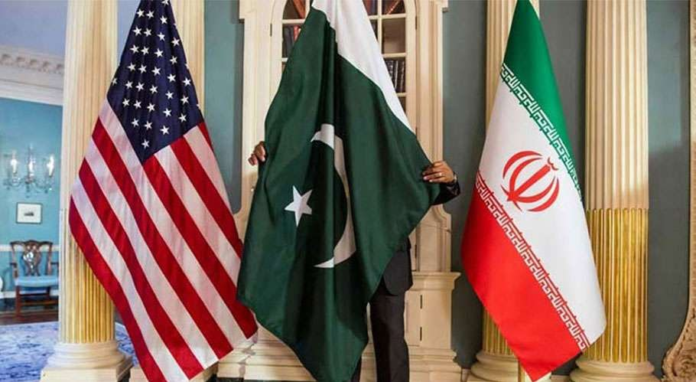
Pakistan has edged into the centre of the unfolding Iran war, not through strength but strategic positioning. It sits at a crossroads that others cannot easily occupy, and that alone has given it visibility. Islamabad is now attempting to play several roles at once: mediator, partner, and even a stabiliser. Yet, beneath this outward confidence lies a familiar fragility; Pakistan today is both more relevant and more vulnerable, and the tension between the two is hard to miss.
The Pillars of Relevance
Part of this relevance stems from its nuclear status. The idea of Pakistan as the only Muslim-majority nuclear power still carries weight, particularly in the Islamic world of West Asia. It gives Islamabad a standing that exceeds its economic reality, as in times of uncertainty, such symbolism travels far. While it does not make Pakistan a leader of the Islamic world, it ensures the nation remains part of any serious conversation.

Its relationship with Saudi Arabia reinforces this position through an arrangement that has always been pragmatic. Saudi Arabia provides financial support when needed, while Pakistan offers military expertise and political backing. That equation has held over time, and in the present crisis, it works in Pakistan’s favour. It allows Islamabad to signal that it is not isolated but is instead plugged into the region’s core networks of influence.
Meanwhile, Turkey’s role is different but no less relevant. Defence cooperation, especially in drones and military systems, has grown steadily. This is not just about procurement; it reflects Pakistan’s attempt to project itself as a country that is adapting rather than standing still. The optics matter, as a state that combines identity with a degree of technological capability is harder to dismiss.
Strategic Manoeuvring
There is also a quiet shift underway in Pakistan’s engagement with the United States. After years of uneasy ties, it is again positioning itself as a country that can talk to multiple sides. Few states today maintain working channels with Washington, Tehran, Riyadh, and Beijing simultaneously; however, Pakistan does. That gives it room to manoeuvre, as even a limited role in easing tensions around the Iran war would add to its diplomatic weight.
Internal Constraints and Vulnerabilities
But this outward reach rests on a narrow base, as Pakistan’s economy remains strained. Debt, inflation, and dependence on external support continue to constrain its choices, and the Iran war has only sharpened these pressures. Rising energy costs and disrupted trade are not distant risks; they are immediate constraints that affect policy and stability.

A more active Pakistan, connected across multiple axes, has a greater capacity to shape narratives and outcomes, especially in West Asia. Its weaknesses remain, but they do not prevent it from remaining relevant
Security concerns add another layer of complexity. The Afghan border remains unsettled, diverting military attention, while internal fault lines—particularly sectarian ones—could deepen if the regional situation worsens. These are not new problems, but they take on added significance when a country seeks to expand its external role. Pakistan is trying to do more abroad while still managing significant uncertainty at home.
Implications for India
For India, the implications are subtle yet significant. The issue is not a sudden shift in the military balance, but rather the steady expansion of Pakistan’s diplomatic space. A more active Pakistan, connected across multiple axes, has a greater capacity to shape narratives and outcomes, especially in West Asia. Its weaknesses remain, but they do not prevent it from remaining relevant.

This is where a clear reading is essential: Pakistan’s current position is less about internal transformation and more about circumstances. In a fragmented region, countries that position themselves in the middle often gain disproportionate influence, and Pakistan is trying to do exactly that. Whether it succeeds will depend as much on how the Iran conflict evolves as on its own capacity.
Pakistan’s increased visibility does not signal a lasting shift in power; at the same time, dismissing it would be a mistake. In today’s geopolitics, relevance often precedes influence, and influence, once established, can shape outcomes in ways that are not immediately apparent
Conclusion
There are potential gains, as a credible mediation role could bring visibility, financial support, and diplomatic traction. But the risks are equally real; if the conflict escalates or domestic pressures intensify, the same strategy could come under strain. What appears as leverage today could turn into a liability with surprising speed.
India’s response, therefore, needs to be measured. There is little reason for alarm, but even less for complacency. Pakistan’s increased visibility does not signal a lasting shift in power; at the same time, dismissing it would be a mistake. In today’s geopolitics, relevance often precedes influence, and influence, once established, can shape outcomes in ways that are not immediately apparent.
A steady approach is required. India will need to deepen its engagement in West Asia, maintain diplomatic consistency, and continue to build its economic and strategic strength. Power is no longer defined solely by size or capability; it is also about access, positioning, and the ability to remain engaged across competing spaces. Pakistan’s current moment reflects this reality. It is not the rise of a dominant power but an example of how a state can use circumstances and optimise its geography to expand its role. Whether it can sustain that role remains uncertain. For India, the task is not to overreact but to recognise the shift and respond with clarity and patience.
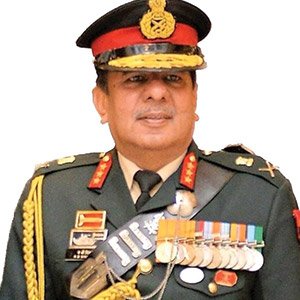
The writer, a PVSM, AVSM, VSM has had an illustrious career spanning nearly four decades. A distinguished Armoured Corps officer, he has served in various prestigious staff and command appointments including Commander Independent Armoured Brigade, ADG PP, GOC Armoured Division and GOC Strike 1. The officer retired as DG Mechanised Forces in December 2017 during which he was the architect to initiate process for reintroduction of Light Tank and Chairman on the study on C5ISR for Indian Army. Subsequently he was Consultant MoD/OFB from 2018 to 2020. He is also a reputed defence analyst, a motivational speaker and prolific writer on matters of military, defence technology and national security. The views expressed are personal and do not necessarily carry the views of Raksha Anirveda





