

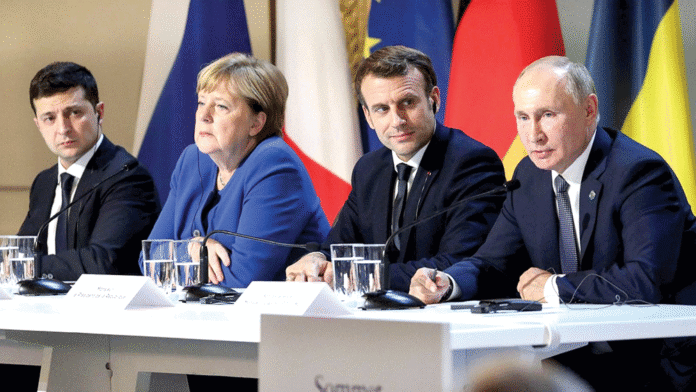
The contemporary international system stands at a critical juncture. What was heralded as the ‘end of the Cold War’ following the collapse of the Soviet Union has instead produced nearly three decades of unprecedented military interventions, regime change operations and escalating geopolitical tensions. From the Middle East to Eastern Europe, from Venezuela to Ukraine, and from the freezing Nordic climes to the thick Jungles of Africa, the world has witnessed the convulsions of a unipolar order desperately trying to conserve itself against the inexorable forces of multipolarity. The fundamental principle of ‘the balance of power’, that historically sustained peace amongst the great powers, has been systematically subordinated to the logic of hegemonic preservation. Unitary US actions, ranging from interventions in Iraq, Iran, Libya, Venezuela and Ukraine; to the warnings directed at Cuba, Colombia, Mexico, India, and even Greenland; alongside the weaponisation of tariffs and the marginalisation of the United Nations, have become a norm. Such actions can only be described as the naked ambitions of a superpower attempting to retain control of a world that is slipping from its grasp.
This article argues that Europe, which possessed both the historical opportunity and material capacity in 1991 to construct an independent security architecture inclusive of Russia, instead chose dependence on Washington and exclusion of Moscow — a choice that has produced the current catastrophe in Ukraine and threatens further destabilisation of the World. The path to sustainable peace requires Europe to abandon its subordinate role within the American-led order and engage directly with Russia on questions of continental security. Kenneth Waltz, in ‘The Theory of International Politics’, argues that the anarchic structure of the international system, characterised by the absence of a central authority, compels states to rely on self-help mechanisms. The distribution of capabilities among states determines the system’s structure and incentivises balancing behaviour to maintain equilibrium (Waltz, 1979). The restoration of this balance offers the only realistic path to lasting peace.

The Balance of Power: From Westphalia to Bipolarity
To understand our current predicament, we must first comprehend the historical function of the balance of power in international relations. The modern state system, established with the Peace of Westphalia in 1648, was built explicitly on the principle that no single European power should achieve the degree of dominance that characterised the Holy Roman Empire or Spanish hegemonies of preceding centuries. As Waltz argues in his foundational work on structural realism, the balance of power is not merely a strategy that states consciously pursue; rather, it emerges as the natural outcome of the security imperative confronting all sovereign actors in an anarchic system (Waltz, 1979). When one power grows too dominant, others band together to contain it, restoring equilibrium through what Waltz calls ‘balancing’ behaviour.
For over two centuries following Westphalia, this mechanism operated effectively. The nineteenth century witnessed a multipolar arrangement with Britain, France, Germany, Austria-Hungary, and Russia constituting the great powers whose relative capabilities determined the shape of international politics. This system, despite its imperfections and periodic wars, prevented any single power from achieving continental mastery.
The Second World War fundamentally altered this distribution. The catastrophic defeat of Germany and the exhaustion of Britain and France produced a bifurcated system dominated by two superpowers: the United States and the Soviet Union. This bipolar structure, while dangerous in its potential for direct great-power conflict, proved remarkably stable precisely because the balance of nuclear terror created mutual assurance of destruction. As John Mearsheimer notes in his offensive realist framework, great powers naturally seek to maximise their relative power and achieve regional hegemony whenever possible, yet the balance of power operates as a restraint on hegemonic ambition (Mearsheimer, 2001). Neither superpower could achieve the kind of regional hegemony that might have tempted aggressive expansion; the costs of attempting hegemony within the other’s sphere were prohibitive.
When the Soviet Union collapsed, Europe stood at a historical juncture. The European Union had the opportunity to become the harbinger of a new security architecture that could encompass all of Europe and Russia. This was an opportunity for Europe to develop as an independent security actor capable of managing its own affairs without American mediation
American Ascendancy: The Marshall Plan and Western Subordination
The roots of American dominance, however, could be traced back to strategic decisions made in the immediate aftermath of World War II. The Monroe Doctrine, originally proclaimed in 1823, took on renewed force as American military and economic power expanded throughout the twentieth century, eventually creating a Western Hemisphere under unmistakable US strategic hegemony. But it was the Marshall Plan, announced in 1948, that truly consolidated American dominance over Western Europe. By offering massive economic assistance to a shattered European continent on the condition of acceptance of American strategic leadership, the United States created a dependent alliance system in which Western European states had little choice but to accept their subordinate role within an American-led order.

NATO, established in 1949, institutionalised this hierarchy, placing European military capabilities under American command and ensuring that European security would forever depend on American commitment. As Richard Sakwa observes, this created what scholars term ‘liberal hegemony’ — a system in which the dominant power maintains control not through explicit military occupation, but through institutional frameworks, alliance dependencies, and the internalisation of American values and preferences by subordinate states (Sakwa, 2020). Western Europe could not defend itself against the Soviet Union without American nuclear protection, and American nuclear protection came only at the price of accepting American leadership. The Cold War at least provided a rationale for this asymmetrical arrangement: the Soviet threat was real, and the cost of containment was perhaps worth the loss of European autonomy. The Soviet Union’s collapse removed that rationale entirely. The United States suddenly found itself unshackled from the burden of maintaining an elaborate alliance system against a great-power rival.
The Unipolar Moment: 1991 and the Erosion of Balance
The collapse of Soviet communism and the dissolution of the USSR in 1991 produced a radically novel situation in world politics. For the first time in the modern state system, a single power possessed the capacity to act without meaningful constraint from other major states. American military capabilities, economic dominance, technological superiority, and cultural soft power combined to create what Charles Krauthammer termed the ‘unipolar moment’ — a period in which the United States stood alone as the world’s sole superpower.

As Henry Kissinger has argued, the fundamental law of international politics is that great powers seek to prevent the emergence of other great powers capable of challenging their dominance (Kissinger, 2014). Once freed from the Soviet constraint, American policymakers faced a choice: they could adjust American military and strategic posture downward in recognition of reduced threats and acknowledge that other powers — particularly in Europe — might establish independent security arrangements, or they could attempt to preserve and perpetuate the unipolar moment, maintaining the infrastructure of global hegemony and using it to shape world order according to American preferences. The choice made by successive American administrations, bipartisan in nature, was unmistakable: preserve hegemony. The 1992 Pentagon’s Defence Planning Guidance explicitly stated the goal of preventing the emergence of any great power that could challenge American dominance. NATO, rather than being diminished or dissolved with its original purpose gone, was instead expanded eastward, pushing American military presence deeper into the former Soviet sphere and closer to Russian borders.
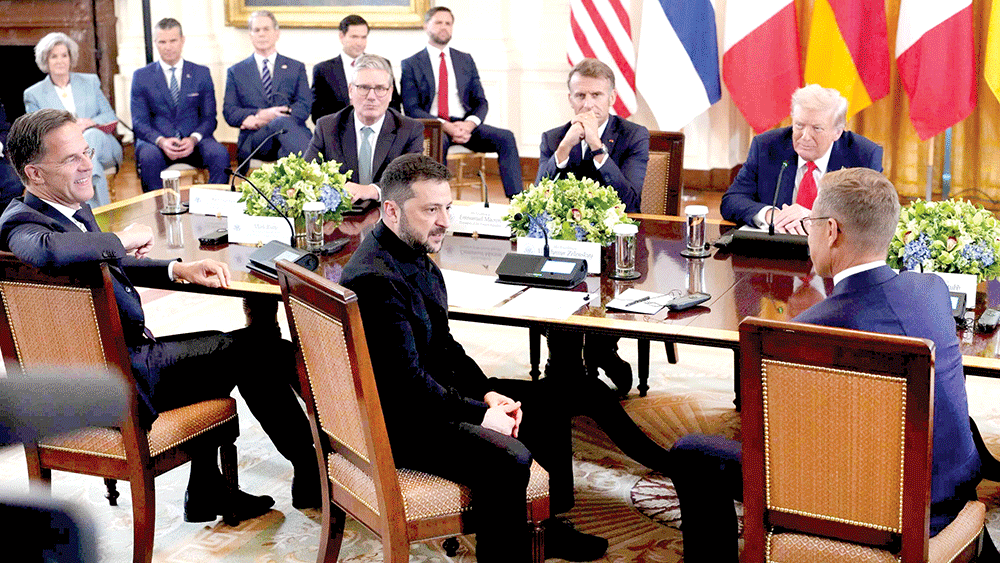
What is crucial to understand is that this expansion into Eastern Europe and the former Soviet space was not driven by the consent or security needs of the states being incorporated into NATO. Rather, it reflected American determination to extend the sphere of the post-Cold War liberal order into regions that, by any objective standard of international relations, constituted Russia’s traditional sphere of influence. As Kissinger himself cautioned regarding Ukraine, the strategic wisdom of pushing NATO into Ukraine was fundamentally flawed because it violated the basic principle of realist diplomacy: every great power must be allowed a sphere of legitimate influence in which it will resist external pressures that threaten its security (Kissinger, 2014).
The Sole Superpower as Global Policeman
The unipolar system created conditions in which American dominance could be leveraged without meaningful opposition. The period since 1991 has witnessed an extraordinary proliferation of the American military with more than 600 bases and multiple interventions across the globe — far more than during the Cold War, when the balance of power imposed restraint. The catalogue of direct American military actions in the unipolar era is extensive and sobering. The 1991 Gulf War in the Middle East was followed by Somalia, Haiti, Yugoslavia, and the catastrophic invasion and occupation of Iraq in 2003 and the emergence of ISIS. The 2001 invasion of Afghanistan evolved into a twenty-year occupation and Taliban restoration. It was followed by the intervention in Libya on the false pretext in 2011. Beyond the direct military interventions, the American security state invested heavily in the infrastructure of regime change and political destabilisation. US organisations funded opposition movements and civil society organisations from Ukraine to Venezuela to Hong Kong and supported ‘colour revolutions’ designed to topple governments deemed hostile to American preferences. Ukraine’s Euromaidan movement of 2013-2014, which descended into civil war and ultimately Russian intervention, occurred in the context of explicit American and EU encouragement of Ukrainian elites to reject the Yanukovych government’s attempts at balancing between Russia and the West. The driving logic behind these interventions is clear: the sole superpower sees its role as global policeman, responsible for maintaining and expanding the liberal international order that American power had constructed.
Europe’s Abdication: The Lost Opportunity of 1991
At the moment when the Soviet Union collapsed, Europe stood at a historical juncture. The European Union, having successfully integrated Western European economies and gradually reduced the likelihood of intra-European conflict through institutional frameworks and economic interdependence, had the opportunity to become the harbinger of a new security architecture that could encompass all of Europe and Russia. This was, perhaps, an opportunity for Europe to develop as an independent security actor capable of managing its own affairs without American mediation.
Instead, Europe chose subordination. Western European elites, moved by the cacophony of newly independent Eastern European countries and scarred by memories of the Cold War, remained convinced that American military presence and leadership were necessary for continental stability. The promise made to Russia during the end of the Cold War — that NATO would not expand into the former Warsaw Pact space — was abandoned within a few years. This was not a strategic necessity. Russia in 1991 was militarily devastated, economically collapsing, and soliciting Western investment and support. The Russian threat that would justify NATO expansion did not exist in the 1990s; it was created by the policies of American hegemonic assertions that convinced European elites that Russian integration into the Western order was not possible. The result was the creation of a system in which European elites came to see the world through American eyes. They choose to define their interests in terms compatible with American hegemonic preservation and to regard Russia as a threat that justified continued American presence and leadership
The Naked Dance of American Ambition: Contemporary Manifestations
The rise of China as an economic powerhouse, India’s demographic and economic ascent, the resurgence of Russia despite Western sanctions, and the increasing assertion of the Global South in international affairs signal the end of the unipolar moment and the emergence of multipolarity. What the world witnesses today is the increasingly frantic attempts of a declining hegemon to maintain its dominance through ever more aggressive assertions of power. The contemporary American posture reveals the naked ambitions of a superpower attempting to retain control of a world that is slipping from its hands. As Mearsheimer notes in his analysis of great power politics, ‘the tragedy of great power politics’ emerges when a declining hegemon refuses to accept the redistribution of power and instead doubles down on maintaining its dominance through increasingly costly and destabilising interventions (Mearsheimer, 2022). In its one-track ambition to remain the most powerful nation, the United States is treating its friends and foes alike with equal disregard for their interests and sovereignty. International laws, institutions, and treaties that have stood the test of time have all been consigned to this lust for power.
The Case for European-Russian Dialogue
The fundamental problem with the current world order is that it is unsustainable. The unipolar system has produced chronic instability, endless military interventions, and the erosion of international law. As American relative power declines, the hegemonic structure cannot be maintained, and Europe finds itself at the cusp of critical choices. It can continue to hitch its security to a declining hegemon, engaging in ever more costly military buildups and technological competition while American strategic stability continues to deteriorate. Or else, it can pursue genuine independence and try to restore the fundamental principle of international relations that has historically maintained peace — the balance of power.
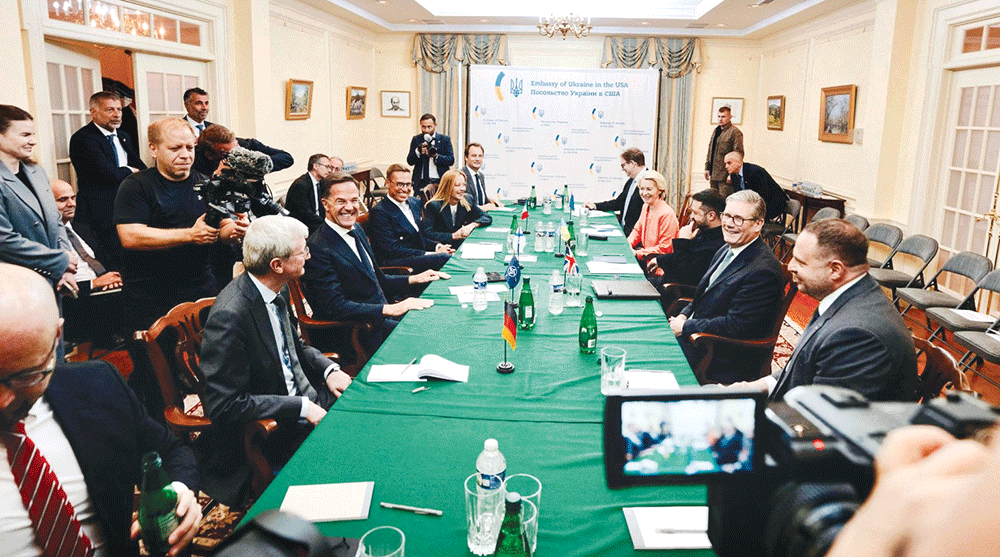
The restoration of balance requires dialogue and the creation of legitimate channels for the non-belligerent adjustments of great-power interests. Kissinger, in his writings on international order, has consistently emphasised that sustainable peace requires every major power to have channels through which it can pursue its interests and achieve recognition of its legitimate needs. He goes on to argue that security involves not just defeating rivals or compelling them to accept terms, but incorporating them into a structure that makes peaceful relations possible (Kissinger, 2014). Europe and Russia, cojoined by centuries of shared history and culture, share a continent and inescapable geographic proximity. They cannot escape each other, and continued attempts to exclude Russia from the European security architecture would be strategically futile and counterproductive.
As the Global South rises, China and India assert themselves, and American power continues its relative decline, the imperative for European strategic autonomy becomes more urgent
It is time for Western countries to speak out. Rather than depending on the United States to bring peace to Europe, a strategy that has failed, they would do well to open direct channels of communication with Russia. For centuries, European powers maintained peace through regular diplomatic consultation and the recognition of mutual legitimacy. The Helsinki Accords of 1975, which established the Conference on Security and Cooperation in Europe as a forum for dialogue between rival blocs during the Cold War, provide a precedent for how dialogue can proceed even amid deep disagreement.
The Way Forward
What might be the path forward for Europe-Russia? First, it should begin with acknowledgment of a fundamental principle: that Russia, as a great power and a European state, has legitimate security interests that cannot be disregarded without creating instability. Second, Europe should use its economic and diplomatic resources to facilitate dialogue on the basis of recognising Russia’s legitimate place in Eurasian security architecture. The principle of ‘indivisible security’ — which holds that no state’s security should come at the expense of others’ security — offers a framework more sophisticated than the current NATO expansion logic. Third, Europe should develop genuine military and diplomatic independence from American hegemony. This does not require hostility to the United States, but it does require the development of autonomous European capabilities and decision-making structures. A Europe that is strategically independent can negotiate with Russia as a peer, rather than as an American client.
The choice before Europe is clear: continue on the current path of subordination to a declining hegemon, with all the instability and military escalation that implies, or chart an independent course that recognises Russia as a legitimate partner in continental security. It may be prudent that Europe and Russia, having shared the same continent for centuries, establish direct channels of dialogue and negotiate a security architecture that acknowledges the legitimate interests of both parties. As the Global South rises, China and India assert themselves, and American power continues its relative decline, the imperative for European strategic autonomy becomes more urgent. History will judge which path Europe chooses, but the stakes could not be higher as the restoration of balance in this fragmented world, and the preservation of peace depend upon it.

The writer, Kirti Chakra, AVSM, VSM, is an Indian Army veteran. He has also served as the Indian Military Attaché in Moscow. He is the Founding Director and CEO of ThorSec Global. An accomplished scholar, he specialises in Geopolitics with a focus on Russian Studies and is currently pursuing his PhD in the field, further enriching his depth of knowledge and global perspective. He can be reached at deepakmehra67@yahoo.co.uk and deepak.mehra@thorsecglobal.com. The views expressed are of the writer and do not necessarily reflect that of Raksha Anirveda





