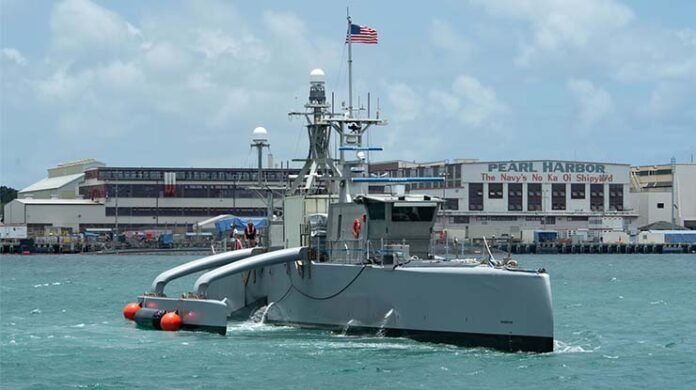
Washington: The US Navy’s Snakehead program is looking dead in the water — again. Congressional appropriators in the fiscal 2023 defence spending bill backed the service’s choice to discontinue funding the large unmanned undersea vehicle program, according to explanatory text accompanying the legislation signed by President Joe Biden.
In lieu of pursuing the program, appropriators urge the service “to prioritize advancements in autonomy, endurance, and multi-mission payload capability now available” in private industry.

“The Secretary of the Navy is further encouraged to integrate commercially available UUV technology into Navy and Marine Corps concept of operations development and resourcing, procurement and fielding plans,” the text continues.
The UUV itself was envisioned to be launched from a submarine and equipped with a wide range of payloads that ultimately free up resources onboard the submarine. But after 14 years and at least $200 million in recent investment, the Navy in its FY-23 budget request decided problems with procurement and design had made the program untenable to continue, and subsequently proposed abandoning it.
Appropriators allowing the Navy to move forward with the program’s termination is noteworthy because of a last-minute effort earlier this year by some lawmakers to revive the UUV program.
Senate authorizers in their version of the defence policy bill proposed a $100 million investment this year to keep the program’s research afloat, arguing the technology could “provide an important capability to the fleet once fielded.”

It’s a suggestion with which some outside analysts, such as the Hudson Institute’s Bryan Clark, would agree. “The Navy’s decision was premature. Future offensive undersea operations will depend on vehicles like Snakehead with substantial endurance, depth and payload,” he wrote in an op-ed soon thereafter.
The funding levels proposed by authorizers — or more specifically, the lawmakers on the House and Senate armed services committees — are necessary as a procedural issue. But they are mostly symbolic if they are not matched by the House and Senate appropriations committees in the federal spending bill. And with Biden’s signature, the appropriators may have put screen doors on the unmanned sub.

Although the funding levels suggest the program of record will come to an end, the services occasionally salvage terminated programs for useful developments, meaning the work done could still contribute to the service’s future unmanned fleet, if not in name, then in spirit.