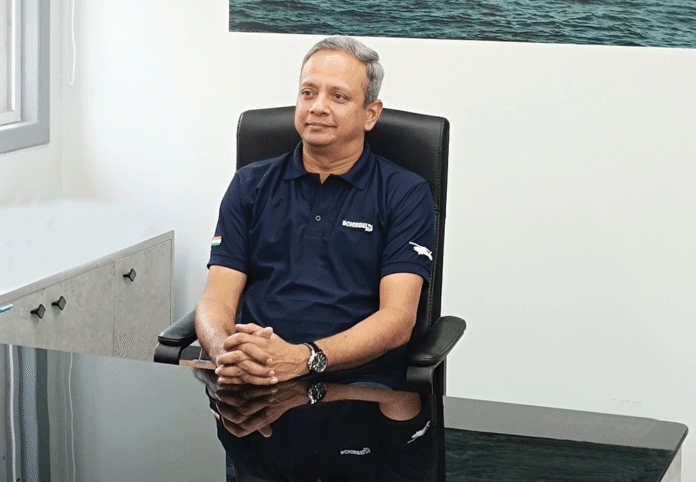
Consolidating its position in India with flagship S-100 Unmanned Aerial System and in-country MRO support set-up, Schiebel India is optimistic of expanding its footprint in India in a very substantive manner. Schiebel’s upcoming innovations like the S-300 with extended capabilities is well positioned to be the game-changer.
In an exclusive interview with Raksha Anirveda, Schiebel India CEO, Jajati Mohanty (JM), reflecting on the company’s resilient journey in the Indian defence market, shares insights into the S-100’s global experience, India-Austria cooperation, Schiebel’s strategic planning, product innovation, steadfast commitment to the Make in India initiative as long-term industry partner, and much more.

RA: The Camcopter S-100 has proven versatile in naval trials, including with the Indian Navy. What key lessons from its deployments worldwide are informing the design and capabilities of the upcoming S-300 rotary-wing UAS?
JM: The most important lesson from the S-100’s global operational experience is that users value a platform that is practical, reliable and adaptable in real missions. Across different theatres and customer requirements, the demand is always for a system that can operate with minimal infrastructure, carry the right payloads for the task, and transition easily between different mission profiles.
That experience is very much reflected in the S-300. It builds on the philosophy behind the S-100, but moves into a higher payload and longer-endurance class. Customers today are looking for more persistence, greater sensor flexibility and the ability to take on increasingly complex roles. The S-300 has been designed with that in mind. It is about extending capability while preserving the operational strengths that have made the S-100 so successful.
RA: With India’s growing demand for indigenous drone tech, how is Schiebel India positioning itself to collaborate with local partners under the Aatmanirbhar Bharat initiative, especially for S-100’s integration in border surveillance?

JM: Our approach in India is very clear: we want to be seen not only as a technology provider, but as a long-term industrial partner. India’s push for self-reliance is creating the right environment for deeper collaboration, and Schiebel India is positioning itself accordingly through local partnerships, growing in-country capability and closer alignment with Indian operational needs.
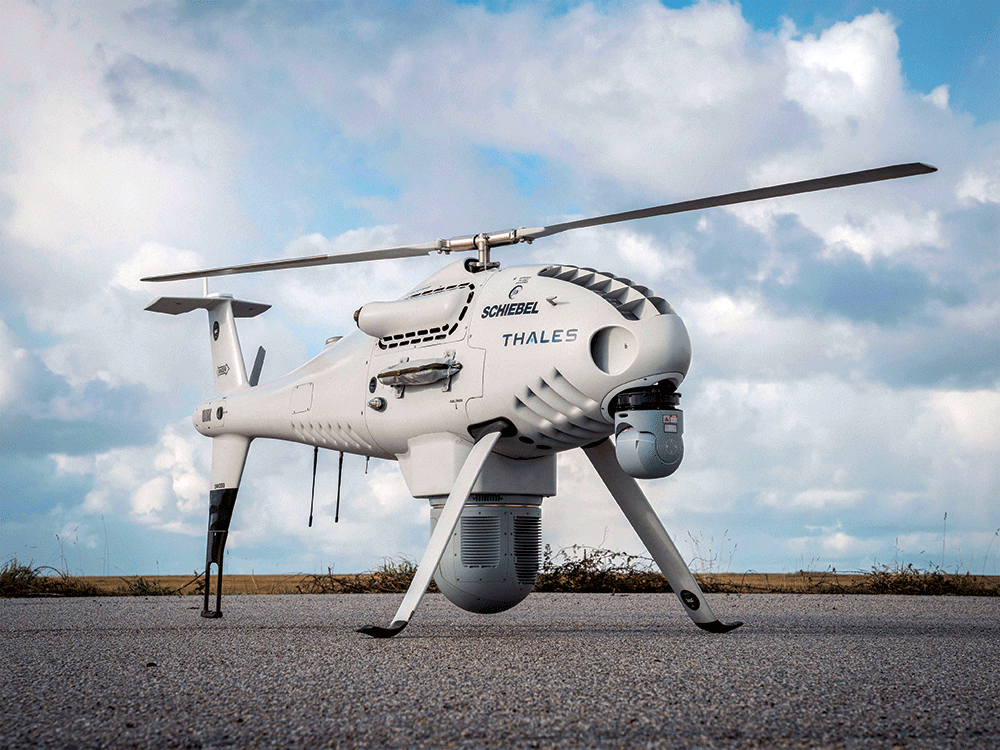
For border surveillance, the S-100 offers a strong combination of mobility, responsiveness and mission adaptability. Its ability to operate without extensive infrastructure and to support different sensor configurations makes it well suited to dynamic security environments where terrain, weather and operational priorities can shift quickly.

RA: Reflecting on Schiebel’s presence in India and consolidation of its position with MRO setup, how do you visualise Schiebel India’s business footprint in the near future amidst the ongoing defence reforms including DAP? Also provide your insights on the positive impacts that government initiatives like Make in India, Aatmanirbhar Bharat and Viksit Bharat have brought to the Indian defence ecosystem.
JM: I see Schiebel India expanding its footprint in a very substantive way over the coming years. That growth is not only about sales, but about building a stronger local base for maintenance, repair and overhaul, deeper industrial cooperation, and closer long-term engagement with customers. This is essential because defence customers increasingly expect not just a platform, but dependable in-country support and the ability to grow capability over time.
For border surveillance, the S-100 offers a strong combination of mobility, responsiveness and mission adaptability. Its ability to operate without extensive infrastructure and to support different sensor configurations makes it well suited to dynamic security environments
The broader direction of India’s defence reforms is very encouraging in this regard. Initiatives such as Make in India, Aatmanirbhar Bharat and the wider Viksit Bharat vision have given strong momentum to domestic capability creation. They have increased confidence across the ecosystem, encouraged investment, and created more room for private industry and technology partnerships. For companies like Schiebel, this is important because it supports a more mature and collaborative environment in which long-term programmes can be developed with real local participation.
RA: Prime Minister Narendra Modi’s visit to Austria in July 2024 was termed ‘historic and immensely productive’ considering its focus on strategic partnership, business and building a framework for future collaboration. Do you think that with the visit India-Austria business cooperation has gained momentum and opened up opportunities for Austrian SMEs, MSMEs and startups? Also highlight the key takeaways that would assist in strengthening the overall Indian business environment.
JM: Yes, I do believe the visit gave fresh momentum to India-Austria cooperation. It was significant not only at a diplomatic level, but also because it sent a strong signal that the relationship is ready to move into a more strategic and future-oriented phase. That naturally creates new confidence for Austrian companies looking at India more seriously, including smaller and highly specialised firms.
For Austrian businesses, India is increasingly attractive because it offers scale, ambition and a clear appetite for advanced technology and industrial cooperation. The real opportunity lies in moving beyond a traditional buyer-seller model towards partnerships in manufacturing, engineering, innovation and long-term capability building. From a business perspective, the key takeaways are the importance of policy continuity, transparent frameworks, faster processes and an environment that supports technology collaboration. Those are the factors that will help convert political goodwill into sustainable business growth.
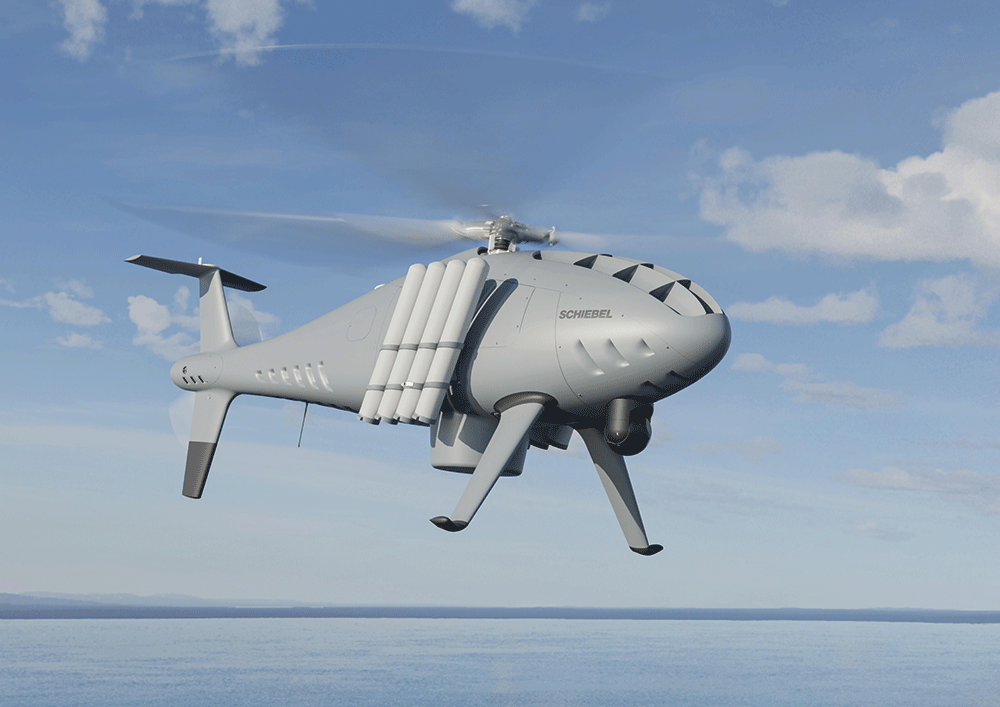
RA: The S-300, with its 650kg MTOW and enhanced endurance, represents a significant leap from the S-100. What timeline are you targeting for its full launch, and how will it address specific operational needs in Asia-Pacific maritime security?
JM: The S-300 already reflects strong programme momentum. Schiebel had secured the South Korean development and delivery contract for the platform at an earlier stage of the programme, establishing an important foundation for its further development. More recently, the aircraft has successfully completed initial flight testing in France, expanding its operational envelope and reaching a total of 100 flight hours. Together, these milestones show that the S-300 is progressing steadily through both customer-backed development and practical flight-test validation.
For Asia-Pacific customers, this is particularly relevant because requirements are evolving towards broader mission flexibility and higher operational effect. The S-300 is intended to answer that demand by enabling more persistent coverage, more capable payload options and a wider range of mission profiles, especially in maritime environments where endurance and adaptability are increasingly important.
RA: Autonomous navigation via GPS waypoints has been a hallmark of Schiebel’s UAS. How are you advancing AI-driven autonomy and payload versatility in the S-300 to handle complex missions like ISR in contested environments?
JM: Autonomy today has to mean more than simply flying from one waypoint to another. The next step is about smarter mission execution – reducing operator workload, handling larger amounts of sensor data and making the platform more effective in complex and contested environments.
That is the direction in which we are evolving. With the S-300, the combination of greater payload capacity and longer endurance opens the door to more advanced sensor mixes, onboard processing and more sophisticated mission management. The aim is not autonomy as an isolated feature, but autonomy as part of a broader mission system: better data handling, better situational awareness and better operational utility. That becomes increasingly important in ISR missions where the value lies not only in collecting information, but in helping users act on it more efficiently.
RA: Operating in India’s regulatory drone ecosystem can be complex. What opportunities do you see in recent policy changes, and how has Schiebel India mitigated export control challenges for sensitive tech like the Camcopter series?
JM: India’s regulatory environment is detailed, but it is also moving in a constructive direction. The opportunity lies in the fact that policy is increasingly encouraging local industrial participation, domestic capability growth and more serious long-term investment in advanced unmanned systems.
For Schiebel India, the key is to work within regulatory framework in a structured and forward-looking way. That means aligning early with Indian requirements, building credible local capability, and creating partnerships that support compliance as well as operational value
For Schiebel India, the key is to work within Indian framework in a structured and forward-looking way. That means aligning early with Indian requirements, building credible local capability, and creating partnerships that support compliance as well as operational value. Export control considerations are naturally part of any advanced aerospace and defence programme, but these can be managed successfully through transparency, careful planning and trusted cooperation between all stakeholders. In that sense, a stronger and more mature Indian defence ecosystem actually helps make such cooperation more effective.
RA: Beyond hardware, how is Schiebel India building an ecosystem around its products – through data analytics services or training programmes – and what role will this play in securing long-term contracts with India’s defence forces?
JM: Long-term success in defence is never based on hardware alone. Customers want a complete capability package: training, support, mission readiness, operational know-how and the ability to keep evolving the system as requirements change.
That is exactly how we view the role of Schiebel India. Building the ecosystem around the platform is just as important as delivering the platform itself. Training is essential because operational effectiveness depends on well-prepared crews and maintainers. Local support and sustainment are equally important because they directly influence availability and customer confidence. Over time, software, data exploitation and mission support will also play a greater role in how unmanned systems deliver value. This broader ecosystem approach is what helps convert an initial procurement into a long-term operational relationship, and that is where we see significant potential in India.