


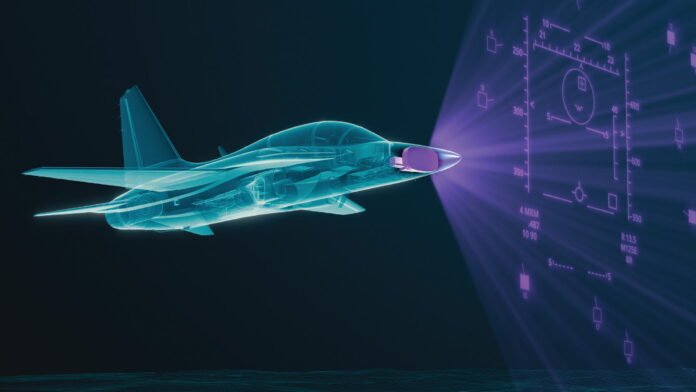
Washington: Ten minutes into the test flight, it was time to see what the new radar could do. A member of the mission crew pressed the button, and pilot Rob Swaringen glanced at the display. While he’s not allowed to describe in detail what he saw on the screen, he made one thing clear: This little, lightweight radar was doing some seriously heavy lifting.
The engineers and programme representatives on board couldn’t help but sneak into the cockpit for a peek.

“It’s the first time this thing is flying, and it worked like a champ,” said Swaringen, a former F-16 pilot who went by the call sign Houdini.
The test, conducted aboard a modified commercial jet Raytheon used as a flying test bed, marked an important milestone for the business’ new PhantomStrike® radar. The radar puts the power of active electronically scanned array in a package compact and light enough for just about any aircraft – even small UAVs – and, in doing so, opens up a world of capabilities to a rapidly changing fleet.
The PhantomStrike radar is cooled entirely with air pulled straight from the platform. This means fewer lines to run and systems to connect, so installation took only a matter of hours, Swaringen said.
Swaringen, Raytheon’s chief test bed pilot, knows first hand the importance of superior situational awareness in every mission scenario – whether it’s in combat with hostile aircraft buzzing from every angle or in a high-stakes test flight.

He said technology like PhantomStrike would have come in handy when he was logging hours on the F-16.
“It [shows] 10 times what I could see with previous capabilities,” he said. “Just having that excellent air picture in your own cockpit – regardless of what’s coming across the radio, what’s on the link display – to have that in your own ship is a real game changer.”

The radar is designed for a range of platforms, including uncrewed and light-attack aircraft, fighter jets and helicopters.
The radar-scanned images captured during that first flight test showed the California terrain clearly and in detail: stretches of dry land next to dense forest, mountains, lakes, islands off the coast. To Larry Martin, a senior technology fellow at Raytheon, an RTX business, and the technical lead for the PhantomStrike radar, what mattered most was that PhantomStrike had worked as he had expected.






