


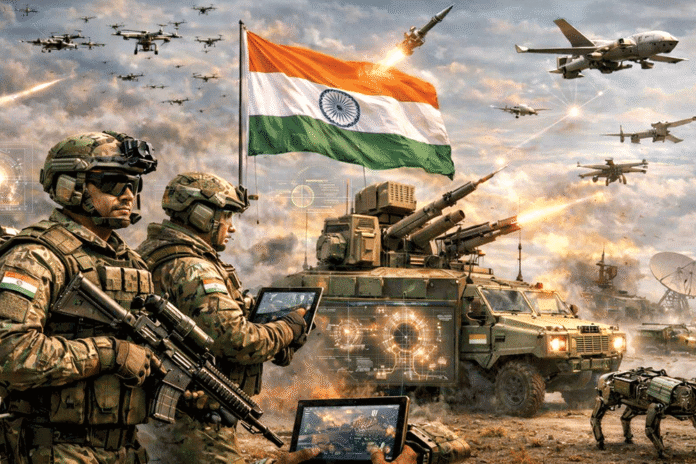
Deterrence will remain necessary in the years ahead, but it will no longer be sufficient. The decisive advantage in the next decade may belong not to the state that can threaten the heaviest punishment, but to the one that cannot be broken. Victory, in its deeper strategic sense, will favour the resilient nation: a nation built on self-reliance, adaptation, institutional depth, and decentralised command. The side that can absorb shock without losing coherence, continue to function under strain, and preserve clarity of judgement amid disruption will hold the true advantage. That, perhaps, is the real test before India between 2026 and 2036.
For much of modern history, power was measured in visible terms: divisions, fleets, airframes, guns, and missiles. Those metrics still matter, and they will continue to matter. Yet the character of conflict is changing in ways that make older assumptions insufficient. War, if it comes, is less likely to unfold as a linear contest between clearly defined beginnings and endings. It is more likely to arrive in fragments: a cyber intrusion before a border incident, a wave of disinformation before a military response, drone attacks before formal escalation, economic coercion before a diplomatic rupture. The opening blows of the next conflict may not come only from the battlefield. They may fall upon power grids, financial systems, communications networks, transport hubs, public psychology, and political resolve.

This is why resilience must now sit beside deterrence as a central pillar of national security. Deterrence seeks to prevent conflict by shaping an adversary’s calculations. Resilience ensures that if deterrence is tested, the nation does not unravel. In a world of prolonged uncertainty, distributed threats, and accelerated decision cycles, resilience is what allows a country to remain steady while under assault. It is what separates temporary disruption from strategic defeat.
India’s challenge in the next decade lies precisely here. It is not only a question of whether India can strike back. It is also a question of whether India can continue to think clearly, govern effectively, mobilise resources rapidly, protect public confidence, and sustain combat power after the first shock has landed. The coming years will test not merely the strength of the Indian military but the endurance of the Indian state and the adaptability of its institutions.
The first and most unforgiving phase of any future crisis will be the phase of shock. In the opening hours and days, hostile action will seek as much to induce confusion as to inflict damage. Decision-makers may be flooded with contradictory information. Communications may be degraded. Civil systems may be disrupted. Rumour will travel faster than fact. A limited tactical episode may be presented to the public as a strategic humiliation or a manageable disruption made to appear like national paralysis. In that moment, the essential contest is not merely one of firepower. It is a contest of coherence. A resilient state does not panic when struck. It absorbs the blow, restores order, and denies the adversary the psychological dividend of chaos. That requires hardened systems, redundant communications, continuity-of-government protocols, trusted public messaging, and institutions that know how to function under pressure. In modern conflict, confusion is not a byproduct. It is often a weapon in itself. A state that remains composed in the first seventy-two hours has already won half the battle.
The question is not only whether India can strike back, but also whether it can continue to think clearly, govern effectively, mobilise resources rapidly, protect public confidence, and sustain combat power after the first shock has landed. The coming years will test not merely the strength of the Indian military but the endurance of the Indian state and the adaptability of its institutions
Beyond the opening shock comes the harder test of adjustment. This is the stage at which the adversary probes for hesitation, for friction between services and ministries, for gaps between political intent and operational execution. Modern conflict moves too quickly, and disruption is too likely, for every tactical decision to await perfect clarity from above. A nation that depends excessively on central direction risks losing tempo at the very moment when tempo becomes decisive. This is where mission command assumes its importance — not merely as an administrative concept, but as a philosophy of war. It rests on trust, training, and a shared understanding of intent. It allows commanders at lower levels to act with initiative when communications falter or circumstances change. In an age of electronic warfare, cyber disruption, and compressed decision cycles, the nation that can decentralise execution without losing strategic coherence will prove far harder to dislocate than one that remains rigidly hierarchical.

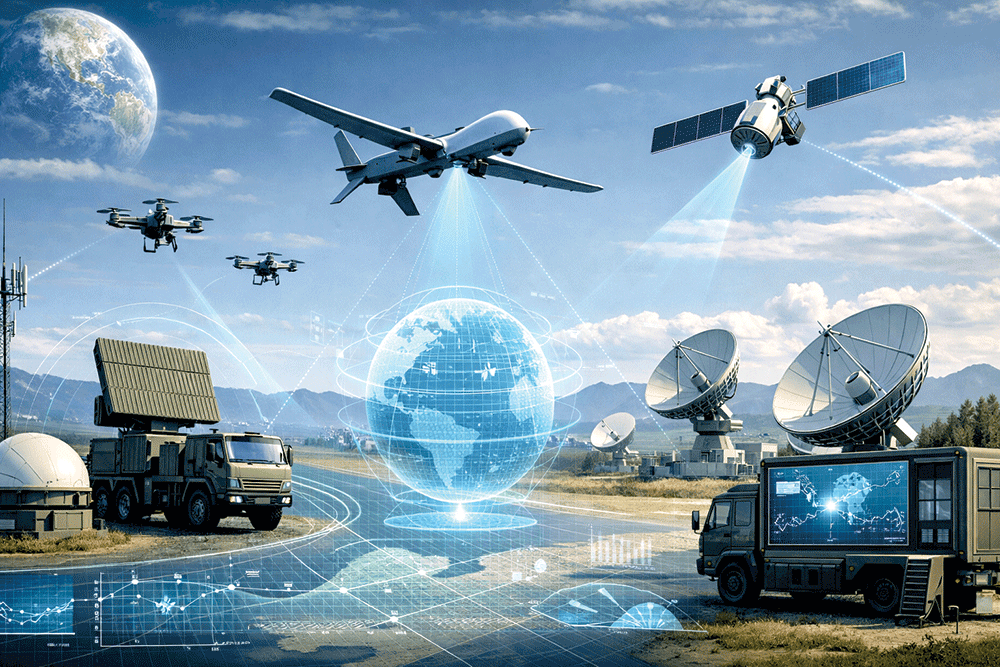
Resilience is not only military. It is industrial, technological, civic, and intellectual. Modern wars are sustained not only by soldiers in the field but by supply chains, repair ecosystems, energy availability, manufacturing depth, and social confidence. The industrial base is no longer in the background of strategy. It is part of the strategy. A nation unable to replenish critical stocks, repair damaged systems quickly, substitute vulnerable imports, or scale production in crisis will discover that battlefield performance is inseparable from economic preparedness. Self-reliance, properly understood, does not mean autarky. It means assured access in a world where access can no longer be taken for granted. India must develop depth in those domains without which sustained operations become impossible: electronics, ammunition, sensors, propulsion, communications systems, batteries, software, and maintenance capability. Procurement cannot remain a peacetime accounting exercise. It must increasingly be judged by resilience in wartime.

The battlefield itself is changing in ways that make resilience more central than ever. Low-cost drones and loitering munitions have altered the geometry of attrition, allowing inexpensive systems to threaten high-value assets and impose disproportionate costs. Nations that rely only on exquisite platforms without building affordable mass, layered defences, and repair capacity may find themselves tactically sophisticated but strategically exhausted. Cyber and electronic warfare will deepen this challenge. Future conflicts are unlikely to permit the luxury of uninterrupted communications or uncontested data flows. India must therefore train not only for optimal conditions, but for degraded ones through jamming, incomplete information, and intermittent communication. Systems can fail; judgement cannot.
There is another dimension of resilience that receives less attention than it deserves: the resilience of national thought. Adversaries will seek to overload India’s decision-making with ambiguity, provocation, and narrative manipulation, aiming to trigger either paralysis or overreaction. A mature strategic culture must distinguish signal from noise, tactical loss from strategic setback, and public anger from sound policy. Nations are often defeated first in their thinking, and only then on the battlefield. War-gaming must become more realistic. Red-teaming must become more institutionalised. Exercises must examine what actually happens when logistics come under attack, when communications are degraded, and when the information environment turns hostile. Strategy cannot be built on optimistic assumptions. It must be forged against friction.
Resilience is not only military, but it is also industrial, technological, civic, and intellectual. Modern wars are sustained not only by soldiers in the field but by supply chains, repair ecosystems, energy availability, manufacturing depth, and social confidence. The industrial base is no longer in the background of strategy, it is part of the strategy
The deeper truth is that resilience is a design principle for the state, not a slogan about toughness. It asks whether institutions can bend without breaking, whether society can remain composed under strain, whether industry can regenerate power, whether the military can sustain tempo, and whether leadership can remain calm in the face of uncertainty. In the decade ahead, these questions may matter as much as the number of platforms India fields.

The way forward begins with a simple recognition: resilience must be built deliberately. It will not emerge automatically from growth, nor can it be improvised in crisis. India must strengthen resilient joint operational networks across the services and test them repeatedly under conditions of disruption. It must invest in hardened and redundant communications, continuity mechanisms, contested logistics, and distributed warfighting capacity. It must deepen its domestic industrial base in critical military and dual-use technologies. Counter-drone, electronic warfare, and cyber defence must move from niche capability to a broad habit. Civil defence, strategic communication, and continuity of essential services deserve far greater attention, for these are no longer peripheral to national security.
The resilient state is not one that is never hit. It is one that remains standing, thinking, and acting after the hit. The India that will command respect between 2026 and 2036 will be defined not only by its ability to punish but by its ability to endure, regenerate, adapt, and lead under stress. Deterrence will remain vital, but the future belongs to the nation that couples deterrent power with staying power. In the end, the strongest message a nation can send is not merely that it can strike hard, but that even after the storm begins, it will continue to function, decide wisely, and prevail.

The writer is an Indian Army veteran and expert in Operations Research and Systems Analysis





