


Mission-mode programmes are government initiatives designed to achieve clearly defined, high-priority objectives within a specified timeframe. They are characterised by concentrated resource allocation, streamlined decision-making, and rigorous monitoring mechanisms. Originally conceived to advance long-term national goals — such as the Chandrayaan lunar missions and the Digital India initiative — these programmes have, over the past decade, evolved into a key policy instrument for accelerating improvements in public service delivery.
In the context of India’s evolving geopolitical landscape, the Mission Mode Decade (2026–2036) represents a critical window to achieve elusive objectives that structural constraints have historically derailed. These goals are essential for bolstering India’s military capabilities, economic resilience, strategic autonomy, and global influence amid rising tensions with neighbours like China and Pakistan, as well as broader uncertainties in the international order.

However, the success of such a mission-mode decade will depend not only on policy design and funding but also on a deeper shift in national mindset. To make this decade transformative rather than incremental, India must move beyond a predominantly profit-oriented business approach towards a builder’s mindset — one that prioritises long-term capability creation, national capacity building, and technological sovereignty.
Lessons From the Global Powerhouses
Historical experience shows that nations that achieved technological and industrial leadership did so through deliberate long-term capability building. South Korea’s transformation from a war-ravaged economy in the 1960s into a global industrial powerhouse was driven by coordinated state support for strategic industries such as shipbuilding, electronics, and automobiles.
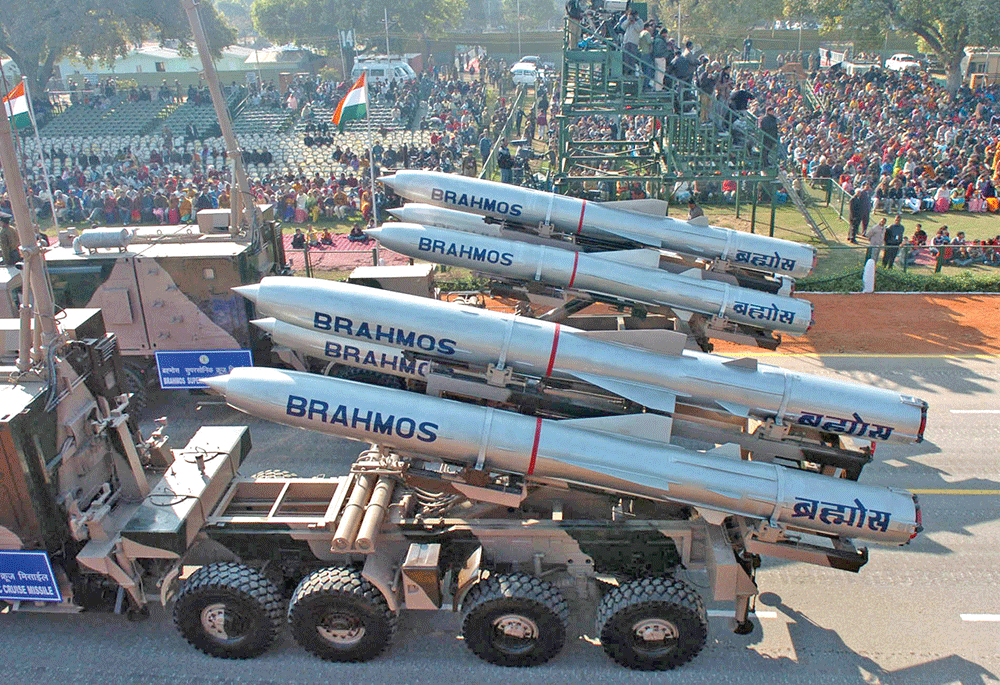
Similarly, China’s rise in advanced manufacturing and digital technologies was not purely market-driven but guided by sustained industrial policy, large-scale public investment, and strategic technology acquisition. In the United States, the Defense Advanced Research Projects Agency (DARPA) pioneered a mission-driven innovation model that funded high-risk, high-impact research, producing breakthroughs such as the internet, GPS, and stealth technologies.

The United States’ leadership in computing and AI was significantly shaped by DARPA-funded research programmes beginning in the 1960s. These programmes supported foundational advances in computer networking, machine learning, and robotics, eventually enabling the emergence of Silicon Valley’s innovation ecosystem
These examples illustrate that national power in the modern era is built through sustained strategic investments and institutional commitment rather than short-term commercial incentives alone.
India’s aspirations align with its national strategy for Artificial Intelligence and the India Semiconductor Mission, emphasising self-reliance (Aatmanirbhar Bharat) while navigating global dependencies. Yet the strategic logic guiding this decade must combine two complementary approaches: competing head-on in critical sectors where global parity is necessary, while simultaneously preparing for leapfrogging opportunities in emerging technologies and new economic paradigms.

Political Blockages: Derailing Mission Mode Plans and the Need for Prioritised Reforms
One of the most persistent barriers to India’s long-term strategic goals is political fragmentation, often intensified by regime changes that interrupt policy continuity. India’s federal polity, characterised by coalition governments and frequent electoral shifts, has historically stalled ambitious projects.
Comparatively, countries that successfully implemented long-term industrial strategies often ensured policy continuity across political cycles. In South Korea during the 1960s-1980s, industrial policy was sustained through successive administrations, enabling conglomerates such as Samsung and Hyundai to mature into global competitors. Similarly, China’s multi-decade planning cycles allowed it to execute ambitious programmes in infrastructure, manufacturing, and digital technologies with remarkable consistency.
India’s democratic system naturally introduces policy contestation, yet mission-critical sectors must be insulated from short-term political disruptions. The experience of the United States offers one model: despite political polarisation, institutions like DARPA and NASA have historically maintained continuity in strategic research programmes across administrations.
To replicate such stability, India could institutionalise long-horizon strategic programmes under autonomous mission agencies with cross-party oversight. Such institutions would embody the builder’s mindset — ensuring that national capability-building efforts continue regardless of electoral changes.
Leadership in Emerging Technologies: AI and Semiconductors
India’s quest for leadership in artificial intelligence and semiconductors is central to its economic and strategic ambitions. For instance, the IndiaAI Mission, approved in March 2024 with a ₹10,371.92 crore budget, aims to establish a sovereign AI ecosystem under the vision “Making AI in India and Making AI Work for India.” It focuses on computing infrastructure (38,000+ GPUs), developing indigenous Large Multimodal Models (LMMs), boosting startups and nurturing talent to position India as a global AI leader. The IndiaAI Mission aims to democratise access to AI while fostering innovation across sectors, with projections suggesting that AI could contribute hundreds of billions of dollars to India’s economy by 2030. However, global competition in these domains illustrates the importance of state-backed technological ecosystems.
The United States’ leadership in computing and AI was significantly shaped by DARPA-funded research programmes beginning in the 1960s. These programmes supported foundational advances in computer networking, machine learning, and robotics, eventually enabling the emergence of Silicon Valley’s innovation ecosystem.
China, meanwhile, has pursued a state-coordinated strategy combining industrial policy, domestic market scale, and talent mobilisation to achieve rapid progress in semiconductors, AI, and quantum technologies. While still dependent on foreign semiconductor equipment, China has dramatically expanded its chip manufacturing capacity through large-scale public investment.
South Korea offers another instructive example. Through sustained government support and strategic protection during the early stages, firms such as Samsung and SK Hynix evolved into global leaders in memory chips.
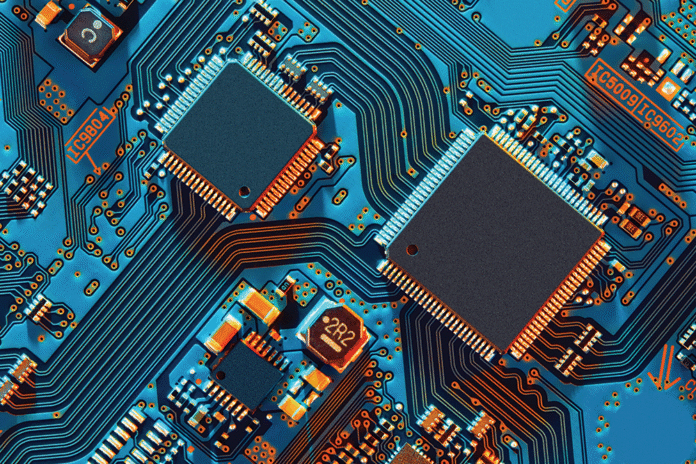
For India, the India Semiconductor Mission represents a critical step towards establishing domestic manufacturing and design capabilities. Yet to compete effectively, India must cultivate a full ecosystem encompassing research institutions, fabrication facilities, supply chains, and skilled talent.
India’s economic trajectory suggests it could become the world’s third-largest economy within the next decade. Yet, the nature of that growth will determine whether India becomes merely a large market or a true technological and industrial power
Here, a blended strategy becomes essential: competing head-on in established semiconductor manufacturing while leapfrogging into emerging domains such as AI accelerators, chiplet architectures, and specialised processors optimised for edge computing.
Strategic Autonomy and Global Power: Indigenous Jet Engines, Space, and Nuclear Technologies
Strategic autonomy in defence and energy technologies remains one of India’s most enduring challenges. Indigenous jet engine development illustrates both the complexity of such efforts and their importance for national security.
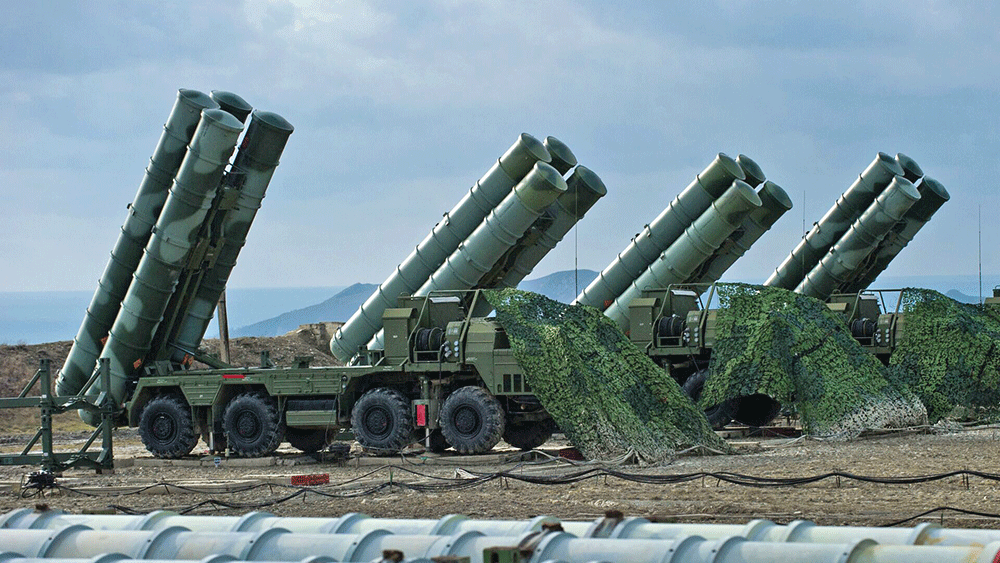
Historical precedents show that aerospace engine development requires sustained national commitment. The United States achieved global leadership through decades of government-funded research and defence procurement supporting firms like General Electric and Pratt & Whitney. China invested heavily in its domestic engine programmes for decades before achieving significant breakthroughs in military aviation propulsion.
India’s GTRE Kaveri engine programme, despite delays, represents a critical step towards reducing dependence on imported propulsion technologies. Mission-mode investments and international co-development partnerships could accelerate progress, particularly if combined with institutional reforms that encourage risk-taking and long-term experimentation.
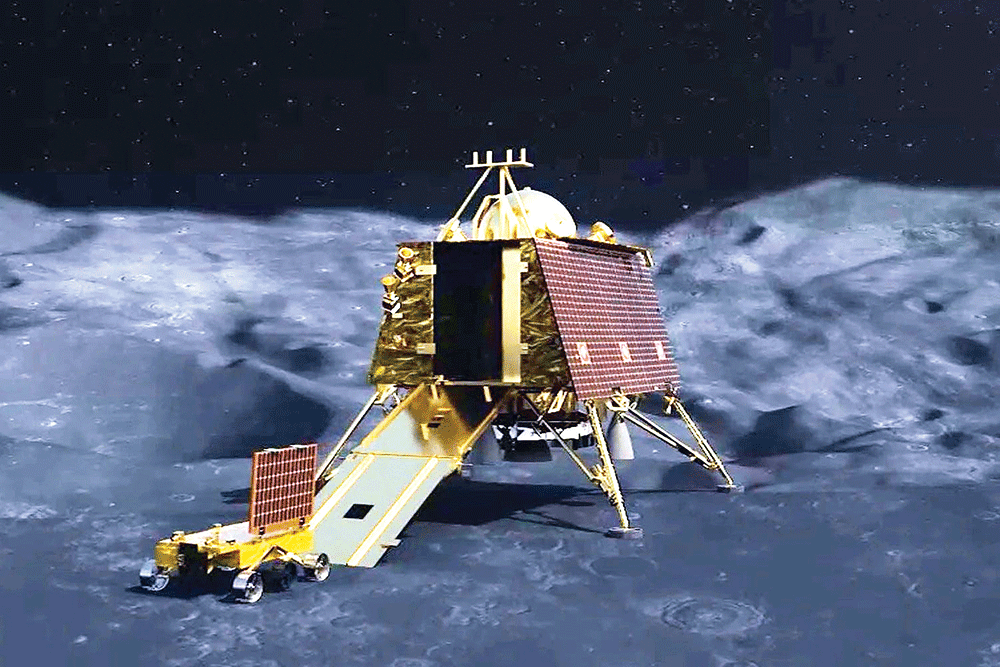
India’s space programme provides a powerful demonstration of what mission-mode thinking can achieve. The steady progression from satellite launches to lunar exploration reflects a builder-oriented approach similar to the early decades of the US space programme.
Looking ahead, India’s ambitions — including human spaceflight missions, an indigenous space station, and expanded deep-space exploration — could position the country as a major player in the global space economy.
 Nuclear energy development offers another long-term strategic opportunity. India’s thorium-based nuclear programme, unique in its design, reflects decades of scientific planning aimed at achieving energy independence. While the 500 MW Prototype Fast Breeder Reactor (PFBR) is set for 2026 operations using plutonium, the final stage aims for thorium-based reactors, including the Advanced Heavy Water Reactor. If successfully scaled, this programme could provide a stable low-carbon energy foundation for India’s industrial expansion.
Meanwhile, China has achieved significant breakthroughs in thorium-based molten salt reactor (TMSR) technology, becoming the first country to operate such a reactor, the TMSR-LF1, in the Gobi Desert. In 2025, China achieved 100% operational capacity and successfully converted thorium into uranium-233, demonstrating a sustainable closed fuel cycle that allows online refuelling without shutdowns.
Enhanced Economic Power: Strategies and Projections
India’s economic trajectory suggests it could become the world’s third-largest economy within the next decade. Yet the nature of that growth will determine whether India becomes merely a large market or a true technological and industrial power.
Countries that successfully transitioned into advanced economies often prioritised strategic manufacturing capabilities and export competitiveness. South Korea’s industrial rise was built on electronics, automobiles, and shipbuilding — industries that required long-term investments before yielding global profits.

China followed a similar path by developing large-scale manufacturing ecosystems and gradually moving up the technological value chain.
For India, programmes such as infrastructure expansion, production-linked incentives, and digital public infrastructure provide a strong foundation. However, the next phase must focus on building globally competitive industrial ecosystems in emerging technologies.
Historical experience from South Korea, China, and the United States demonstrates that sustained technological leadership emerges from coordinated state support, patient capital, and institutional commitment to ambitious national missions
A builder-oriented economic strategy emphasises not just GDP growth but the creation of durable technological capabilities. Combining direct competition in established sectors with leapfrogging opportunities in green energy, advanced manufacturing, and digital technologies will allow India to shape the next wave of global innovation.
Conclusion: Shift Towards Long-Term Strategic Building
India’s Mission Mode Decade offers a transformative opportunity to secure its future amid global technological and geopolitical competition. Achieving this transformation requires more than policy adjustments — it demands a shift in the national mindset towards long-term strategic building.

Historical experience from South Korea, China, and the United States demonstrates that sustained technological leadership emerges from coordinated state support, patient capital, and institutional commitment to ambitious national missions.
India’s strategic doctrine for the coming decade should therefore integrate two complementary approaches: competing head-on with established powers in critical sectors while simultaneously preparing to leapfrog into emerging technological frontiers.
By embracing this builder-oriented vision and sustaining mission-mode investments across political cycles, India can lay the foundations for realising the vision of Viksit Bharat by 2047 and emerge as a decisive force in shaping the global technological and geopolitical order.

–The writer is a globally cited defence analyst based in New Zealand. The views expressed are of the writer and do not necessarily reflect the views of Raksha Anirveda





