

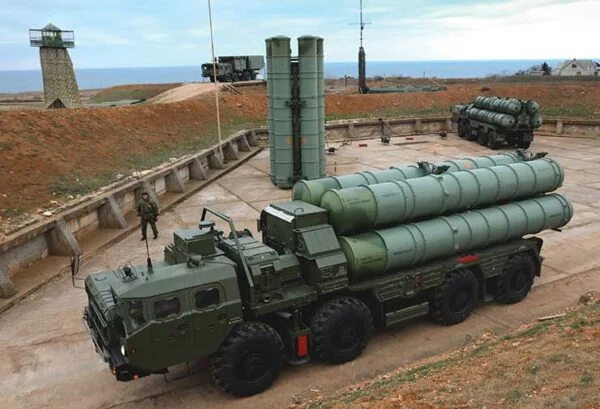
New Delhi: India and Russia are currently engaged in high-level negotiations to expedite the delivery of the remaining two units of the S-400 Triumf surface-to-air missile system, a critical component in bolstering India’s multi-layered air defence shield.
The discussions come in the wake of the S-400’s proven battlefield utility during its operational debut against Pakistan earlier this year, where the system was credited with establishing an impenetrable aerial shield under “Operation Sindoor.”

According to sources familiar with the matter, Russia is expected to deliver the fourth unit by 2026 and the fifth by 2027, marking the completion of the original 2018 order for five regiments of the system, which was valued at approximately ₹39,000 crore.
The delay in deliveries, attributed to logistical challenges and Russia’s own military requirements during ongoing conflicts, has been a recurring theme raised by New Delhi, particularly during Defence Minister Rajnath Singh’s visit to Moscow in 2024 and subsequent bilateral defence dialogues.
So far, India has received and deployed three S-400 units, strategically positioned at Adampur in Punjab to counter threats from Pakistan, as well as in the Eastern and Western sectors to monitor China’s growing aerial and missile capabilities.
Each regiment of the S-400 system comes equipped with eight launch vehicles carrying four missile tubes each, supported by sophisticated radar and command modules.

The system’s ability to detect enemy activity up to 600 km away, track more than 100 incoming targets simultaneously, and neutralise threats as far as 400 km—including bombers, fighter aircraft, drones, ballistic missiles, and airborne radars—has made it a force multiplier for India’s air defence network.
Senior military leaders, including Air Chief Marshal AP Singh, have publicly described the S-400 as a “game-changer,” particularly after Pakistan failed to penetrate its defensive coverage during recent hostilities when it launched multiple retaliatory projectiles following India’s counterterrorism strikes. The strategic deterrence offered by the system is widely recognised as having altered the aerial security dynamics in South Asia.

Beyond the pending deliveries, India is also planning to expand its procurement of the S-400 system as part of a broader initiative to establish a comprehensive indigenous air defence framework under the “Sudarshan Chakra” project.
Highlighted by Prime Minister Narendra Modi in his Independence Day address, this ambitious project envisions a multilayered national defence architecture integrating state-of-the-art surveillance, advanced missile interception, and cyber capabilities to create an aerial “protective dome,” conceptually similar to Israel’s Iron Dome but broader in scope and scale.
The integration of additional S-400 regiments into this framework is expected to be a backbone of the project, complementing indigenous missile defences like the Akash and the ongoing Ballistic Missile Defence (BMD) program.
Russia has indicated readiness for closer cooperation in this domain, with Dmitry Shugayev, head of Russia’s Federal Service for Military-Technical Cooperation, confirming that negotiations for fresh orders are now underway and additional deliveries are a real possibility.
The continued defence collaboration between New Delhi and Moscow underscores the resilience of the India-Russia strategic partnership despite global geopolitical turbulence.
The issue of S-400 deliveries has become not just a defence procurement matter but also an indicator of the broader bilateral relationship, which was on full display during the Shanghai Cooperation Organisation (SCO) summit in Tianjin.
Both nations showcased strong camaraderie, with Russia openly appreciating India’s independent foreign policy decisions, including its refusal to halt oil imports from Russia despite US and Western pressure. This strategic balancing has enabled India to secure vital defence supplies while maintaining its sovereign autonomy in global affairs.
The successful integration of the S-400 into India’s defence ecosystem and its track record in actual combat situations mark a turning point in the country’s aerial shield capabilities.
Once the remaining units are delivered and new acquisitions are finalised, India will have one of the most formidable multi-layered air defence networks in the region, significantly enhancing its deterrence posture against both Pakistan and China.
Going forward, the convergence of Russian hardware and India’s indigenous innovations under the Sudarshan Chakra framework is expected to define the next era of India’s defence preparedness, ensuring strategic stability and a robust deterrent against evolving aerial and missile threats.

