New Delhi: In a move to speed up defence deals with countries, the government has done away with offsets for government to government defence deals as the policy has failed to bring critical technology into the country and has resulted in loading extra costs on contracts, an official said.
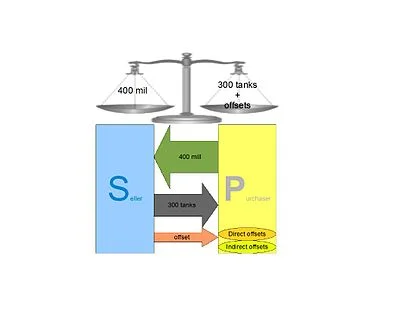
The new Defence Acquisition Procedure (DAP), cleared by the Ministry of Defence (MoD) on September 28, has done away with the need of foreign companies investing at least 30 per cent of the contract value in the Indian manufacturing sector if the deal is being processed under the government to government or single vendor case.

Officials said that this could result in savings as anecdotal evidence suggests that foreign companies increase the contract price by eight to ten per cent to cater for the offsets clause. However, competitive multi vendor procurement cases will still have the offsets clause.
“No offset has led to a transfer of technology, most have to do with product purchase as has been brought out in a recent Comptroller and Auditor General report,” Director General (Acquisition) Apurva Chandra said.
The official was speaking on aspects of the new DAP, in which significant changes have been done with the creation of new procurement categories to promote Make in India. A recent CAG report has been critical of the offset policy, saying that it has failed to bring in cutting edge technology, pointing to the Rafale fighter jet deal, where discussions on engine technology sharing have been on.
The Rafale deal had faced controversy over the selection of offset partners by the French side, after the opposition alleged favouritism towards Reliance Defence that is executing part of the US$3.5 billion worth of offsets.

Officials pointed out that major Russian contracts under the government to government route did not involve offsets and said that the quantum of offsets is likely to significantly reduce in the coming years. This reduction is expected to happen in tandem with an increasing proportion of procurement done under the Make in India route.
Among other changes, the armed forces will now be allowed to take a variety of equipment on lease, cutting down acquisition time as well as costs. The armed forces can lease any equipment like transport aircraft, trainers or simulators. Given the inadequate budgetary allocations, the option will come in handy for the forces to obtain equipment at short notice.

The defence ministry has also clarified in the new DAP that only companies that have more than 50 per cent Indian ownership will be allowed to participate in key Make in India categories of procurement. This includes the Strategic Partnership policy, Make I and 2 and Indian Designed Developed and Manufactured (IDDM) categories.