


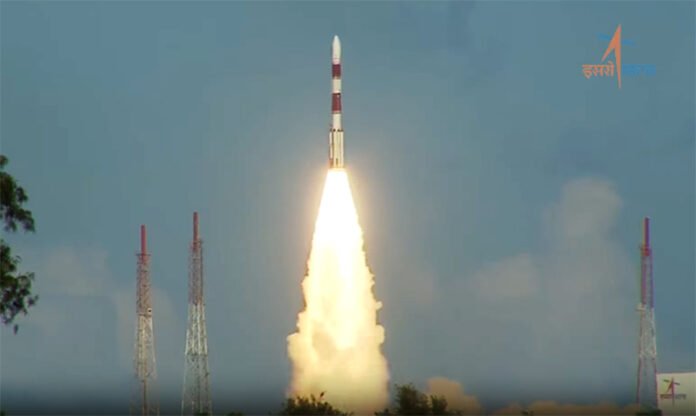
New Delhi: The Indian Space Research Organisation (ISRO) successfully launched the European Space Agency’s (ESA) Proba-3 mission on December 5, at 4:04 PM IST from the Satish Dhawan Space Centre in Sriharikota, Andhra Pradesh. This mission marks a significant collaboration between ISRO and ESA, emphasising international cooperation in space exploration.
The Proba-3 mission aims to study the Sun’s corona, its outermost layer, which can reach temperatures of up to 2 million degrees Fahrenheit. Understanding the corona is crucial for predicting space weather events that can affect satellite operations and power grids on Earth.

The mission consists of two satellites: Coronagraph Satellite (CSC): Weighing 340 kg, it will observe the corona and Occulter Satellite (OSC): Weighing 200 kg, it will block the Sun’s bright disk to facilitate observations of the Corona.
Proba-3 is notable for its use of precision formation flying technology, where the two satellites will maintain a fixed distance of 150 metres apart. This configuration allows the OSC to create an artificial solar eclipse, enabling the CSC to observe the faint corona in unprecedented detail. This setup provides scientists with up to six hours of continuous observation, equivalent to experiencing about 50 natural solar eclipses annually.
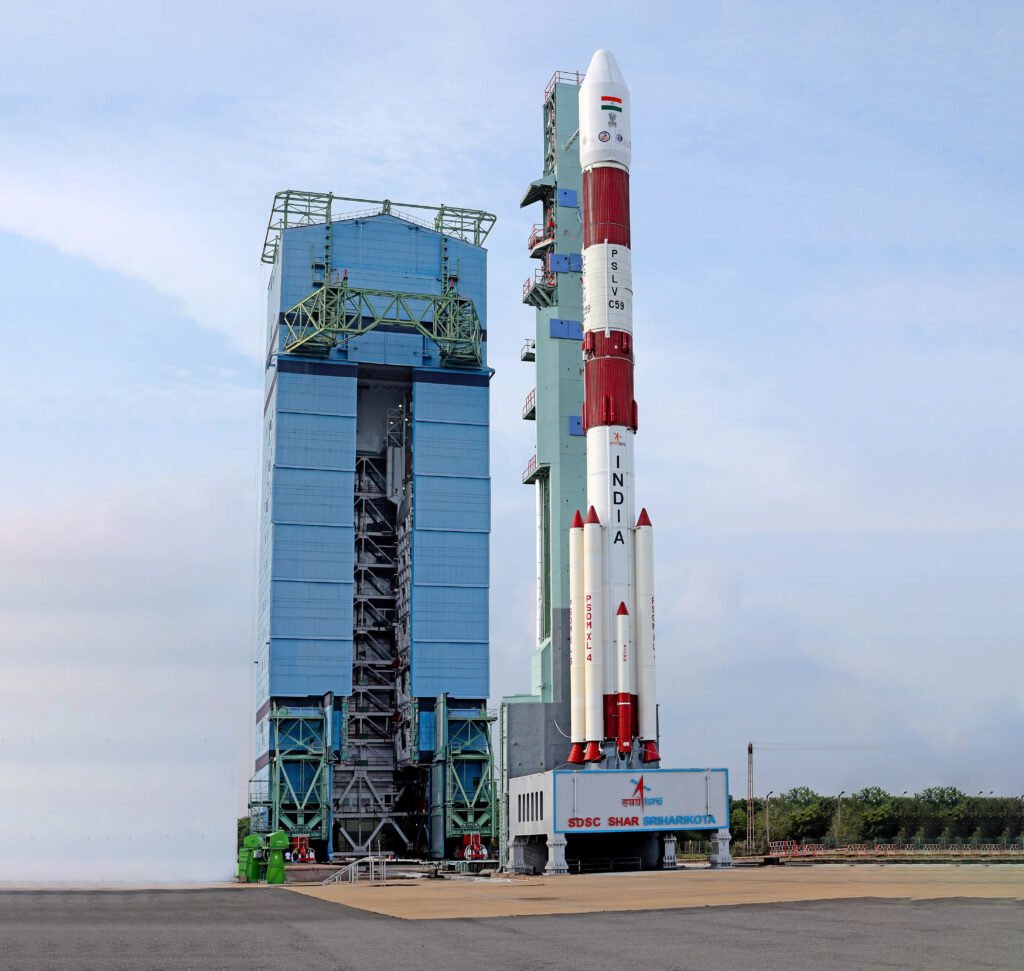
This launch not only enhances our understanding of solar phenomena but also demonstrates ISRO’s capabilities as a reliable launch provider for international missions. The Proba-3 mission complements India’s own solar observation initiative, Aditya-L1, which was launched in September 2023, further solidifying India’s role in global solar research and exploration.

The successful deployment of Proba-3 represents a critical advancement in space technology and a testament to the growing collaboration between ISRO and ESA, highlighting the importance of international partnerships in advancing scientific knowledge and technological capabilities in space exploration.

Raksha Anirveda's editorial desk team brings in the collective experience of creative professionals - a fine mix of senior copy editors, writers, proofreaders and designers. Working as a team, they continuously create, manage, and curate content to sustain the magazine's profile and reputation in line with market trends and achieve magazine's goal.






