New Delhi: With increasing demand for use of electronics in modern warfare, Electronic Warfare (EW) systems have demanding requirements for the use of Armed Forces on land, air, sea and space. Threats are becoming more and more agile and moving higher in the spectrum, thereby especially putting stringent design criticalities on various technologies for EW systems.
Defence Electronics Research Laboratory (DLRL), Hyderabad is now working to meet the requirements of EW systems of Indian Armed Forces. The laboratory has designed, developed, and produced a large number of ruggedized systems meeting the state-of-the-art requirements of Army, Navy and Air Force in a dynamically changing operational scenario.

The EW system configuration comprises of antenna, microwave frontend modules followed by digital signal processing hardware, software, and man-machine interface modules.
The laboratory developed the expertise in design and development of each of these functional technologies and also subsequently integrating them towards rugged field deployable systems for user exploitation and induction into the Services.
Over five decades, DLRL has developed the expertise and technical competence towards custom indigenous design, development, and production of critical MW technology modules over multi-octave bandwidths meeting the requirements of the Services. Towards this wide range of MW technologies ranging from components, RF frontend modules and multi-channel receiver modules were successfully realised, productionised, field installed, and being exploited by the tri-services. State-of-the-art technologies like LTCC modules, multi-chip modules, T/R modules, core-chip, T/R chips and phased-array systems are also being developed and proposed to configure future systems with enhanced performance features.
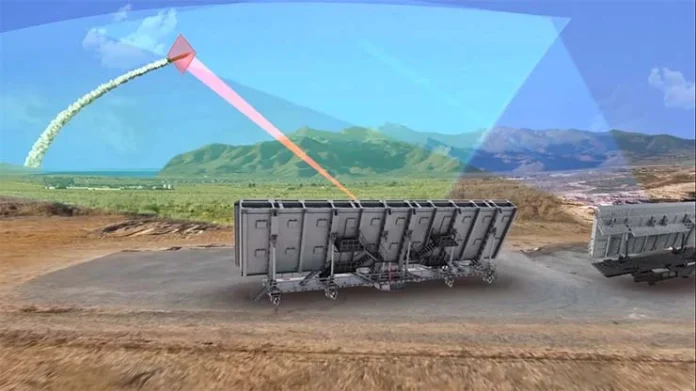
High Effective Radiated Power (ERP), fast reaction times, High DF accuracies and ability to handle multiple threats are the essential requirements of present day jammer systems. Conventional jammers using TWTs as transmitters along with high gain antenna are mounted on a servo pedestal to achieve wide angular coverage. State-of-the-art next generation EW systems are configured with an active electronic scanned planar antenna array where, each element of the antenna is driven with a low power solid-state amplifier and the phase and amplitude of each element is controlled to form a single sum beam of narrow beam-width, with high gain using spatial combination technique. The active electronic planar antenna array facilitates to form the beam that can steer both in azimuth and elevation planes.

As a technology development, wideband T/R module-based 12X16 active array covering 5-18 GHz is being developed in DLRL. The approach is based on individual MMIC chips, TR, and CORE chips for 28 dBm, 2 w and 4 w respectively. The individual T/R modules are tested and iterations are in progress. Complete AESA system modules comprising of antenna array, plank controller, quadrant RF module, power supply, and other electronics for integration are in advanced stage of development and testing.