

New Delhi: The Defence Acquisition Council (DAC), chaired by Defence Minister Rajnath Singh, is scheduled to convene on July 1, 2025, to review two major defence procurement proposals crucial for bolstering India’s maritime and air defence capabilities.
The first proposal, valued at approximately ₹44,000 crore, seeks approval for the indigenous construction of 12 advanced Mine Countermeasure Vessels (MCMVs) for the Indian Navy.

This initiative comes amid escalating threats from Chinese and Pakistani submarines, both of which have the capability to clandestinely lay underwater mines in the Indian Ocean Region, posing significant risks to India’s harbours, ports, and commercial shipping lanes.
The MCMVs are designed to detect, track, and neutralise underwater mines, a critical requirement given that the Indian Navy currently lacks any operational minesweepers after the retirement of its previous Karwar-class and Pondicherry-class vessels.
The new vessels will feature advanced technologies, including high-definition sonar, acoustic and magnetic sweeps, and unmanned underwater vehicles for safe mine disposal. With non-magnetic hulls and modular mine-clearing systems, these ships will be capable of operating stealthily and efficiently in both coastal and deep-sea environments.
The project, aligning with the government’s ‘Aatmanirbhar Bharat’ (Self-Reliant India) initiative, will be executed by Indian shipyards through an open tender process, though it is expected that the first vessel may take at least seven to eight years to be delivered after the contract is signed.

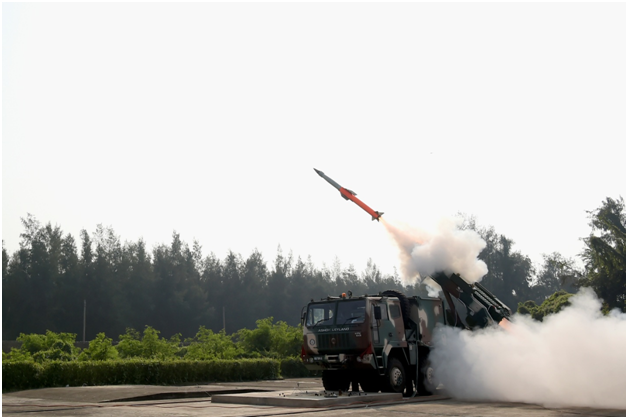
Simultaneously, the DAC will consider a ₹30,000 crore proposal for the acquisition of three regiments of the Quick Reaction Surface-to-Air Missile (QRSAM) system for the Indian Army.
Developed by the Defence Research and Development Organisation (DRDO) in collaboration with Bharat Electronics and Bharat Dynamics, the QRSAM is designed to provide last-layer air defence against aerial threats within a range of 3 to 30 kilometres.

This procurement aims to significantly enhance the Army’s ability to defend critical assets and formations from enemy aircraft, helicopters, and drones. The final decision on the number of regiments to be acquired is pending, but the deal represents a major step in scaling up indigenous air defence capabilities.
Both proposals underscore India’s urgent need to modernise its defence infrastructure in response to evolving regional security challenges.
The revival of the minesweeper project, in particular, addresses a long-standing capability gap and is expected to play a pivotal role in securing India’s 7,500-kilometre coastline, major ports, and vital maritime trade routes.
The DAC’s decisions on July 1 will mark a significant advancement in India’s pursuit of self-reliance and operational readiness in both naval and land-based defence domains.

