


Diplomacy is like an art. It involves the process of negotiation with different parties with the aim of getting the best for a particular country. The nature of diplomacy has evolved with the changing nature of the nation-state system. There are multiple dimensions of diplomacy, out of which the most important, perhaps is economic or trade diplomacy.
India is no different, her diplomatic priorities and goals in the economic realm has changed over the years keeping in mind the changing circumstances. However, its real evolution took place in the post 1991 economic liberalisation period. However, Indian trade diplomacy has undergone a remarkable change under the present dispensation.

The most interesting part of the trade diplomacy in the Modi-era in the post-Covid period is to reduce the reliance on Chinese imports. Keeping this in mind, it has become necessary to articulate its nature.
A missed opportunity
The era of Washington consensus in the 1990s was a period of opening up. It meant liberalisation of global trade. Further, opening up of domestic markets was an essential prerequisite of such ‘opening-up’. However, the process of liberalisation was to be regulated by a benign global leviathan. In this context, it was the World Trade Organisation.
Indian diplomatic priorities and goals in the economic realm have changed over the years keeping in mind the changing circumstances
The WTO was formed in 1995, succeeding GATT or General Agreement on Tariffs and Trade. The WTO was mandated to ensure that global markets remained open and that countries would engage in global trade in an orderly manner.
Any dispute would be referred to the Dispute Settlement Mechanism whereby the WTO would resolve the matter.

Despite strong hopes and high confidence in the ability of the WTO in ensuring equity in global markets, it turned out to be a disappointment.
Joseph Stiglitz, former Chief Economist of World Bank in his book Globalisation & Its Discontents argued that the WTO has proven to be a failure in protecting the interests of the countries of the Global South from the assertive claims of the Global North.

Countries like India, South Africa etc., therefore have taken recourse to other means of meeting their strategic trade interests.
FTA diplomacy
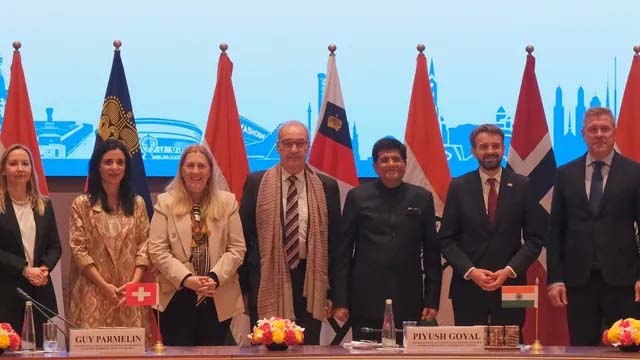
FTA or Free Trade Agreement diplomacy is a new form of diplomacy the Modi government has embarked upon.
Recently the Modi government has signed the EFTA or European Free Trade Agreement with four countries – Iceland, Norway, Switzerland and Liechtenstein. The agreement will see these four countries investing $100 billion in India over the next 15 years, generating close to a million jobs across sectors like pharmaceuticals, chemicals, information technology, artificial intelligence etc.
The EFTA will see these four countries investing $100 billion in India over the next 15 years, generating close to a million jobs across sectors like pharmaceuticals, chemicals, information technology, artificial intelligence etc
Despite FTA diplomacy not being new, the thrust the Modi government is giving it is something new. The EFTA is not new, India has also negotiated FTAs with Australia and UAE, earlier.
More FTAs are being negotiated with the UK and the European Union. Once implemented, the UK-India FTA will be the first such free trade agreement that India will successfully implement with a major power in the West.
The EFTA is meant to reduce India’s trade deficit with major European nations, all of which have a healthy trade relations with India. However, China is the main reason why India has invested so much diplomatic capital in the EFTA.
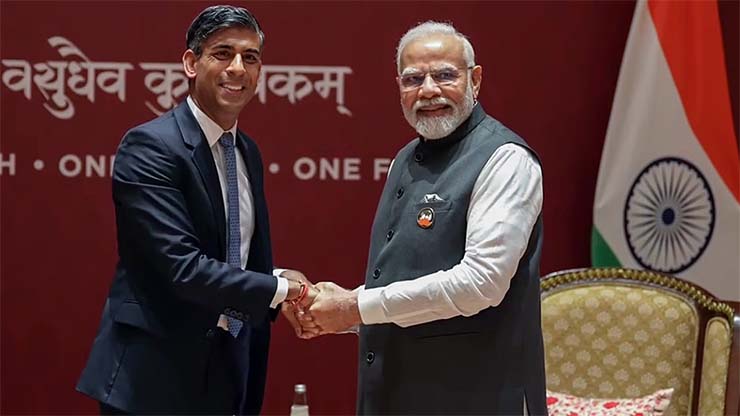
China is the second largest trade partner of India with bilateral trade well over $100 billion. However, India has a massive trade deficit with China. What makes this more concerning is that India imports close to 70% of its pharma components and raw materials from China.
With the Covid-19 pandemic exposing the fragility of the supply chains emanating from China, New Delhi and the West have begun reducing their dependence on China. The EFTA is the latest example of such an exercise.
More FTAs are being negotiated with the UK and the European Union. Once implemented, the UK-India FTA will be the first such free trade agreement that India will successfully implement with a major power in the West
A stumbling bloc which may act as an obstruction in the future FTA negotiations is the hefty tariffs New Delhi imposes on various sectors in order to protect its domestic industries. Indian diplomacy should be mindful of the concerns of its foreign partners when it comes to market accessibility and tariffs and proceed accordingly.
It, however, is very clear that Indian trade diplomacy is changing the style of economic bargaining and is expected to drive more such transformational changes in the foreseeable future.
–The writer is currently working as a Research Associate at Defence Research and Studies (dras.in) and is a columnist. The views expressed are personal and do not necessarily reflect the views of Raksha Anirveda

–The writer is currently working as a Research Associate at Defence Research and Studies (dras.in) and is a columnist. The views expressed are personal and do not necessarily reflect the views of Raksha Anirveda
