

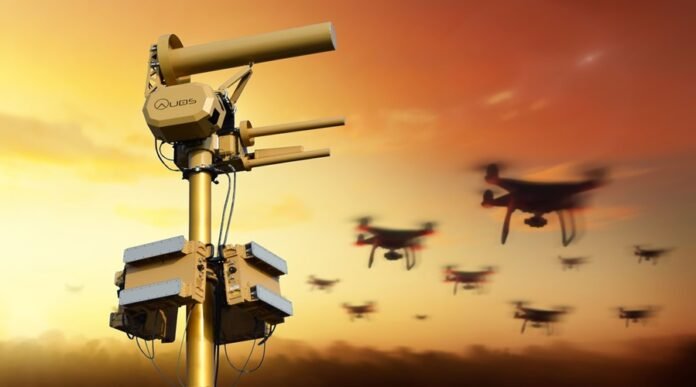
The drone attacks by Iran on neighbouring Gulf countries continues relentlessly. A report by Times of India dated March 16, 2026, indicates that a drone attack led to an outbreak of fire at Dubai airport leading to temporary halt in Emirates airline operations.
In the last two weeks, Iran has ensured that Gulf countries bear the brunt of its attacks for perceivably siding with United States and Israel in the ongoing war. Iran’s choice of selecting targets for its drone attacks are deliberate and driven with the intent to restrict the flow of energy emanating from the region, stirring a global economic crisis, and intimidate the local population and security forces.

With the recent usage of First Person View drones by Iranian supported terrorist groups, as reported in Times of India on March 15, 2026, the nature of drone warfare is expected to get even more uglier as these systems are relatively smaller in size, difficult to detect and take their own aim to ram into their targets.
In the post-conflict scenario, there is bound to be a huge demand emanating from Gulf countries to replenish their dwindling anti-drone inventories and evaluate new systems on a war footing
While the combined resources of the United States, Gulf countries and Israel have managed to insulate the levels of damage to some extent, however an objective post-conflict analysis is bound to show up significant areas for improvements in both operational effectiveness of the existing anti drone systems and the entire cycle of anti-drone kill chain.
In the post-conflict scenario, there is bound to be a huge demand emanating from Gulf countries to replenish their dwindling anti-drone inventories and evaluate new systems on a war footing. This becomes particularly important for these countries considering continued prevalence of regional diplomatic tensions, deep-rooted differences and presence of several disruptive proxies.
Amidst global calls for energy diversification away from the region in view of this conflict, it becomes imperative for the Gulf countries to reassure its large customer base, energy partners and people in general about responsible steps it would be taking to ensure security robustness of its vast energy assets.

Indian companies can add significant value in strengthening the anti-drone ecosystem in the Gulf region. Real contribution will not be just in deploying anti-drone systems, but in analysing the vast pool of data generated, performance review of deployed systems, and lessons drawn.
Indian companies can add significant value in strengthening the anti-drone ecosystem in the Gulf region
Consulting firms will have a particularly critical role to play in terms of providing counsel to governments, cities, owners of important installations, energy assets, port operators, business sites etc. across the Gulf region on revisiting and revamping their anti-drone capabilities.

Since the last few years, Indian defence laboratories, startups, and large companies have been directing their efforts in developing anti-drone systems. A FICCI-EY report estimates counter-drone systems manufacturing potential to reach Rs. 49,000 crores by 2030.
Some Indian companies have tied up with foreign OEMs to develop anti-drone solutions, and some have entered into partnerships with Indian defence labs for transfer of technology. India has a talent pool well conversant in air defence operations, resources to support large scale anti-drone systems manufacturing, engineering capabilities, and institutional mechanisms for defence partnerships with foreign partners and proximity to potential markets.
Anti-drone solution companies from Europe, North America and Israel will have a natural advantage in entering this space by leveraging their decades old relationships and familiarity with operational intricacies of the region
However, it is easier said than done. Anti-drone solution companies from Europe, North America and Israel will have a natural advantage in entering this space by leveraging their decades old relationships and familiarity with operational intricacies of the region.
For instance, a BBC report by James Landale few days back clearly indicates Ukraine’s keenness to assist Gulf countries in mitigating drone threats emanating from Iran. Therefore, Indian anti-drone companies have a hard task ahead in terms of communicating its strengths, and proactively reaching out to potential customers once the conflict is over and showcasing the value addition it can make to strengthen the evolving security ecosystem in the Gulf region.

Dr Sanket Kulkarni is a Defence Analyst and comments on Drone warfare, Defence & Aerospace manufacturing strategy and Geopolitics. The views expressed are of the writer and do not necessarily reflect the views of Raksha Anirveda
