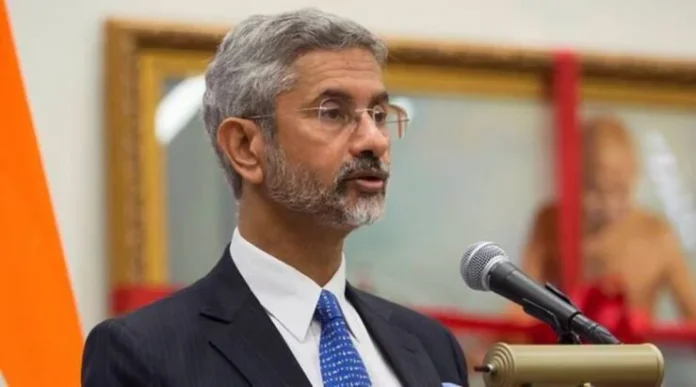
New York: With China rapidly constructing warships and emerging as the number one in Naval strength, External Affairs Minister S Jaishankar raised concern over the “steady increase in Chinese naval presence” in the Indian Ocean and called “to prepare for a far greater presence of Beijing than seen ever before.”
Speaking at the ‘Discussion at Council on Foreign Relations’ in New York, Jaishankar said, “Last 20 -25 years, there has been a steady increase in the Chinese naval presence and activity in the Indian Ocean, but there has been a very sharp increase in the size of Chinese navy. When you have a very much bigger navy, that navy is going to be visible in terms of its deployment somewhere.”

Jaishankar said that New Delhi does watch these developments “very carefully” for any security implications. “In our own case, we have seen Chinese port activity, and buildings, you mentioned Gwadar, there is a port called Hambantota in Sri Lanka. There are a few others. In many cases, I would say looking back, the governments of the day, and the policymakers of the day perhaps underestimated the importance of this and how these ports could work in the future. Each one is quite unique in a way,” Jaishankar said.
“We obviously do watch many of them very carefully for any security implications…From an Indian point of view, it’s very reasonable for us to prepare for a far greater Chinese presence than we have seen before,” he said.
China has significantly expanded its engagements in the Indian Ocean region over the past three decades, raising fears among American and Indian strategists about its growing naval presence, together with its use of so-called “debt-trap diplomacy,” might provide it with meaningful military advantages far from its shores. Although China’s ultimate aims in the Indian Ocean remain somewhat ambiguous, it is clear that the Chinese leadership is actively pursuing capabilities that would allow it to undertake a range of military missions in the region.
Jaishankar also said that today India is one of the few countries that has the ability to bridge the sharp East-West polarisation and North-South divide.

“One of the contradictions and it was very visible at the G20. You have a much sharper East-West polarisation, whose immediate, but not only cause is the conflict in Ukraine. You have particularly because of Covid, but not only because of Covid, a very deep North-South divide. And I would say we are one of the few countries, who have the ability to actually bridge both these issues,” he said.