
New Delhi: The government intends speeding up indigenous early warning aircraft being impressed by the performance of home-developed early warning aircraft during the Balakot air strikes earlier this year.

The acquisition of two larger platforms will give wider radar and surveillance coverage and ‘eye in the sky’ project — an aircraft-mounted radar that can look deep into enemy territory and direct combat assets for a strike — will get a boost.
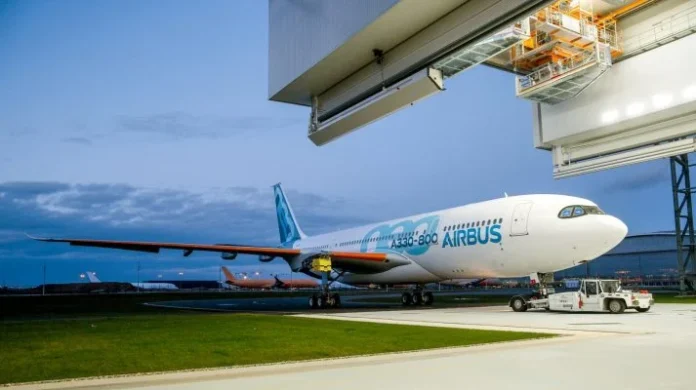
The two Airbus A330 platforms to be acquired next week will be modified by the Defence Research and Development Organisation (DRDO).
India currently operates the domestically developed ‘Netra’ airborne early warning and control aircraft, two of which were used during the Balakot strikes. The Netra aircraft were used to safely guide Mirage 2000 fighter jets into Pakistani airspace to drop smart bombs that targeted the terror training camp at Balakot.
However, subsequent operations and the stand-off with Pakistan that lasted several weeks brought out the severe shortage of such aerial platforms that can be used to detect incoming enemy aircraft from well within Indian airspace. India currently operates two of the Netra aircraft and three IL76 ‘Phalcon’ systems that were jointly developed with Israel and Russia.

Officials said the air force has been unimpressed with the loitering time of the Phalcons. Though the aircraft have a wider range of coverage than the Netra, it is unable to stay airborne long enough to meet operational requirements.
Pakistan has six of the Saab 2000 early warning aircraft that were extensively used in the February 27 aerial battle to direct and control 25 fighter jets toward Indian targets. The active participation of these aircraft in the air skirmish gave Pakistan an extensive view of the battlefield and Indian air deployment that enabled it to direct fighters to the target zone. Indian early warning aircraft were outnumbered by the Pakistani air force.

The strategic programme to develop next-generation airborne warning and control systems (AWACS) that will act as a major force multiplier for the air force was cleared in 2015 for an estimated cost of Rs 5,200 crore but orders have not yet been placed for the platform.
DRDO will oversee structural modifications and adaptations for a 10m rotodome that will be mounted on the aircraft. The system will have an electronically scanned array radar that will give 360 degree radar coverage. The air force estimates that the two indigenous AWACS will be inducted into service by 2025 and will be a major force multiplier over the coming years.