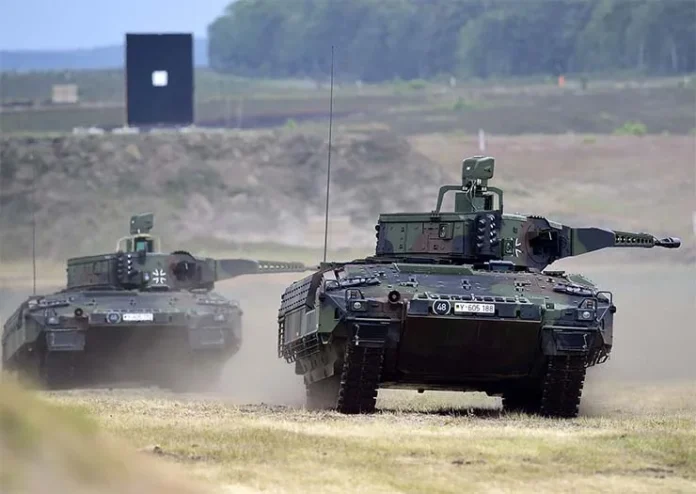
Washington: German lawmakers have approved a Defence Ministry request to order 50 Puma infantry fighting vehicles for more than $1 billion, buying into the government’s proposition that the purchase bears risks but is necessary to fulfil NATO obligations by 2027.
Parliamentarian appropriators voted in favour of the request during a May 10 meeting, two days before an offer by manufacturers Rheinmetall and Krauss-Maffei Wegmann was set to expire, Defence Minister Boris Pistorius told reporters following the panel’s session.

The total financial commitment is €1.5 billion (US $1.6 billion), according to German media. That amount includes spares and $140 million for an anticipated price increase because the vendors’ original offer hails from December 2021, media reports said. The Bundestag’s approval also entails an option for another tranche of 179 vehicles to the tune of €4.8 billion, the reports said.
After quickly ordering the newly authorised 50 vehicles, defence leaders now hope to move forward on that second option later this year, Pistorius said. The Bundeswehr already has about 350 Pumas, designed as the centre piece vehicle for the service’s mechanised forces as the 50-year-old Marder fleet ages out.
Pistorius described the newer vehicle as a “quantum leap” over the older weapon system, as it provides better protection, lethality and mobility. Germany is on the hook to contribute five battalions’ worth of forces available for NATO’s force pool by 2027, he said in Berlin, which means time is of the essence in ordering new ones. At the same time, the modern infantry fighting vehicle has a history of wobbly performance that officials thought they had overcome until all 18 vehicles involved in an exercise broke down late last year. Defence officials have since blamed most of the failures on training and handling, siding with the Army’s push to stick with the vehicle.
“We have a requirement for the Puma, especially given the new security situation,” Pistorius said, referring to Russia’s invasion of Ukraine, which prompted European governments to beef up their defensive postures. He acknowledged that “risks” remain in the program, describing the appropriators’ funding approval as a “trust advance” granted to the Defence Ministry and the vendors.

The Germany Finance Ministry flagged risks in a letter to lawmakers this week, proposing to wait on new purchases until the first vehicles from an upgrade wave check out as acceptable when they roll off the production line in the fall, media reports said.