

“The real and lasting victories are those of peace, and not of war,” said Ralph Waldo Emerson. The world is currently in a turbulent state grappling with the existential issues of an ever more warming planet, ethnonationalism, sectarianism and war. While Steven Pinker in his book The Better Angels of Our Nature argued that with scientific and economic progress human beings’ propensity to resort to violence has reduced over the centuries but to differ with him, it is ingrained in the nature of Homo Sapiens to be warlike. In this context, it is necessary to debate a critical question of our times – are global institutions that are creations of Homo Sapiens society effective at all in addressing or better dealing with contemporary challenges to peace and security.

To begin with, it is first of all necessary to understand which global institutions are being talked about in this context – the United Nations, the International Court of Justice (ICJ), the International Criminal Court, and the Intergovernmental Panel on Climate Change (IPCC) to name a few. Global institutions whether political or non-political have played a pivotal role in the maintenance of global stability and prosperity over the years, there is not an iota of doubt about that. The United Nations and its organs especially the Security Council, General Assembly, and the Economic and Social Council have played important role in maintaining global peace and security (traditional and non-traditional) for the past seven decades since their inception.
However, the nature of global challenges and issues is such that global institutions are finding it increasingly problematic to deal with them effectively notwithstanding their keenest efforts.
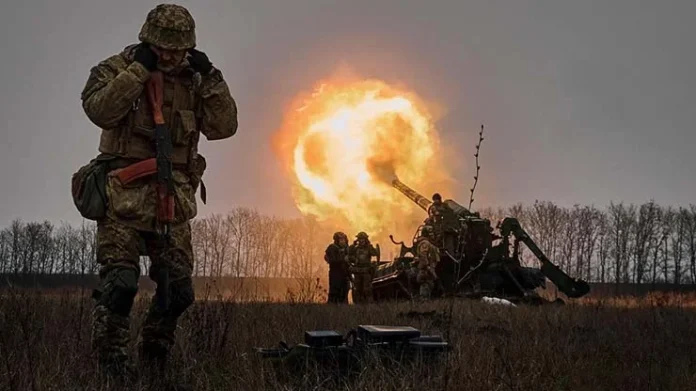
The first issue that automatically comes to mind is the challenge of territorial security of sovereign states which manifests itself in the ongoing Russo-Ukraine war. The United Nations has unfortunately been at best a helpless spectator and continued to see Russia hammer Ukraine, while at the same time, the West under the banner of NATO supplied cutting-edge weapons to Ukraine to defend itself further exacerbating the conflict.
The United Nations hasn’t been able to bring about a permanent ceasefire let alone protect Ukrainian sovereignty. Efforts to hold Russia accountable have been futile as it is a veto-wielding permanent member of the UN Security Council. On top of that the various organs of the UN resolutions against Russian invasion have yielded mixed results with India and China, two of the most populous countries in the world, abstaining or supporting the Russian cause.

The International Criminal Court has issued an arrest warrant against Vladimir Putin for the forcible deportation of children and adults to Russia during the Ukraine conflict. But its enforcement by countries around the world depends on their willingness to comply with the court’s orders which in accordance with International law is the sovereign prerogative of every country.
Apart from the Russo-Ukraine conflict, there are several other intractable problems like the Iranian nuclear issue and North Korean missile testing which have seen the UN equally ineffective in dealing with the problem thanks largely to the vested interests of the great powers involved.

A key aspect of a contemporary challenge to peace and security is the issue of non-traditional security, the most prominent of which is the issue of combating the menace of climate change. In this context, the record has been mixed with some substantial victories and a few dismal failures. The United Nations Framework Convention on Climate Change (UNFCCC), a global framework to combat climate change, has seen some monumental moments in humanity’s fight against this existential menace. The hallmark is the 2015 Paris Accord or COP 21 which is perhaps the most widely accepted treaty, aiming to limit pre-industrial temperature rise to 1.5 C and if necessary to below 2 C.
A recent landmark treaty is the BBNJ (Biodiversity Beyond National Jurisdiction) treaty, also known as the High Seas Treaty. It is aimed at the global conservation and sustainable use of the ‘high seas’ – water bodies that are beyond the maritime jurisdiction of nation-states and are meant for the collective use of humanity.
On the flip side, there have been some disappointing losses such as the ‘phase-down’ instead of ‘phase out’ of carbon emissions outcome of COP 26 or the Glasgow summit held in 2021 and the abysmal progress of the COP 27 summit at Sharm El Sheikh in Egypt.
Conclusion
It is the need of the hour that key global institutions like the United Nations are reformed to ensure a better outcome for all of humanity.
References
https://www.britannica.com/topic/Economic-and-Social-Council
https://www.orfonline.org/research/the-last-crisis-to-break-the-un-camels-back/
https://www.wionews.com/world/explained-uns-role-in-controlling-the-ever-escalating-russia-ukraine-war-565854?gclid=Cj0KCQjwlPWgBhDHARIsAH2xdNcLCOH8O5dBRUHVUM0CyB-P33aU60QWnAJvPcmU1jKmkNEEJHgvCZYaAmPFEALw_wcB
https://www.cnbc.com/2022/04/01/russia-and-the-west-battle-to-get-china-and-india-on-side-in-the-war.html
https://indianexpress.com/article/explained/explained-global/vladimir-putin-arrest-warrant-ukraine-war-crimes-international-criminal-court-8504268/
https://indianexpress.com/article/explained/explained-climate/the-high-seas-treaty-key-provisions-and-the-challenges-it-faces-8513426/
https://indianexpress.com/article/india/phase-down-vs-phase-out-at-cop-bhupender-yadav-stresses-national-circumstances-7638091/
https://www.reuters.com/business/cop/cop27-climate-talks-slow-progress-stokes-worry-over-final-deal-2022-11-13/
–The writer is currently working as a Research Associate at Defence Research and Studies (dras.in) and is a columnist. The views expressed are personal and do not necessarily reflect the views of Raksha Anirveda

–The writer is currently working as a Research Associate at Defence Research and Studies (dras.in) and is a columnist. The views expressed are personal and do not necessarily reflect the views of Raksha Anirveda
