
New Delhi: Today, sustainable and efficient transportation has become a key focus point around the world and a driving force to revolutionise air travel.
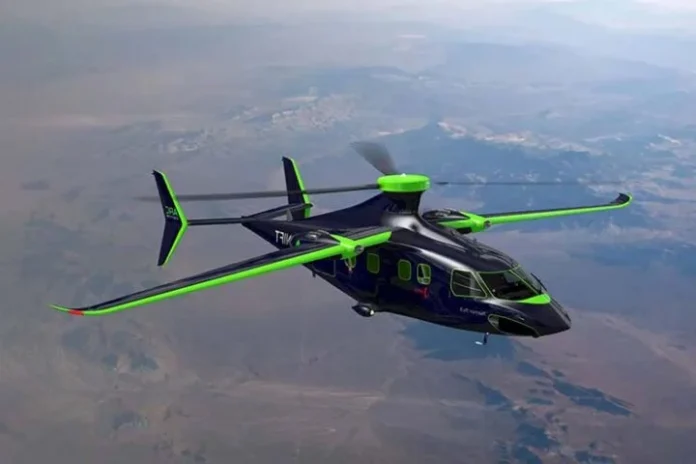
UK based technology startup ARC Aerosystems recently unveiled its sustainable passenger aircraft – ARC Linx P9 at the Air Finance Journal event in Dublin. Designed in-house as a cost-effective, low-carbon solution to intercity travel, Linx P9 is billed as the “world’s most advanced nine-seater aircraft with vertical take-off and landing (VTOL) capability.”

With the flexibility of a helicopter and performance of a fixed-wing utility aircraft, Linx P9 can perform a jump take-off and no-roll landing without the need for a runway. This makes Linx P9 a highly versatile passenger and cargo craft fit for a wide range of applications.
The Linx P9 is a full-composite structure aircraft with two variants of Hybrid Electric and twin turbo-prop power trains, both running on Sustainable Aviation Fuel (SAF) or even hydrogen in the future. It is unpressurized and equipped with the retractable tricycle landing gear.
The Linx P9’s single rotor is essentially un-powered (apart from the electric spin-up motor, used only prior to take-off), and the corrosion-proof composite airframe will be a light and low drag. The aircraft is 11.6 meters (38.1 ft) long and has a wingspan of 12.6 meters (41.3 ft). With a composite airframe, the lightweight vessel will be able to reach a maximum speed of 200 knots (370 km/h) at full tilt or cruise at 162 knots (300 km/h). It can also fly up to 13,000 feet and deliver a 512 nautical miles (950 km) range in a standard configuration or a 702 nm (1,300 km) range with an extended-range tank fitted.
The nine-passenger cabin of Linx P9 roughly doubles the payload of typical leading eVTOL air taxis and also compares well to the similar-sized AW109 helicopter, which carries 6 in the cabin and a 7th sitting next to the pilot. The Linx has a far less complex drivetrain than a helicopter, which will reportedly reduce the overall maintenance costs.

According to the company, its VTOL aircraft offers a 40% more cost-effective alternative to traditional helicopters (based on the DARPA model) and a 30% increased range compared to similar-size helicopters (based on the Roskam method).
Seyed Mohseni, ARC’s CEO said, “It’s a very exciting design concept that is the ultimate solution for the market, that is affordable, safe and practical, whilst providing the right answer to the current environmental concerns.”

Expected to enter the service as soon as 2028, the new ARC Linx P9 can be operated for around $505 per flight hour.