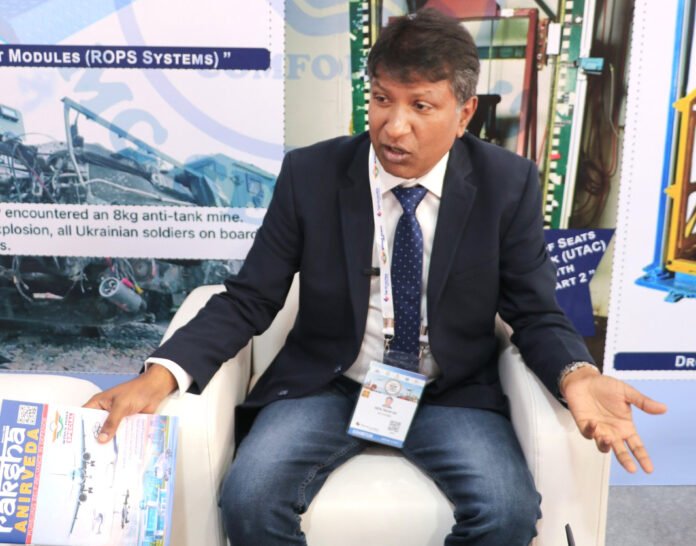
Gopal Prasad Sah, Founder and Managing Director (MD) of MG Seating Private Limited, is a well-recognised name in the mobility and defence manufacturing space. He is an engineering professional with over three decades of global experience, including 25 years in the seating systems space. In his extensive career, Sah has worked across passenger vehicles, commercial mobility, railways, armoured platforms, aerospace, and marine applications.
Over the years, MG Seating has emerged as a key contributor to India’s indigenisation journey, working closely with Original Equipment Manufacturers (OEMs) and defence stakeholders, and signing multiple Memorandums of Understanding (MoUs) across segments to develop indigenous, safety-critical seating solutions for land, air, and marine platforms. MG Seating is committed to Aatmanirbhar Bharat.

In an exclusive interview with Raksha Anirveda Editor Ajit Thakur, Gopal Prasad Sah reflected on MG Seating’s journey so far, the thinking behind its technology focus, and the larger direction of India’s defence manufacturing. Excerpts:
RA. MG Seating has grown across the defence and mobility segments. How would you describe the company’s journey so far?
GPS: My association with seating systems spans nearly two and a half decades. I began my career in the passenger car segment, but over time, I realised that there were far more critical areas beyond passenger vehicles where serious capability gaps existed.
A major turning point came in 2010, after the Sukma blast, where nearly 175 Central Reserve Police Force (CRPF) personnel lost their lives. That incident deeply impacted me and reinforced the belief that engineering must serve a larger national purpose. My father was socially inclined, and that mindset influenced my decision to step away from a stable corporate career and build something meaningful.

Gopal Prasad Sah says, “Our core focus is on blast-protected and energy-absorbing seating systems. Some of our seats can convert an impact of 250g to below 20g, which means a very high survivability in high-impact scenarios”
Before starting MG Seating, I worked with Bharat Seats, Motherson, Krishna Maruti, Magna Seating, and Harita Seating, spending nearly 15–16 years in leadership roles across Design, Research and Development (R&D) and Engineering. Around 10 years ago, we started MG Seating, and April 2026 marks a decade of our journey.
We began with only a few niche products. Today, our greatest satisfaction is that our products are saving lives and minimising injuries. In land mobility, we have developed a strong and diversified product portfolio. We now work with 40+ customers outside India, and our solutions are deployed extensively across domestic platforms as well. Today, MG Seating is a global brand in land mobility.

RA. Could you elaborate on the types of products that MG Seating specialises in, particularly for defence and security applications?
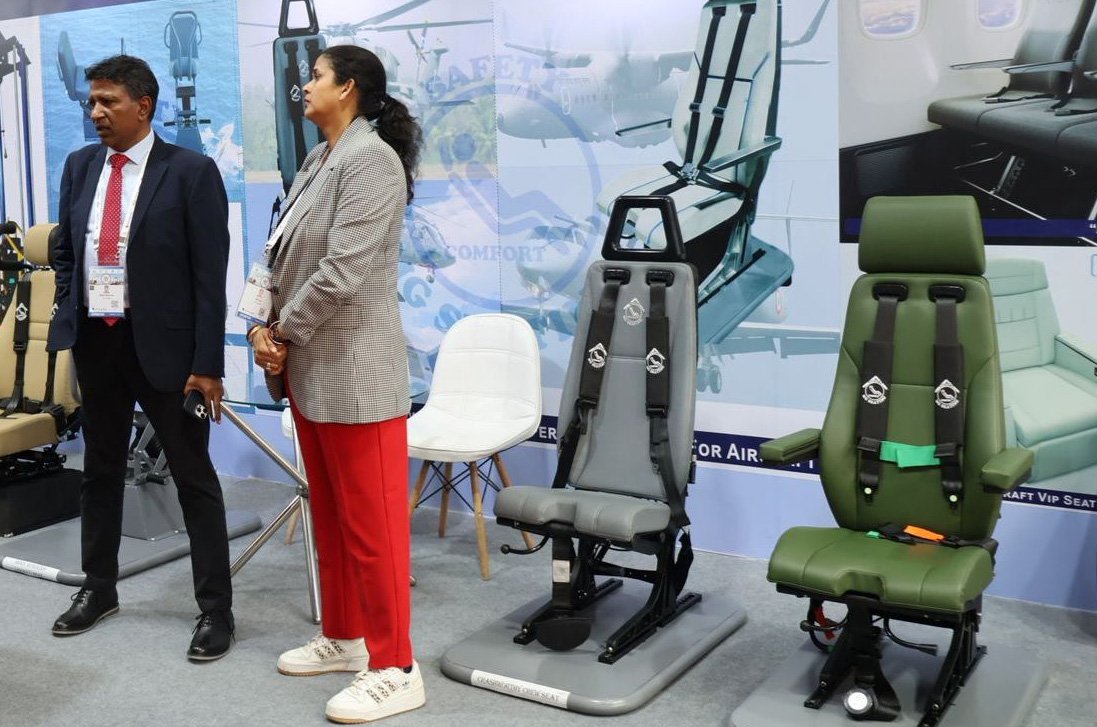
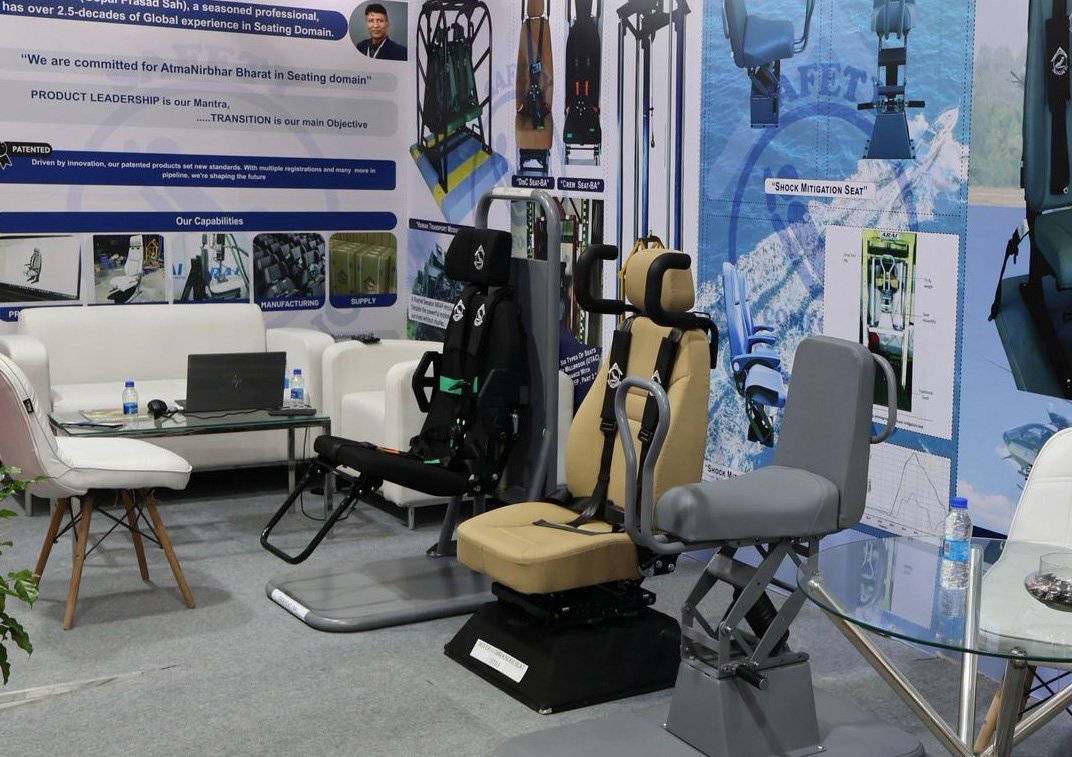
GPS: Our core focus is on blast-protected and energy-absorbing seating systems. Some of our seats can convert an impact of 250g to below 20g, which means a very high survivability in high-impact scenarios.
The design enables controlled energy absorption within the seat structure itself, significantly reducing injuries during blasts or crashes. These are not just comfort products; they are life-saving systems.
We also do Shock Mitigation Seats for High Speed Boats, again reducing the shock level from 12g to below 5g.
The Land and Naval mobility product success motivated us to do Seats for the Aerospace domain and the very first Crashworthy Crew Seats for Helicopters we launched during AERO INDIA 2025. The same drew huge attraction from the potential customers like HAL.
MG Seating is here to bridge all technological gaps in the seating domain, even su-motto, working on the Ejection Seat as well.
RA. Recognition for indigenous defence products often takes time. How was your early experience in India, and what prompted your international expansion?
GPS: Our first major business came from Bharat Forge (Kalyani group), valued at around ₹45 lakh. After that, there was a long phase where no immediate domestic orders followed.
That period forced us to rethink our strategy. We already had international quality products as we kept visiting the international exhibitions for the product/ customers/ competitors acquaintance and product benchmarking, so we decided to go for the international market. The response overseas was extremely encouraging.
International ecosystems allow smaller companies to survive and grow. I wish decision-making in our country were more open and encouraging.
RA. Cost competitiveness is a major concern for defence procurement. How does MG Seating address this?
GPS: Cost is where indigenisation makes a real difference. One of our seats, if imported, costs around ₹4 lakh, whereas we supply the same capability for under ₹1 lakh. Like we are in the process of developing an operator chair for AWACS, which, if imported, costs ₹40 lakh and we will supply in just ₹15 lakh. So, if a vehicle requires ten such seats, the savings become substantial.
Despite this, Indian manufacturers often face excessive documentation and prolonged scrutiny, while foreign suppliers are trusted far more easily. This imbalance needs correction if we truly want indigenous capability to flourish.
RA. You have spoken about certification delays, especially in aerospace. How serious is this challenge?
GPS: Certification is perhaps the single biggest bottleneck, particularly in aviation and aerospace. If certification alone takes 1.5 to 2 years, how does a company survive during that period?
I strongly believe the certification time period must be aligned with the applying company’s capabilities and there must be hand-holding by the certification agencies. We are willing to invest without immediate returns because our intent is long-term. The talent exists in India; what is needed is refinement in the system.
RA. MG Seating is increasingly involved in aerospace and naval applications. Could you share some recent validation experiences?
GPS: Today, many of our seats (fitted to vehicles) are tested at NATO-approved labs in South Africa and the USA, where vehicles are subjected to extreme impact conditions. Even when vehicles are airborne during tests and land on the ground, the occupants survive due to the seat performance.
Cost is where indigenisation makes a real difference. One of our seats, if imported, costs around ₹4 lakh, whereas we supply the same capability for under ₹1 lakh. Like we are in the process of developing an operator chair for AWACS, which, if imported, costs ₹40 lakh, and we will supply in just ₹15 lakh. So, if a vehicle requires ten such seats, the savings become substantial
While developing our Shock Mitigation Seat (SMS), when a local customer wanted the design data to be shared with their UK counterpart for evaluation, we did, and it was approved in just 15-days. Irony is the same SMS, soon we will be exporting to the UK and Canada, but unable to supply to Goa Shipyard Ltd (for whom we primarily developed). I think policymakers must look into these gaps to help more companies survive.
Aerospace is now of huge interest to us. The crashworthy seat we developed for helicopters is now relevant for eVTOL, so opening a huge domestic and international market for us. The Wisk (now owned by Boeing) has shown a strong interest in our product for their eVTOL. We are applying for DGCA certification soon.
MG Seating is a ‘unique’ company in the world, catering to safety-critical seating requirements in Land, Naval and Aerospace (WIP) mobility. This is the most satisfying and speaks about our product engineering capabilities.
RA. How has MG Seating’s financial journey evolved over the years?
GPS: Our first-year turnover was ₹3 lakh, followed by ₹10 lakh and then ₹30 lakh. During COVID, we reached ₹1 crore. Today, we are at around ₹30 crore. Next year, we expect to touch ₹45 crore, and by 2030, cross ₹100 crore.
Certification is the biggest bottleneck, particularly in aviation and aerospace. If certification takes 1.5 to 2 years, how does a company survive during that period? I believe the certification period must be aligned with the applying company’s capabilities, and there must be hand-holding by the certification agencies
We consciously operate in technology-intensive products. If we entered conventional segments, scaling to ₹500 crore in three to four years would be possible. But we avoid areas where others are already operating. Our philosophy is to address technology gaps, but not displace livelihoods.
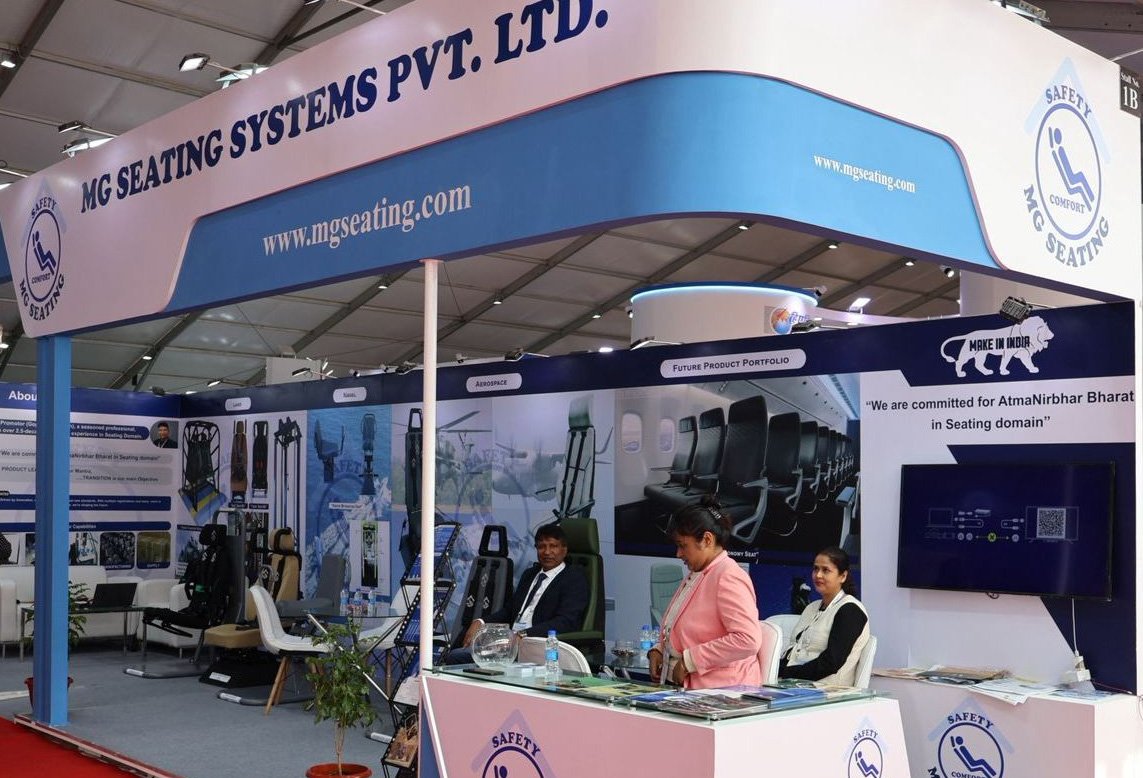
RA. Why is Pune your manufacturing base, and how important are testing facilities to your operations?
GPS: Our base is in Pune, primarily because testing facilities like the Automotive Research Association of India (ARAI) are available there, and setting up independent test labs involves massive investment. Moreover, leveraging existing infrastructure allows us to focus resources on product development while maintaining strict compliance. Testing, validation, and proximity to certification agencies are critical for safety-critical products like ours.
Innovations for Defence Excellence (iDEX) is a good concept, but innovations must lead to commercial outcomes. The support should not stop at prototype development; it must continue until commercialisation. Otherwise, startups collapse midway
RA. What is your approach to exports and global customer engagement?
GPS: International customers are very clear about their requirements. We proactively send products for their touch, feel, and testing. If they are satisfied, they proceed; if not, there is no obligation.
So far, we have sent nearly 50 products for global evaluation and currently work with 40+ customers worldwide in land mobility. Transparency and confidence in engineering are key.
How do you view initiatives like iDEX in supporting defence start-ups and innovators?
Innovations for Defence Excellence (iDEX) is a good concept, but innovations must lead to commercial outcomes. Policy support should not stop at prototype development; it must continue through to commercialisation. Otherwise, startups collapse midway.
Defence platforms take 4–5 years to develop and can cost a lot depending on the product types. Without cohesive, long-term support, survival becomes extremely difficult.