

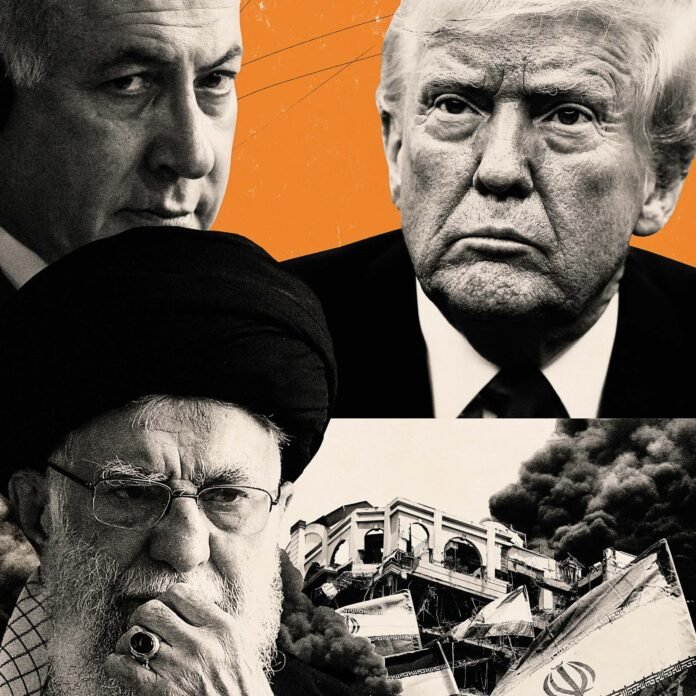
US President Donald Trump’s U-turn on the Iran war – from his threat of launching massive attack on the Middle East country’s energy infrastructure if it did not open the Strait of Hormuz within 48 hours, to holding “very good and productive conversations” with a “top guy” in Iran, has created a new twist in the ongoing war in the region.
President Trump, in his usual unpredictable style, used social media handle Truth Social on March 24 to declare a five-day pause on war against Iran, just hours after he furiously said, “If Iran does not fully open, without threat, the Strait of Hormuz, within 48 hours from this exact point in time, the United States of America will hit and obliterate their various power plants, starting with the biggest one first!”

This unpredictability in the US President’s behaviour has exposed America which launched the war to bring about a regime change in Iran. But this scenario appears to be far from unfolding even though Iran has lost top political and military leadership, and it has instead turned down America’s 15-point proposal, which is conditional in nature for ending the war.
As per Bloomberg, the US has lost at least 16 military aircraft, 10 Reaper drones and several other weapons in the conflict with the Middle Eastern country. Additionally, it has suffered, losses at its military bases in the Middle East even, significant damages in terms of loss of military personnel and weapons, including THAAD, touted as one of the most capable anti-ballistic missile systems in the world. The Iranian media also claims bringing down F-18 and F-35 jets, considered as the linchpin of the US’s aerial power in the world
Iran opposes negotiations with US
Moreover, giving a rap on the US’s knuckle, Iran’s Foreign Minister Abbas Araghachi said no negotiations are taking place between Tehran and Washington. Instead, sending a firm message to the world that Iran has no feet of clay, Iranians insist that the war will end when Tehran decides and not according to the wishes of Trump. The war is, however, inflicting significant military and economic pains on America.
As per Bloomberg, the US has lost at least 16 military aircraft, 10 Reaper drones and several other weapons in the conflict with the Middle Eastern country. Additionally, it has suffered, losses at its military bases in the Middle East even, significant damages in terms of loss of military personnel and weapons, including THAAD, touted as one of the most capable anti-ballistic missile systems in the world. The Iranian media also claims bringing down F-18 and F-35 jets, considered as the linchpin of the US’s aerial power in the world.
More concerning is the mounting financial cost of the war. During their briefing to members of the Congress, the US Defence Department officials reportedly said that the first six-days of the Iran war had cost $11.3 billion. The first 12-days cost was $16.5 billion. The White House is now seeking $200 billion more for the war effort in Iran, reports the BBC.

However, it is hard to assume how much such developments would have impacted President Trump in making a sudden U-turn on Iran. It is nonetheless clear that the US President appears to be looking for an Iranian leader who could remain at the beck and call of America. But the question is—whether the US chosen person to lead Iran will be acceptable to the country’s Mullahs and all-powerful Islamic Revolution Guards Corps (IRGC)?
The US is focusing on Iran’s Parliament Speaker Mohammad Bagher Ghalibaf for the Middle East country’s possible leadership role. According to the Israeli media, Bagher Ghalibaf has been in talks with the US officials, including President Trump’s son-in-law Jared Kushner and special envoy Steve Witkoff.

The US is focusing on Iran’s Parliament Speaker Mohammad Bagher Ghalibaf for the Middle East country’s possible leadership role. According to the Israeli media, Bagher Ghalibaf has been in talks with the US officials, including President Trump’s son-in-law Jared Kushner and special envoy Steve Witkoff. But the Iranian Parliament’s Speaker has denied that he has ever held any talks with the US officials
The Iranian Parliament’s Speaker has denied that he has ever held any talks with the US officials. “No negotiations have been held with the US, and fake news is used to manipulate the financial and oil markets and escape the quagmire in which the US and Israel are trapped,” Iranian Parliament’s Speaker Bagher Ghalibaf said in a post on X.
Understandably, Iranian leaders are united in confronting the US and Israel-led campaign to trigger a regime change by placing on the top, a pliable figure of their choice. They appear to be rigidly firm in not lowering their guards even after several weeks of the war that Trump apparently waged in a bid to push his approval rate in America.
Fall in Trump’s approval ratings
On the contrary, as per a new poll survey conducted by Reuters/Ipsos, 59% Americans have disapproved of the US-led military action on Iran.
Trump’s own approval ratings have dropped to 36%, one of the lowest levels since returning to the White House in 2025. Food and gas prices have soared in America since the US together with Israel launched the attack on Iran on February 28. The poll survey reflects growing anger of Americans against President Trump. During his first days in office, Trump’s approval rate was 47% and just before the Iran war, his approval rating hovered around 40%. But rising cost of fuel and food in the US, triggered by the war, hit his approval rate by 4%, said the Reuters/Ipsos poll survey.
Understandably, Iranian leaders are united in confronting the US and Israel-led campaign to trigger a regime change by placing on the top, a pliable figure of their choice. They appear to be rigidly firm in not lowering their guards even after several weeks of the war that Trump apparently waged in a bid to push his approval rate in America
A dip in President Trump’s approval ratings could be unsettling to Republicans seeking to maintain their control of the Congress. Republicans currently have a slight edge over Democrats in the US House; while there are 217 Republican lawmakers, the number of the total Democrats is 214. There is fear that when the crucial midterm election for the US Congress will take place in November, Republicans’ strength may potentially decline. Moreover, many observers believe that if the US fails to achieve its objectives in Iran, especially any effort aimed at regime change, chances of Republicans’ substantial rout during the midterm Congress election will be very high.
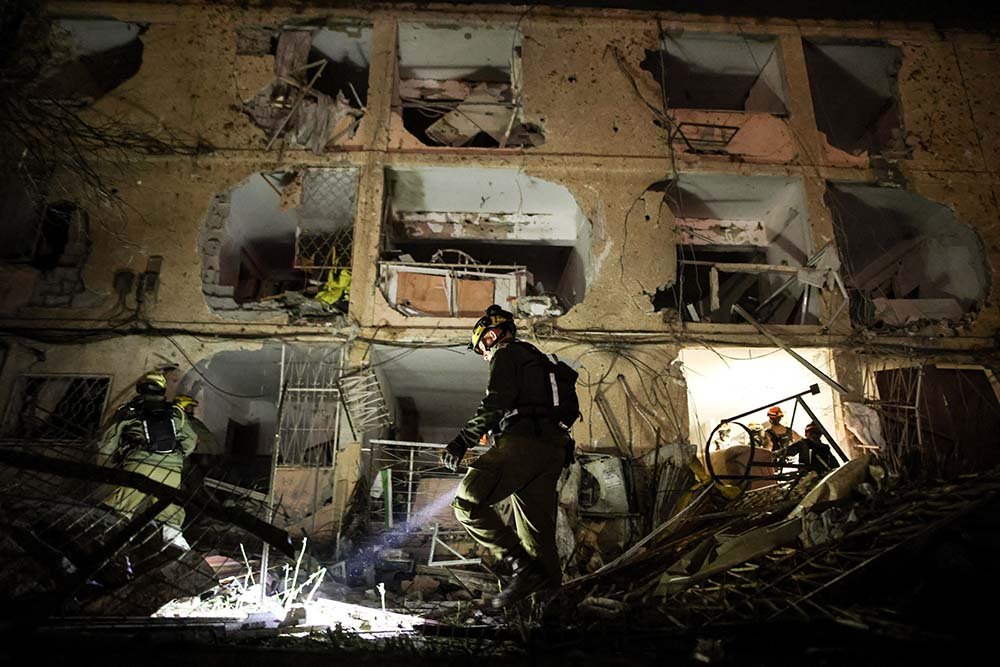
Whatever be the poll prospect for Republicans, the Iran war has left the US with a little choice. If America intensifies attacks on Iran, Tehran will resort to fierce retaliation against the US’s West Asian allies and Israel. The Gulf countries, being the frontline states facing the wrath of Iranian attacks right from February 28, have already spent billions in intercepting the daily onslaught of Iranian missiles and drones, while their economies and sovereignty are gasping for life.
According to estimates by analytics firm Kpler, Gulf countries have lost an estimated $15.1 billion in energy revenues since the start of the war. Near-shutdown of the Strait of Hormuz has hit Gulf countries’ very hard. The Strait of Hormuz, a critical seaway for global oil supplies, carries about $1.2 billion worth of crude oil, refined products and LNG each day, based on average prices and volumes in 2025, says Kpler. The United Nations has warned of severe international consequences if the Strait of Hormuz remains shut for a prolonged period.
In the present circumstances when Iran is not ready for negotiations with the US, while Trump is inclined to take over Kharg island, which accounts for more than 90% of the Middle East country’s exports, it does not appear that both sides are genuinely committed to ending the ongoing deadly conflict
Due to closure of the Strait of Hormuz, the price of Brent has gone above $100 a barrel, triggering a far-reaching impact on the global energy market. India is also feeling the heat of the crisis triggered by Iran’s closure of the Strait of Hormuz, but Prime Minister Narendra Modi has assured the people that the country will not face the brunt of the energy crisis. In this context, he said India has more than 5.3 million metric tonnes of strategic oil reserves, and work is underway to create another 6.5 million metric tonnes of oil reserves. Regarding the LPG supply, he said India imports 60% gas to ensure its availability for domestic use.
This does not mean India will overcome challenges even if the Iran war prolongs. If oil prices continue to rise above $100 per barrel, India’s current account deficit could likely jump to 3% of GDP, impacting the overall health of the country’s economy. As such, the immediate end of the war is the most urgent requirement for India and several other countries. But the moot question is whether the US-Israel combine and Iran are prepared to give peace a chance?
In the present circumstances when Iran is not ready for negotiations with the US, while Trump is inclined to take over Kharg island, which accounts for more than 90% of the Middle East country’s exports, it does not appear that both sides are genuinely committed to ending the ongoing deadly conflict. Rather statements made by Iranian leaders suggest that Tehran is determined to make Trump realise the grave mistake of launching war against the Middle Eastern country.

–The writer is a senior journalist with wide experience in covering international affairs. The views expressed are of the writer and do not necessarily reflect the views of Raksha Anirveda
