

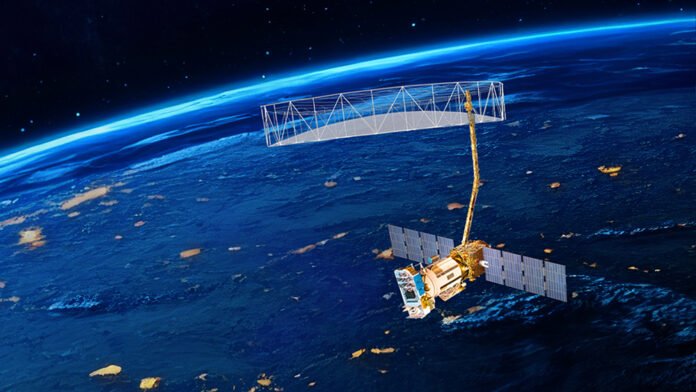
New Delhi: Texas Instruments (TI) semiconductors are enabling the radar imaging and scientific exploration payloads for the NASA-Indian Space Research Organisation (ISRO) synthetic aperture radar (NISAR) satellite, which was recently launched into orbit.
The launch of the satellite culminates a decade-long partnership between TI and the ISRO to optimise the performance of the electronic systems responsible for this Earth-observation mission. NISAR is equipped with TI’s radiation-hardened and radiation-tolerant products that enable designers to maximise power density, precision and performance in their satellite systems.

Engineering a first-of-its-kind satellite for Earth observation
The ISRO describes NISAR as the first Earth-observation mission to use dual-band synthetic aperture radar (SAR) technology, enabling the system to capture precise, high-resolution images during the day, night and all weather conditions. TI’s technology is enabling the satellite’s next-generation capabilities through efficient power management, high-speed data transfer, and precise signal sampling and timing.
The NISAR satellite will image the entire planet every 12 days, offering scientists greater understanding of changes to Earth’s ecosystems, ice mass, vegetation biomass, sea-level rise and groundwater levels. The agencies also expect the data to improve real-time monitoring of natural hazards such as earthquakes, tsunamis, volcanoes and landslides.
“From selecting the right products to ensuring consistent support across development cycles, TI’s technical expertise helped us navigate complex payload requirements,” said Nilesh Desai, Director, Space Applications Centre (SAC), ISRO. “A deeply coupled partnership, specifically focused on high-impact mixed signal and analog semiconductors, enabled ISRO to meet the system-level requirements for a satellite in low Earth orbit. Together, we achieved the space-grade performance standards needed for this important mission.”
Addressing complex design challenges with TI’s space-grade portfolio
Throughout the project life cycle, TI’s system expertise and space-grade semiconductors, which are designed to withstand the harshest space environments, helped enable the advanced S-band SAR capabilities of the NISAR mission. The company provided:

- Radiation-hardened power management die for SAC-ISRO developed point-of-load hybrid power module, helping optimise size, weight and power for the mission payloads.
- Analog-to-digital converters with ultra-high sampling rates and high resolution, allowing the satellite payload to generate fine-grained, high resolution radar imagery.
- High-performance interface technology, which enables high-speed data transfer between different satellite subsystems to ensure reliable communication.
- A clocking solution that enables the precise time alignment and synchronous, coherent sampling required for high-precision SAR systems.
“As the NISAR satellite is now in orbit, I reflect on the decade-long partnership that brought us here and how our teams are already looking to what’s next, developing new technologies that will enable future missions,” said Elizabeth Jansen, TI India’s sales and applications director. “Building on more than 60 years of expertise, TI’s radiation-hardened and radiation-tolerant semiconductors are ready to meet the evolving demands of the space market. Our broad and reliable space-grade portfolio is ever-expanding and pushing the limits of what’s possible in the next frontier.”

