
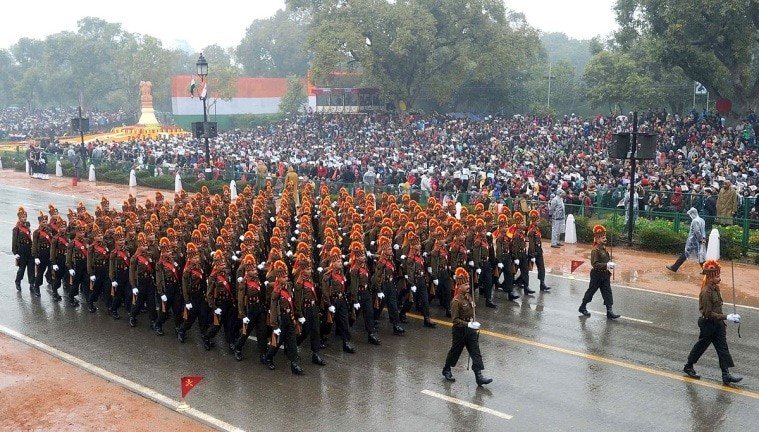
Some recent biased analyses alleging the persistence of caste in the Indian Army presents a deeply flawed understanding of military organisation, conflating historical legacy with contemporary policy and misrepresenting class-based formations as caste discrimination.
These misconceptions are required to be clarified by examining the Indian Army’s actual recruitment practices, organisational philosophy, and the constitutional and legal framework governing military service in India.

The Fundamental Misunderstanding of Class-Based Military Organisation
The Indian Army’s regimental system is built on the principle of class composition, not caste exclusivity. This distinction is critical yet deliberately obscured in critiques that seek to paint the military as a bastion of caste hierarchy.
Class-based regiments in military terminology refer to units organised around shared linguistic, cultural, and regional backgrounds that enhance operational cohesion.
The Jat Regiment, for instance, draws primarily from farming communities from Haryana, Rajasthan, and Uttar Pradesh, encompassing multiple castes within this regional and occupational demographic profile.
Similarly, the Madras Regiment recruits from across Tamil Nadu, Karnataka, Andhra Pradesh, Telangana, and Kerala, representing the entire caste spectrum of South India.

Military historians and serving officers have consistently maintained that this organisational principle serves a purely functional purpose: soldiers who share common languages, cultural references and regional bonds form tighter-knit units with stronger internal communication and mutual trust.
This cohesion has been tested and proven in every major conflict since 1947, from the Kashmir operations to the Kargil War, where mixed-caste regiments fought with distinction. The battle honours accumulated by these regiments stand as a testament to the effectiveness of this approach, demonstrating that shared regional identity rather than caste homogeneity drives military success.

The Indian Army’s regimental system is built on the principle of class composition, not caste exclusivity. This distinction is critical yet deliberately obscured in critiques that seek to paint the military as a bastion of caste hierarchy
The criticism that these formations perpetuate colonial-era martial race theory fundamentally misunderstands how the modern Indian Army operates.
While British recruiters did employ pseudoscientific racial classifications, independent India retained certain regimental structures for their proven operational effectiveness, not their caste composition.
The critical difference lies in recruitment policy: whereas the British restricted entry based on arbitrary racial classifications, the Indian Army opens recruitment to all eligible citizens regardless of caste, with assignment to regiments based on regional and linguistic compatibility, not social hierarchy.
Constitutional and Legal Framework Governing Military Recruitment
The Indian Army’s recruitment practices operate within a robust constitutional and legal framework that explicitly prohibits caste-based discrimination.
Article 15 of the Indian Constitution forbids discrimination on grounds of religion, race, caste, sex, or place of birth, while Article 16 guarantees equality of opportunity in matters of public employment.
The Armed Forces have consistently operated under these constitutional mandates, with recruitment policies that emphasise merit-based selection through standardised physical, educational and medical criteria.
The Indian Army’s recruitment practices operate within a robust constitutional and legal framework that explicitly prohibits caste-based discrimination
In the landmark case of Union of India vs. Veerpal Singh Chauhan (2016), the Supreme Court examined allegations of caste-based discrimination in military recruitment.
The Court upheld the Army’s position that regimental organisation based on class composition does not violate constitutional equality guarantees, as it serves a legitimate military purpose of operational effectiveness.
The judgment explicitly noted that class-based recruitment differs fundamentally from caste-based exclusion, as individuals from all castes within a regional or linguistic group remain eligible for service.
Similarly, in State of Maharashtra vs. Milind (2001) case, the Supreme Court recognised that the armed forces require special organisational considerations that may differ from civilian employment norms, provided these do not violate fundamental rights.
The Court acknowledged that military effectiveness depends on unit cohesion and that reasonable classifications based on operational requirements do not constitute unconstitutional discrimination.
This jurisprudential foundation establishes that the Army’s regimental system, when operated without caste restrictions, falls within permissible organisational autonomy.
The Ministry of Defence has filed multiple affidavits before the Supreme Court confirming that recruitment to the Indian Army involves no discrimination based on caste, religion, or region.
These sworn statements detail how recruitment rallies are conducted across the country, with standardised eligibility criteria applied uniformly to all applicants.
Soldiers are selected solely on merit as determined by physical fitness tests, educational qualifications, and medical examinations. The subsequent assignment to regiments considers regional and linguistic factors to maximise unit effectiveness, but caste plays no role in this process.
Soldiers are selected solely on merit as determined by physical fitness tests, educational qualifications, and medical examinations. The subsequent assignment to regiments considers regional and linguistic factors to maximise unit effectiveness, but caste plays no role in this process
Furthermore, in Lieutenant Colonel Nitisha vs. Union of India (2021) case, the Supreme Court reaffirmed the principle of merit-based selection and non-discrimination in military service, extending permanent commission to women officers.
This judgment reinforced the constitutional requirement that military service opportunities must be available to all citizens on equal terms, with distinctions permitted only for legitimate operational necessities.
The complete absence of any finding of caste-based discrimination in this or any other Supreme Court case involving military recruitment demonstrates the legal soundness of current practices.
The Political Economy of Caste-Based Regiment Demands
Periodic demands for the creation of Dalit regiments, Ahir regiments or other caste-specific military units reveal more about contemporary identity politics than about actual discrimination in the armed forces.
These proposals, typically advanced by caste-based political organisations seeking to mobilise their constituencies, fundamentally misunderstand military organisation and would, if implemented, severely undermine national cohesion and operational effectiveness.
The Indian Army has consistently and correctly rejected these demands. Creating regiments organised explicitly around caste identity would legitimise caste as a relevant category for military service, something the institution has deliberately avoided since independence.
It would transform the military from a space of national integration into another arena for caste competition, with communities demanding representation through dedicated regiments and political parties promising such regiments as electoral inducements.
This path leads to the fragmentation of military identity and the subordination of national defence to identity politics.
Moreover, the mathematical absurdity of caste-based regimental organisation becomes apparent when considering India’s social reality. Contemporary scholarship identifies over six thousand distinct caste groups across India.
The Indian Army maintains fewer than seventy regiments in total, including infantry, armoured, artillery and support units. Even if the entire force structure was reorganised around caste, it could accommodate only a tiny fraction of existing communities, inevitably creating new grievances from excluded groups. The only logical conclusion is that military organisation cannot and should not be based on caste representation.
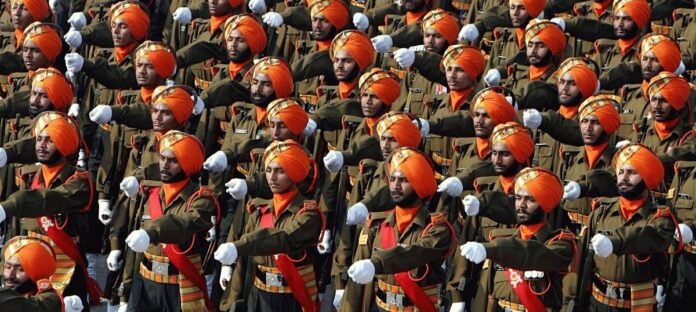
The demand for caste-based regiments also ignores how existing regiments actually function. The Sikh Regiment, often cited as an example of religious exclusivity, in fact includes substantial numbers of Hindu and Muslim soldiers who meet the physical and cultural criteria for service.
The Gorkha regiments recruit from multiple ethnic communities across Nepal and Indian Gorkha-majority regions. The Madras Regiment draws from all castes across South India.
These examples demonstrate that regimental identities, even when named for particular communities, operate on the basis of regional and cultural affinity rather than rigid caste or religious barriers.
Political exploitation of military recruitment for caste mobilisation also disrespects the sacrifices of soldiers who serve and die for the nation without regard to caste identity. When a soldier from any regiment makes the ultimate sacrifice, he does so as an Indian defending Indian territory, not as a representative of his caste defending caste interests.
Periodic demands for the creation of Dalit regiments, Ahir regiments or other caste-specific military units reveal more about contemporary identity politics than about actual discrimination in the armed forces
Reducing military service to caste calculus dishonours this sacrifice and undermines the transcendent national identity that military service cultivates.
Merit, Equality and Opportunity in Military Service
The Indian Army’s recruitment process operates on strictly merit-based criteria that are publicly announced, uniformly applied and legally enforceable.
Recruitment rallies conducted across the country follow identical protocols: candidates undergo physical fitness tests measuring running speed, pull-ups, and endurance; educational qualifications are verified against standardised requirements; and medical examinations ensure fitness for military service. At no point in this process does caste appear as a criterion for selection or rejection.
This meritocratic system has produced a military that draws from every segment of the Indian society. Field Marshal Sam Manekshaw, who led India to victory in the 1971 war, came from the Parsi community. General KV Krishna Rao, who served as Chief of Army Staff, was a Brahmin from South India.
General Bipin Rawat, India’s first Chief of Defence Staff, hailed from the Garhwal region of Uttarakhand. These examples span caste, regional and linguistic boundaries, demonstrating that military leadership is genuinely open to talent from all backgrounds.
At the enlisted level, similar diversity prevails. A survey of decorated soldiers reveals recipients of gallantry awards from across the caste spectrum, serving in regiments both nominally associated with their communities and in those historically dominated by other groups.
The Param Vir Chakra, India’s highest military honour, has been awarded to soldiers from diverse caste backgrounds, including Lance Naik Albert Ekka, a Christian tribal from Jharkhand and Subedar Joginder Singh, a Sikh from Punjab.
This pattern of recognition based on valour rather than identity confirms the merit-based nature of military service.
The complaint that certain castes are underrepresented in particular regiments misunderstands how military assignment works.
After selection through merit-based recruitment, soldiers are assigned to regiments based on organisational needs, linguistic compatibility and regional connections that facilitate unit cohesion.
A candidate from Tamil Nadu is more likely to be assigned to the Madras Regiment not because of caste but because his shared language and cultural background enhance his ability to integrate with fellow soldiers and contribute to unit effectiveness. This is a practical military consideration, not caste discrimination.
Furthermore, the existence of technical branches, support services and specialised units that recruit on a purely all-India basis provides opportunities completely divorced from traditional regimental structures.
The Corps of Engineers, Corps of Signals, Army Service Corps and numerous other branches select personnel from across the country without regard to regional or traditional class composition.
The Indian Army has consistently and correctly rejected these demands. Creating regiments organised explicitly around caste identity would legitimise caste as a relevant category for military service, something the institution has deliberately avoided since independence
Officers and enlisted personnel in these units advance purely on merit, technical competence, and professional performance, proving that the Army can and does operate without reference to caste when organisational requirements permit.
Historical Legacy Versus Contemporary Policy
Understanding the Indian Army’s current structure requires distinguishing between historical inheritance and contemporary policy choices. The British Indian Army did employ martial race theory, pseudoscientific classifications that designated certain communities as inherently suited for military service while excluding others.
This pernicious ideology served colonial interests by dividing Indian society and ensuring military loyalty to the British rule. After independence, India faced a choice: completely dismantle existing military structures or retain proven regimental frameworks while reforming their underlying logic.
The decision to maintain certain regiments reflected practical military necessity rather than endorsement of colonial ideology. In 1947, India faced immediate security threats requiring a functional military force.
Completely restructuring regimental organisation while simultaneously managing partition, integrating princely states and defending newly independent territory would have compromised national security.
Instead, independent India retained effective military structures while fundamentally reforming their operational principles: recruitment opened to all communities, martial race classifications were abandoned and regimental assignments reflected regional and linguistic considerations rather than caste hierarchy.
Importantly, no new caste-based regiments have been created since independence. This fact receives insufficient attention from critics who focus exclusively on the persistence of historical units. If the Indian Army genuinely embraced caste-based organisation, we would expect new regiments organised around caste identity to emerge as the force expanded.
Instead, new units either adopt all-India recruitment or follow the class-based regional model that cuts across caste lines. The Assam Regiment, raised post-independence, recruits from across Northeast India regardless of caste. The Ladakh Scouts draw from the Buddhist and Muslim communities of Ladakh. These examples show evolution away from, not entrenchment of, caste-based military organisation.
The continuation of regiments with names associated with particular communities should be understood as preservation of military heritage and battle honours, not perpetuation of caste discrimination.
The demand for caste-based regiments also ignores how existing regiments actually function. The Sikh Regiment, often cited as an example of religious exclusivity, in fact includes substantial numbers of Hindu and Muslim soldiers who meet the physical and cultural criteria for service
The Maratha Light Infantry carries forward the legacy of units that fought in both the World Wars and in India’s post-independence conflicts. Soldiers in this regiment take pride in its history and battle honours, which foster esprit de corps and unit identity.
This military tradition building serves the same purpose as any organisation maintaining institutional memory and celebrating its history. It does not require or imply caste-based exclusivity.
Equal Honour in Sacrifice
Nothing more powerfully refutes claims of caste discrimination in the Indian Army than the equal honour accorded to fallen soldiers regardless of their social background.
When a soldier makes the ultimate sacrifice, the military’s response follows identical protocols: the body is received with full military honours, the family receives the same compensation and benefits, gallantry awards are considered without regard to caste or religion and the soldier’s name is inscribed on memorials alongside all others who died in service.
The Amar Jawan Jyoti at India Gate, New Delhi and similar memorials across the country make no distinction between soldiers based on caste.
The names etched in stone represent every segment of the Indian society, unified in sacrifice for the nation. Military funerals, regardless of the deceased’s background, follow the same ceremonial protocols: the flag-draped coffin, the gun salute, the bugle call of the Last Post.
This equality in death reflects equality in service, contradicting suggestions that the Army maintains caste hierarchies.
Gallantry awards provide further evidence. The Param Vir Chakra, Maha Vir Chakra and Vir Chakra are awarded for exceptional valour without consideration of the recipient’s caste, religion or regional background.
Analysis of award recipients reveals representation from across the Indian society, from sepoys to officers, from border villages to metropolitan cities, from all castes and communities.
The selection process for these honours examines the circumstances of the act of bravery, witness accounts and military records, not the soldier’s social identity.
By conflating historical legacy with current policy, misunderstanding class-based organisation as caste exclusivity and ignoring overwhelming evidence of merit-based recruitment and equal treatment, these critics construct a narrative disconnected from how the military actually functions
The families of martyred soldiers, regardless of caste or community, receive identical benefits: financial compensation, family pensions, educational support for children, employment opportunities for dependents and lifetime healthcare.
These benefits are not calibrated to social status but reflect the nation’s gratitude for sacrifice. That a Dalit soldier’s family receives the same support as a Rajput officer’s family demonstrates the caste-blindness of military service and sacrifice.
Furthermore, the ways in which units and regiments honour their fallen comrades show no caste differentiation. Regimental war memorials list all soldiers who died in service, creating a collective memory that transcends social divisions.
Annual remembrance ceremonies bring together veterans and serving soldiers to honour departed comrades, with no segregation by caste or community. This culture of collective remembrance reinforces the principle that military service creates a bond stronger than caste identity.
Operational Effectiveness as the Ultimate Justification
The fundamental purpose of any military force is to defend the national territory and prevail in any armed conflict. Organisational structures, recruitment policies, and unit composition must be evaluated primarily by their contribution to this objective.
The Indian Army’s record since independence provides compelling evidence that its current structure, including class-based regiments, effectively serves national defence.
India has fought five major wars since 1947—the Indo-Pakistani conflicts of 1947-48, 1965, 1971 and 1999, plus the Sino-Indian War of 1962.
In these conflicts, Indian forces demonstrated cohesion, fighting spirit and tactical effectiveness, achieving decisive victories in 1971 and Kargil, fighting to stalemate in 1947-48 and 1965 and learning hard lessons from the 1962 defeat.
The regiments frequently criticised for their class-based composition earned battle honours in all these conflicts, with mixed-caste units fighting with distinction.
The 1971 war offers particularly relevant evidence. Indian forces achieved a complete strategic victory, liberating Bangladesh in 13 days of intensive combat. The regiments that participated included both traditionally class-based units and more diverse formations, all performing effectively under combat conditions.
Post-war analysis attributed success to superior strategy, better training, higher morale, and more effective logistics—factors unrelated to caste composition. No credible military assessment suggested that caste-based organisation contributed to or detracted from operational success.
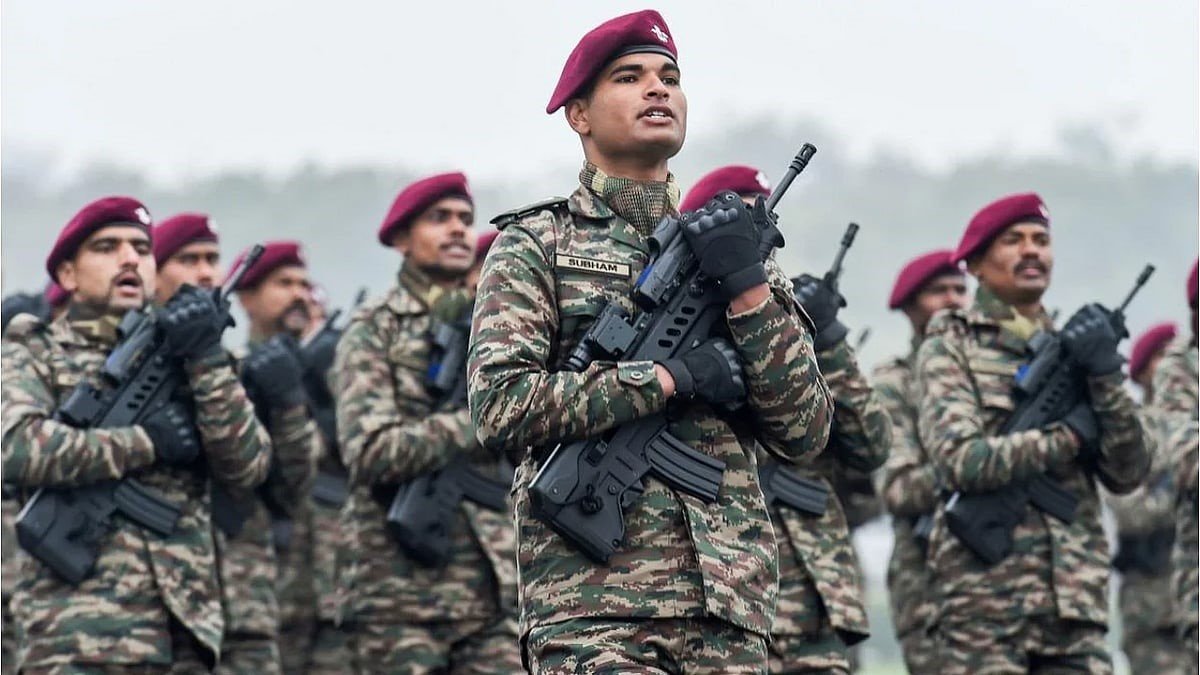
More recently, operations against insurgency and terrorism have tested military cohesion under different conditions than conventional war.
In Kashmir, the Northeast and against left-wing extremism, security forces operate in complex environments where unit cohesion, local knowledge and adaptability prove critical.
Regiments deployed in these operations maintain effectiveness regardless of their composition, with success depending on training, leadership, and operational doctrine rather than caste homogeneity.
The argument that class-based organisation enhances cohesion rests on military expertise accumulated over decades of operations. Soldiers who share language communicate more efficiently in combat. Troops from similar cultural backgrounds develop mutual understanding more quickly.
Units with strong regional identity cultivate fierce loyalty to regimental honour. These practical benefits of class composition explain why the organisation persists, not caste prejudice or colonial nostalgia.
If alternative organisational models proved more effective, military leadership would adopt them, as operational success remains the paramount consideration.
The Supreme Court has repeatedly examined and upheld military recruitment practices, finding no constitutional violations in class-based regimental organisation when it serves legitimate military purposes and does not exclude eligible citizens based on caste
Merit, Unity and National Defence
The persistence of critics alleging caste discrimination in the Indian Army reveals more about contemporary political discourse rather than about military reality.
By conflating historical legacy with current policy, misunderstanding class-based organisation as caste exclusivity and ignoring overwhelming evidence of merit-based recruitment and equal treatment, these critics construct a narrative disconnected from how the military actually functions.
The constitutional framework, legal precedents and official policies governing military service explicitly prohibit caste discrimination and mandate equality of opportunity.
The Supreme Court has repeatedly examined and upheld military recruitment practices, finding no constitutional violations in class-based regimental organisation when it serves legitimate military purposes and does not exclude eligible citizens based on caste.
The Indian Army’s primary obligation is national defence and its organisational structures must be evaluated by their contribution to operational effectiveness. Seven decades of combat operations, from conventional wars to counterinsurgency, demonstrate that current structures produce cohesive, effective fighting forces capable of defending Indian interests.
The equal honour accorded to martyrs regardless of caste, the merit-based advancement opportunities available throughout the force and the complete integration of elite units all confirm that military service transcends caste identity.
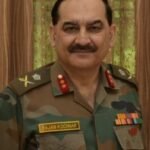
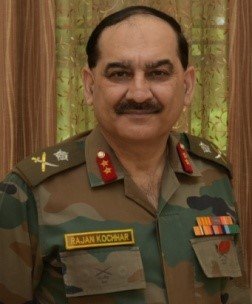
-The author retired as Major General, Army Ordnance Corps, Central Command, after 37 years of service. A management doctorate and expert on defence modernisation, he is the author of four books, including the Amazon bestseller “Breaking the Chinese Myth,” and a frequent media commentator. He is affiliated with several leading defence and strategic studies institutions in New Delhi. The views expressed are of the writer and do not necessarily reflect the views of Raksha Anirveda
