

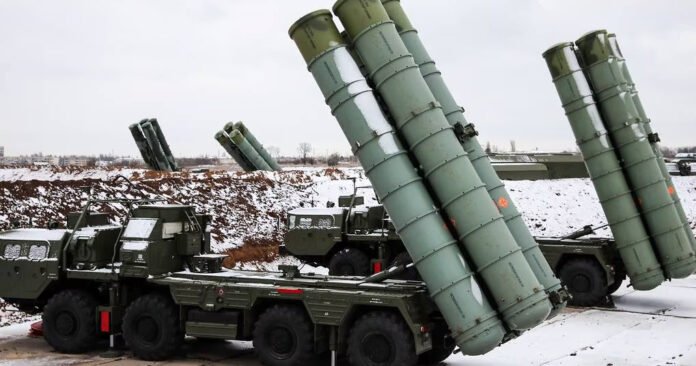
Tel Aviv: The US and Israel are closely following the recent shipments of Russian military systems to Iran. According to sources, there are solid confirmations that among these shipments were S-400 air defence systems.
These deliveries are being made via heavy transport aircraft, including the An-124 Ruslan, and are part of a broader strategic shift that strengthens Iran’s air defence and combat aviation capabilities.

According to the sources, Russia has signed a contract with Iran to supply its air force with advanced Su-35 fighter aircraft. The $ 6.5 billion deal includes 48 Su-35 aircraft.
The sources confirmed that the Su-35 will be equipped with the Khibiny-M electronic warfare pods and Irbis-E radar, and are expected to be assembled locally in Iran.
The sophisticated Khibiny ECM protects the aircraft from attacks by mounting two cylindrical pods on the fighter jet’s wing tips, or in some models, two pods on the wing tips and one pod under the belly. After identifying a missile strike, this system surrounds the fighter jet with a radio-electronic shield that deflects and stops the hostile missile from reaching its target.
The Irbis E radar offers air-to-air, air-to-sea, and air-to-ground capabilities. Experts say that this radar can function in highly cluttered settings and is designed to identify low and super-low observable/stealth aircraft threats.

The Su-35 deal marks Iran’s largest fighter jet procurement since the 1970s and is intended to replace its ageing fleet of F-14s and F-4s.
The two nations’ growing military and economic connections are reflected in the arms deliveries, which are a part of a larger barter agreement involving Iranian drones and oil. These supplies are perceived as a direct challenge to Western influence in the Middle East and are taking place in the midst of increased regional tensions.

Iran’s capacity to withstand external military pressure and project power in the region is greatly improved by the transfer of these cutting-edge technologies.
The ability of the Russia-Iran defence axis to evade Western sanctions and create a parallel military-technological realm might change the balance of power in the region.

-The writer is an Israel-based freelance journalist. The views expressed are of the writer and do not necessarily reflect the views of Raksha Anirveda
