

In an era defined by rapid technological evolution, the low-altitude economy — airspace up to 1,000 metres — has emerged as a key arena for innovation in unmanned systems. Globally, countries are investing in drone technologies to revolutionise industries ranging from logistics to environmental monitoring. India, with its vast geographical diversity and growing technological prowess, stands at the cusp of this revolution.
In this backdrop, Odisha, one of India’s most progressive states, has taken a proactive stance through its white paper, “Unlocking India’s Low Altitude Economy,” which outlines a visionary roadmap to establish the state as India’s premier hub for drone and UAV development. The white paper has been authored by Baibhav Patel, who works at the intersection of unmanned aviation, policy, and government engagement, leading regulatory strategy and UAV deployment at BonV; A B Debasis Mohanty, who supports UAS deployment, sales, and training at BonV Aero across defence and public service sectors and Uma Sudhindra, a strategy consultant scaling emerging technologies into mission-ready solutions across policy and national security.

Released amid increasing national focus on aviation infrastructure, the white paper aligns with Odisha’s broader ambition under frameworks like the Rs 14,182 crore Building and Management of Aviation Assets and Network (B-MAAN), which seeks to integrate advanced airspace management with economic development. The document not only addresses technological advancements but also underscores the socio-economic benefits, including job creation, export potential and enhanced disaster resilience. By emphasising real-world testing, infrastructure development and skill enhancement, Odisha aims to position itself as a national leader in this sector.
Conceptual Framework: The Low-Altitude Economy and B-MAAN
The low-altitude economy refers to the commercial and operational utilization of airspace primarily through drones, UAVs and emerging technologies like electric vertical takeoff and landing (eVTOL) vehicles. This domain is distinct from traditional high-altitude aviation, focusing instead on agile, autonomous systems capable of high-density operations. The white paper says that treating this airspace as “national infrastructure,” akin to highways or railways, is essential for unlocking its potential.
Released amid increasing national focus on aviation infrastructure, the white paper aligns with Odisha’s broader ambition under frameworks like the Rs 14,182 crore Building and Management of Aviation Assets and Network (B-MAAN), which seeks to integrate advanced airspace management with economic development. The document not only addresses technological advancements but also underscores the socio-economic benefits, including job creation, export potential and enhanced disaster resilience
According to the paper, “Airspace below 1,000 metres above ground level has historically been treated as a safety buffer rather than a productive resource. Today, that perception is changing rapidly. Around the world, this low-altitude layer is emerging as a new form of infrastructure that enables drones and other unmanned systems to deliver public services, improve logistics, strengthen disaster response, and support economic growth. This transformation, commonly referred to as the Low-Altitude Economy, is not driven by the number of drones in the sky, but by the ability of governments to enable safe, repeatable and trusted operations at scale.”
According to the World Economic Forum’s 2024 analysis of the global drone ecosystem, more than 60 percent of the long-term economic value from drones will arise from services, data and applications rather than from manufacturing aircraft themselves. McKinsey & Company similarly estimates that drone-enabled services could generate $30-40 billion annually by 2030, particularly in infrastructure inspection, logistics and public-sector use cases. These projections underscore a central message of the white paper: the future value of low-altitude aviation depends less on technology alone and more on governance, evidence, and institutional readiness.

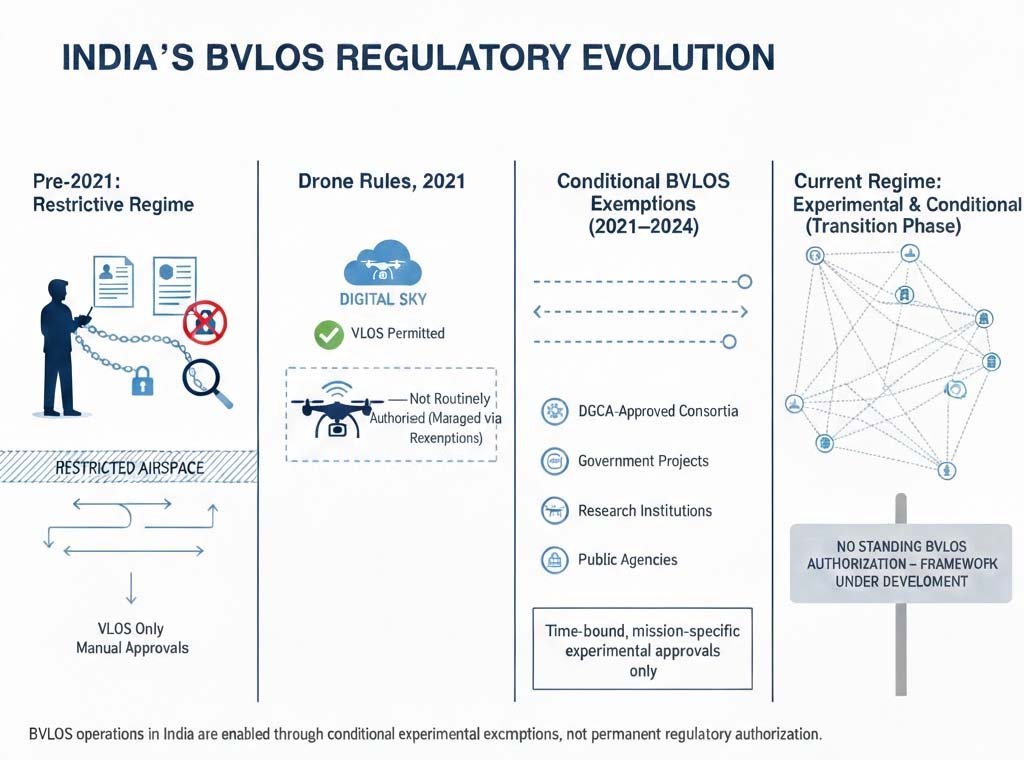
Central to Odisha’s vision is the B-MAAN framework, designed to standardise and regulate low-altitude aviation. B-MAAN emphasises beyond visual line of sight (BVLOS) operations, swarm technologies and AI-driven navigation, ensuring safe integration with manned aviation. Odisha’s white paper builds on this by advocating for state-level implementation, positioning the state as a testing ground for national policies. This approach reflects a federalist model of innovation, where regional strengths — such as Odisha’s diverse terrain and industrial corridors — contribute to national goals.
Theoretically, this framework draws from global precedents, such as the US Federal Aviation Administration’s (FAA) Unmanned Aircraft Systems Integration Pilot Program and China’s drone corridors in Shenzhen. However, Odisha’s emphasis on real-world testing over simulated environments marks a pragmatic shift, acknowledging the limitations of lab-based validations in complex, variable conditions like India’s monsoonal climate and rural landscapes.

The white paper delineates several core objectives, each designed to advance Odisha’s role in the low-altitude economy while addressing national priorities.
Prioritising Real-World Testing and Innovation Corridors
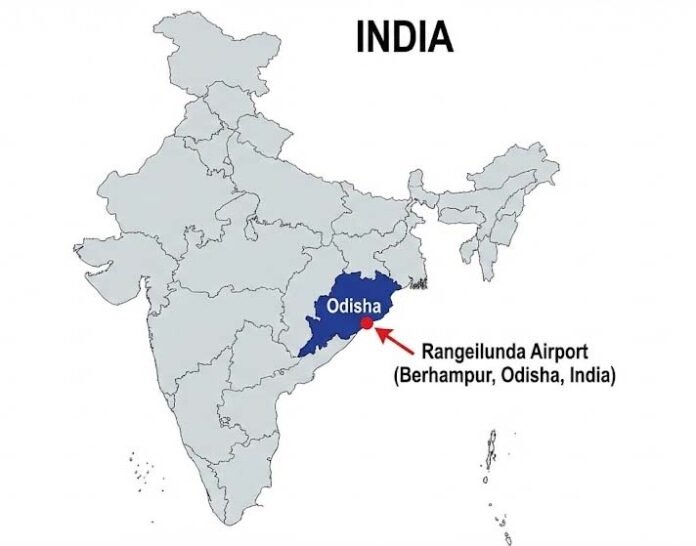
A cornerstone of the strategy is the transformation of Rangeilunda Airport in Ganjam district into India’s first National UAV Test and Innovation Corridor.
Rangeilunda has national relevance because it uniquely combines the conditions needed for a national-grade UAV testing, training and validation ecosystem. As an existing public aviation asset in low-density airspace, it enables safe experimentation without greenfield development or disruption to commercial aviation. Its coastal and mixed-terrain environment mirrors real Indian operating conditions for logistics, disaster response, surveillance and infrastructure monitoring.
Odisha’s white paper builds on this by advocating for state-level implementation, positioning the state as a testing ground for national policies. This approach reflects a federalist model of innovation, where regional strengths — such as Odisha’s diverse terrain and industrial corridors — contribute to national goals
Odisha’s strong record in anticipatory governance — particularly its globally recognised disaster-management systems — supports a vision of Rangeilunda as a civilian-governed, regulator-supervised test ecosystem rather than a commercial drone park or defence-exclusive range. Here, safety procedures, traffic management systems, operational concepts and human factors can be transparently validated under national aviation oversight.
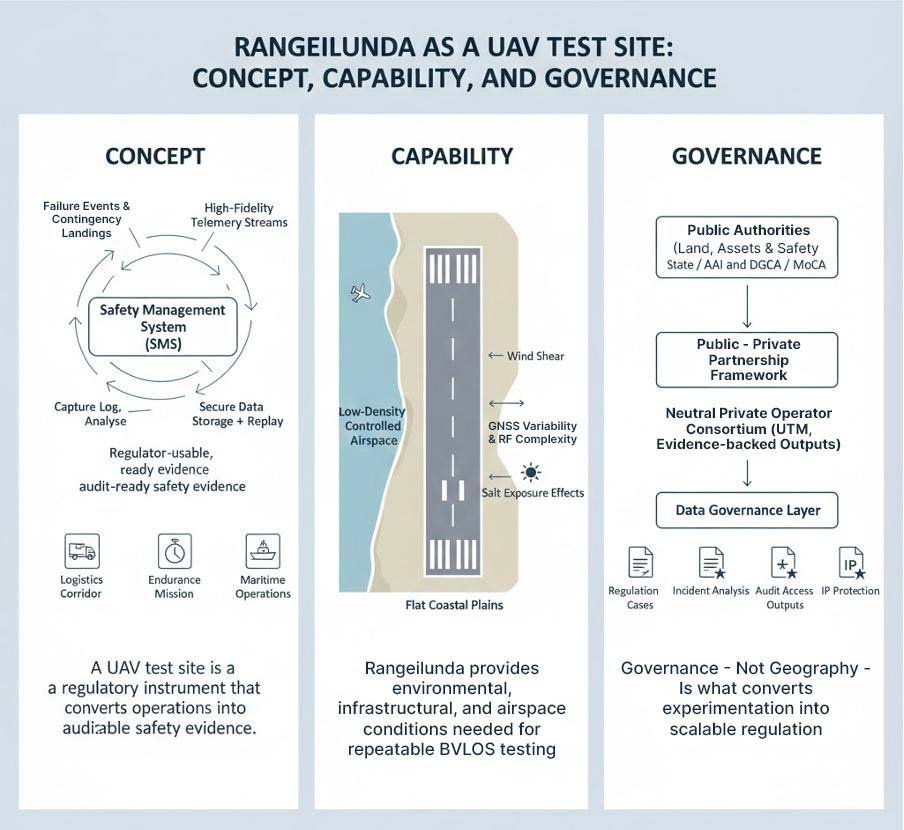
The benefits for Odisha extend well beyond aviation. Test and validation ecosystems generate sustained demand for skilled, institutional roles such as engineers, safety managers, technicians, analysts, compliance officers, trainers and licensed drone pilots, creating long-term career pathways rather than episodic employment. OECD research shows that regions hosting such infrastructure experience more durable employment and higher skill retention than manufacturing-only clusters. Shared facilities also lower entry barriers for local MSMEs and startups, anchoring value creation locally and generating recurring economic activity with strong spillovers into hospitality, transport, housing and services. Public-sector gains are equally significant: validated drone workflows strengthen disaster preparedness, infrastructure inspection, healthcare logistics and environmental monitoring by enabling evidence-based scale-up. Linking Rangeilunda with universities would further create a living laboratory for applied research, workforce readiness and standards literacy.
At the national level, evidence generated at Rangeilunda would reduce policy risk for the DGCA by enabling a shift toward scalable, performance-based regulation aligned with global practice. Domestic test capacity helps retain talent, intellectual property and investment, while regulator-supervised validation enhances export credibility for Indian platforms. Early operational learning also positions India to play a more influential role in international standard-setting forums, moving from rule-taker to rule-shaper.
The paper argues that such infrastructure is vital for fostering high-density operations, where multiple drones operate simultaneously in confined airspace. Applications span logistics (such as last-mile delivery), defence (surveillance and reconnaissance), agriculture (precision spraying) and disaster response (rapid assessment and supply drops). By prioritising these, Odisha aims to mitigate risks associated with urban drone integration, such as collision avoidance and privacy concerns, through iterative, data-driven refinements.
Advancing Technological Frontiers
The document highlights goals in emerging technologies, including drone swarms for coordinated missions, AI-enhanced navigation for obstacle avoidance, and autonomous management systems for seamless integration with ground infrastructure. These objectives are underpinned by a recognition of the interdisciplinary nature of UAV development, intersecting fields like robotics, machine learning and aerospace engineering.
The document highlights goals in emerging technologies, including drone swarms for coordinated missions, AI-enhanced navigation for obstacle avoidance, and autonomous management systems for seamless integration with ground infrastructure. These objectives are underpinned by a recognition of the interdisciplinary nature of UAV development, intersecting fields like robotics, machine learning and aerospace engineering
For instance, in agriculture — a sector critical to Odisha’s economy — the white paper envisions drones for soil mapping, crop health monitoring and targeted pesticide application, potentially increasing yields by 20-30 percent while reducing chemical usage. In defence, swarm technologies could enable cost-effective border surveillance, drawing parallels to Israel’s Iron Dome adaptations to combat UAV threats. Disaster response applications, particularly relevant given Odisha’s vulnerability to cyclones, include real-time mapping and humanitarian aid delivery, as demonstrated in post-Fani recovery efforts in 2019.
Major Initiatives and Implementation Strategies
To operationalise its objectives, the white paper proposes a series of initiatives, emphasising partnerships, skilling and infrastructure investment.
Strategic Partnerships and Phased Rollouts
A key initiative is the collaboration with BonV Aero, announced at Wings India 2026, for a phased rollout of low-altitude infrastructure. This partnership exemplifies public-private synergy, where private expertise in UAV design complements state resources in land allocation and regulatory facilitation. The white paper treats low-altitude airspace as analogous to terrestrial infrastructure, advocating for standardised corridors that enable scalable operations.
This approach mitigates fragmentation in India’s aviation sector, where disparate state regulations have historically hindered national integration. By aligning with B-MAAN, Odisha’s initiatives ensure interoperability, facilitating cross-state drone operations and boosting inter-regional trade.
Skilling and Human Capital Development
Recognising the skill gap in UAV operations, the white paper proposes establishing dedicated training hubs. The UAV training centre at Rangeilunda aims to certify over 100 pilots annually, focusing on BVLOS and swarm management skills. Complementing this, a flying school at Dandbose Airport will train 50 pilots per year, emphasising eVTOL and hybrid systems.
These initiatives address the broader challenge of workforce readiness in emerging technologies. Scholarly literature on technological adoption, such as Rogers’ Diffusion of Innovations theory, underscores the importance of training in accelerating uptake. Odisha’s focus on skilling not only generates employment — potentially thousands of jobs in piloting, maintenance and data analysis — but also positions the state as an exporter of skilled talent, contributing to India’s global competitiveness in aviation.
Integration with Broader B-MAAN Investments
The white paper proposes the integration of cargo hubs, eVTOL development and ancillary infrastructure. This includes pilot and technician training programmes, aimed at creating a robust ecosystem for low-altitude operations. Economic modelling suggests that such investments could yield multiplier effects, with each rupee in aviation infrastructure generating up to Rs 3-5 in ancillary economic activity through supply chains and tourism.
Plus, the framework targets job creation in high-value sectors, boosting exports of indigenous UAV technologies. Odisha’s strategic location, with access to the Bay of Bengal for maritime testing, enhances its appeal for international collaborations, potentially attracting foreign direct investment (FDI) in drone manufacturing.
Implications and Challenges
Odisha’s vision has profound implications for India’s economic trajectory. By leading in the low-altitude economy, the state could catalyse a sector projected to contribute significantly to GDP, akin to how information technology transformed India’s service economy. Sectors like logistics could see reduced costs through drone-enabled supply chains, while agriculture and disaster management benefit from enhanced efficiency and resilience.
“Unlocking India’s Low Altitude Economy” represents a forward-thinking blueprint for harnessing UAV technologies to drive national progress. Through its emphasis on real-world innovation, strategic partnerships, and human capital development, the document not only positions Odisha as a hub but also contributes to India’s ambition of becoming a global leader in aviation
However, challenges persist. Regulatory harmonisation across states remains critical to avoid silos. Environmental concerns, such as noise pollution and wildlife disruption from drone operations, warrant integration of sustainability metrics. Additionally, cybersecurity risks in autonomous systems necessitate robust protocols, drawing from international standards like those from the International Civil Aviation Organisation (ICAO).
Conclusion
“Unlocking India’s Low Altitude Economy” represents a forward-thinking blueprint for harnessing UAV technologies to drive national progress. Through its emphasis on real-world innovation, strategic partnerships, and human capital development, the document not only positions Odisha as a hub but also contributes to India’s ambition of becoming a global leader in aviation.
As implementation unfolds, ongoing evaluation and adaptive policy-making will be essential to realise this vision. Policymakers should view this as a model for regional innovation in emerging economies, where localised strategies amplify national aspirations. The Odisha Government can also explore comparative analyses with other states or international benchmarks to refine this approach.

–The writer is a globally cited defence analyst based in New Zealand. The views expressed are of the writer and do not necessarily reflect the views of Raksha Anirveda
