

New Delhi: Russia has recently proposed a comprehensive collaboration with India to revive the Fifth Generation Fighter Aircraft (FGFA) programme, centring on an Indianised version of the Su-57E stealth fighter, while expressing willingness to co-develop sixth-generation platforms.
This initiative includes an initial supply of two to three squadrons of ready-to-fly Su-57E aircraft to the Indian Air Force, providing immediate fifth-generation stealth capabilities amid escalating regional threats.

Licensed production in India would follow, incorporating extensive technology transfer in critical areas such as engines, stealth coatings, active electronically scanned array (AESA) radars, AI-driven avionics, and weapons integration systems.
The proposal positions the Su-57E project as a foundational “gateway” for deeper Indo-Russian aerospace ties, potentially paving the way for joint work on next-generation air dominance fighters.
Moscow has signalled openness to India’s involvement in its sixth-generation fighter programmes, alongside stealth strike aircraft and manned-unmanned teaming systems like the PAK-DP.
A future strategic bomber programme, comparable to Russia’s PAK-DA, could also feature in this expanded partnership, aligning with India’s long-term air-power modernisation goals.

This overture revives the FGFA effort, which originated in 2007 as a joint Sukhoi-Hindustan Aeronautics Limited (HAL) venture but was abandoned by India in 2018 due to concerns over costs, timelines, stealth performance, and insufficient technology sharing.
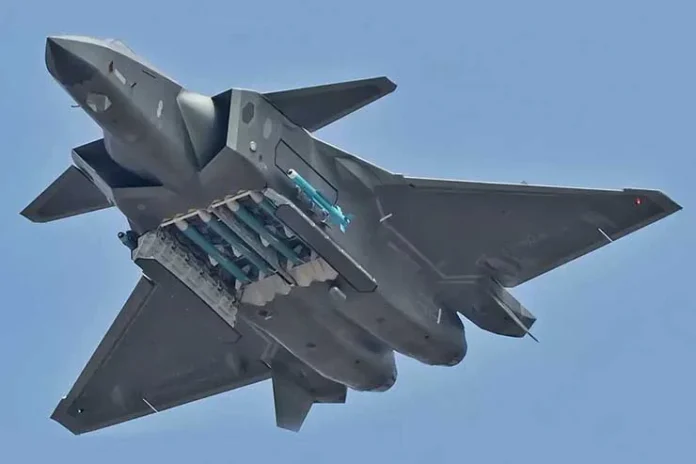
Recent geopolitical shifts, including China’s rapid deployment of over 300 J-20 stealth fighters and advancements in its sixth-generation designs like the J-36 and J-50, have heightened India’s urgency to bridge a perceived 15-year technology gap.

Operations such as India’s Operation Sindoor have further underscored the need for enhanced stealth and interoperability with existing Su-30MKI fleets.
Under the plan, Russia would deliver 20 to 30 Su-57E jets off the shelf initially, with full integration of Indian systems taking three to four years to enable domestic production lines.
ROSOBORONEXPORT has emphasised alignment with India’s “Make in India” initiative, offering not just assembly but also joint development of an indigenous fifth-generation fighter derived from the Su-57E platform. Discussions could extend to exporting co-produced platforms to third countries, boosting India’s defence export ambitions.
Strategically, this collaboration could redefine Indo-Russian defence relations for the next three decades, complementing India’s Advanced Medium Combat Aircraft (AMCA) project by addressing engine and stealth technology shortfalls.
Earlier, Russian Ambassador Denis Alipov had highlighted intensive work on the Su-57E as a means to support India’s fifth-generation ambitions.
While some Indian Air Force experts remain cautious about the Su-57E’s maturity compared to Western alternatives like the F-35, the offer’s depth in localisation and future-generation access presents a compelling counter to China’s aerial surge.
Production facilities in India, potentially at HAL or private partners, would benefit from Russian investments, mirroring recent deals like the ₹13,500-crore Su-30MKI contract.
The Su-57E’s two-seat variant, tailored for pilot and weapons systems operator roles, incorporates 43 enhancements over the base model, including superior sensors and networking.
Linking with the Su-75 Checkmate, slated for first flight in 2026, could further modularise India’s fighter ecosystem at lower costs than competitors.
Challenges persist, including integration of indigenous munitions like Astra missiles and navigating sanctions on Russian tech transfers. Nonetheless, with India’s Union Budget 2025-26 allocating ₹6.81 lakh crore to defence—up 9.53%—funding appears viable for such transformative projects.
Acceptance could position India as a regional hub for stealth production, enhancing deterrence against Pakistan’s potential J-35 acquisitions from China. This proposal thus offers a strategic bridge from fifth to sixth-generation supremacy.

