

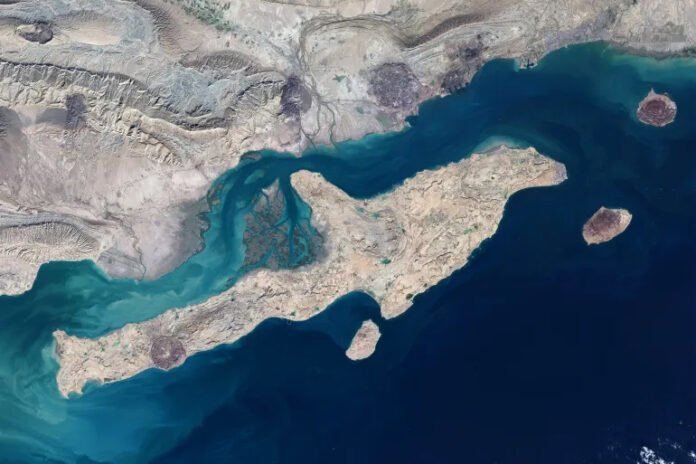
Qeshm occupying an area of 1,445sq km (558sq miles) approximately – is considered to be the entrance point from the Gulf, acting as a cork in the world’s most vital energy transit passage. It is considered to be one of the most ecologically diverse locations in the Middle East. It is home to the Hara mangrove forest, a vital breeding ground for migratory birds, and the Qeshm Geopark – the first of its kind in the region to be recognised by UNESCO, in 2006.
Further, it is home to a complex network of canyons and rock pillars carved by millennia of erosion. Local legends claim the valley was formed by a falling star that shattered the earth, and is known as The Valley of Stars. The island is also home to one of the world’s longest salt caves, popularly known as Namakdan Salt Cave, stretching for more than 6 km (3.7 miles). Its crystalline formations are hundreds of millions of years old, containing some of the purest salt in the Gulf. In addition, Chahkooh Canyon is a deep, narrow corridor of limestone and salt, where vertical walls create a natural cathedral of stone, on the island.

However, the island’s modern industrial facade, bolstered by its status as a free trade-industrial zone since 1989, is overshadowed by its role as Iran’s “unsinkable aircraft carrier”, as the island acts as the primary platform for Iran’s “asymmetric” naval power, say analysts.
Qeshm is home to a complex network of canyons and rock pillars carved by millennia of erosion. Local legends claim the valley was formed by a falling star that shattered the earth, and is known as The Valley of Stars. The island is also home to Namakdan Salt Cave, and Chahkooh Canyon
Reportedly, Iran has stationed a vast number of naval drones, missiles and other armaments under the soil of the popular tourist island, ostensible presuming that it will afford its stockpile a safe haven, as no country would target this UNESCO heritage island.
However, that has not stopped the US and Israeli war planes and armed drones from dropping bombs on the sites, apparently entombing the Iranian weapons below ground in some locations. Satellite imagery taken in recent days shows the smouldering remains of several Iranian missiles and launchers destroyed in US and Israeli airstrikes near entrances to the “missile cities,” as Iranian officials call the subterranean sites.
Additionally, on March 7 – one week into the war – US air strikes targeted a critical desalination plant on the island. The strike, which Tehran branded a “flagrant crime” against civilians, cut off freshwater supplies to 30 surrounding villages on the island.

While exact figures regarding the number of Iranian fast-attack boats and coastal batteries hidden within the island’s subterranean labyrinths remain heavily classified, their strategic intent is clear. Qeshm houses “striking Iranian capabilities” within what is described as an underground “missile city”. Apparently, this is designed for one primary purpose: to effectively control or close the Strait of Hormuz
While exact figures regarding the number of Iranian fast-attack boats and coastal batteries hidden within the island’s subterranean labyrinths remain heavily classified, their strategic intent is clear. As reported by Al Jazeera, Qeshm houses “striking Iranian capabilities” within what is described as an underground “missile city”. Apparently, this is designed for one primary purpose: to effectively control or close the Strait of Hormuz.
This, they have successfully done. Shipping traffic through the strait was effectively halted last week when Iran threatened to strike ships attempting to pass.

Interestingly, Qeshm’s strategic importance was revealed to the world by the Iranian authorities themselves. Iran’s Islamic Revolutionary Guard Corps (IRGC) has used newly released footage from its underground Iran ‘missile city’ to claim it holds an ‘enormous’ stockpile of naval suicide drones and other weapons, which commanders say could be deployed to shut the Strait of Hormuz and hit targets across the region. The video, broadcast on Iranian state media and attributed to the IRGC Navy, was released on Thursday (March 12), although officials did not say when it was filmed.
The purported video shows long underground tunnels packed with unmanned surface vessels, anti-ship missiles and naval mines, some of which are shown being readied and fired. Iran’s naval suicide drones, also known as unmanned surface vehicles or USVs, have already been blamed for attacks on commercial shipping. It is reported they were responsible for strikes on two oil tankers in the Persian Gulf.
USVs operate either on or just below the surface of the water and are packed with explosives for what are effectively kamikaze missions. They are particularly difficult to defend against, especially after dark, because many of the tools developed to detect and stop aerial drones do not transfer neatly to waterborne threats.
Alongside the suicide boats, the Iran missile city footage reportedly flaunts a wider arsenal. Experts identified various systems as Abadil-2 and Abadil-3 ‘kamikaze’ drones on rail launchers; Shahed-136 drones adapted for naval use; Zolfaqar explosive-laden boats designed to swarm larger vessels, besides Ghadir, Nasr-1 and Khalij Fars anti-ship cruise and quasi-ballistic missiles; and multiple types of sea mines such as Maham and Sadaf-02
Iranian-made USVs are also said to have been used by Yemen’s Houthi rebels against trade vessels in the Red Sea, and unmanned boats have been used by Ukraine against Russian forces.
A recent report cites a study by UK-based security and defence analysts Westland Advisory, which argues that USVs are a particularly awkward problem for navies because existing radio-frequency detection, geolocation and jamming techniques for aerial drones are not always effective at sea level.
The same study suggests possible countermeasures such as more advanced radar and sonar to spot small surface targets, improved capabilities to intercept or jam USV communications, and the deployment of autonomous underwater vehicles tasked with neutralising the drones before they reach their targets.
Alongside the suicide boats, the Iran missile city footage reportedly flaunts a wider arsenal. Experts identified various systems as Abadil-2 and Abadil-3 ‘kamikaze’ drones on rail launchers; Shahed-136 drones adapted for naval use; Zolfaqar explosive-laden boats designed to swarm larger vessels.
Moreover, other identified in the arsenal are Ghadir, Nasr-1 and Khalij Fars anti-ship cruise and quasi-ballistic missiles; and multiple types of sea mines such as Maham and Sadaf-02, some of which can be laid from ordinary-looking dhows or fast boats.
Iranian officials framed the Iran missile city arsenal as a tool to inflict severe economic and military damage if Western strikes continue. The regime has threatened to cripple the global economy and drive oil prices to as high as $200 (£151) barrel by using its weapons to close or disrupt traffic through the Strait of Hormuz, one of the world’s most important energy chokepoints.
Qeshm’s silent salt caves and ancient shrines serve as a reminder that while past empires and military coalitions like those of the Portuguese and British have eventually faded, the geological fortress of the strait remains anchored in the turbulent tides of history
Meanwhile, an FBI memo has raised concerns about a separate Iranian ‘revenge’ plot involving drones launched from an unidentified vessel off the United States West Coast, including California. The memo, as described, said the bureau had intelligence that drones could be used to strike targets from such a platform, although no specific timelines or locations were provided.
Allegedly, Iranian forces already possess ‘thousands’ of attack drones that can be operated from far away, fly hundreds of miles and hit targets with a level of accuracy that would once have required manned aircraft. These are not hobbyist quadcopters but what he described as ‘long-range, one-way attack drones that are extremely capable and can be sent in swarms’.
As Qeshm becomes the focal point of a 21st-century energy war, its silent salt caves and ancient shrines serve as a reminder that while past empires and military coalitions like those of the Portuguese and British have eventually faded, the geological fortress of the strait remains anchored in the turbulent tides of history.

