

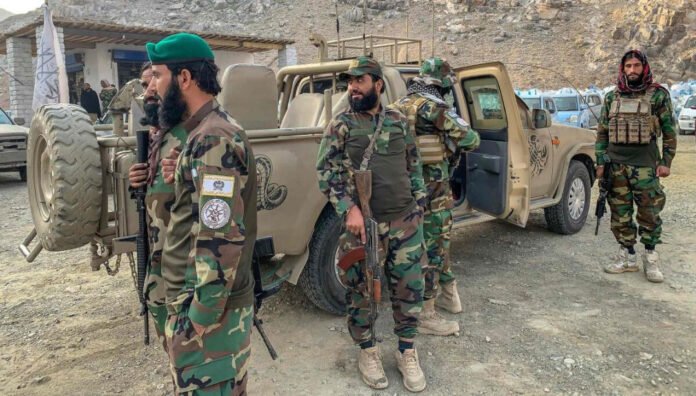
What is happening along the Durand Line is not just another familiar border conflict. It is the unravelling of a security doctrine that Pakistan has developed for decades and mistaken for effective statecraft. The recent strikes across Afghan territory and the retaliatory cycle that followed are not isolated military actions. They demonstrate that an entire framework built on manipulation, leverage, and selective interpretation of terrorism has crossed its peak of utility and is now striking back. South Asia is adjusting to a sterner balance. Power built on proxies rarely retires quietly. It recoils.
For years, Islamabad believed Afghanistan could be shaped from behind the curtain. Influence in Kabul was treated as insurance, a buffer against vulnerability elsewhere. Proximity, patronage, and historical ties were assumed to translate into compliance. Armed actors were classified into manageable categories. The western frontier was not seen as a fault line but as controlled space.

That confidence has now dissolved in plain sight.
The resurgence of militant violence within Pakistan has revealed how shallow that leverage truly was. Networks once considered assets have shown independence. Sanctuaries proved vulnerable. Ideological loyalty was conditional. The line between “good” and “bad” Taliban collapsed under the realities of operational challenges. What was marketed as calibrated influence has proven to be actual accumulated risk.
For years, Islamabad believed Afghanistan could be shaped from behind the curtain. Influence in Kabul was treated as insurance, a buffer against vulnerability elsewhere. Proximity, patronage, and historical ties were assumed to translate into compliance. The western frontier was not seen as a fault line but as controlled space. That confidence has now dissolved in plain sight
The decision to conduct air strikes deep inside Afghanistan was intended as a display of resolve. Instead, it underscored strategic exhaustion. Air power can punish infrastructure. It cannot intimidate a movement forged in insurgency. Pakistan’s counterinsurgency strategy has failed miserably, igniting more fires than dousing them. Afghanistan’s current rulers survived two decades of superior firepower. Their legitimacy narrative is built on endurance.
What is happening along the Durand Line is not just another familiar border conflict. It is the unravelling of a security doctrine that Pakistan has developed for decades and mistaken for effective statecraft. The recent strikes across Afghan territory and the retaliatory cycle that followed are not isolated military actions. They demonstrate that an entire framework built on manipulation, leverage, and selective interpretation of terrorism has reached its peak and is now striking back. Pakistan’s coercive signalling, therefore, produces the opposite of submission. It generates resistance.

The deeper failure lies in doctrine. Strategic depth was premised on the belief that influence could be sustained through informal networks and asymmetric tools. It is assumed that armed actors would remain permanently tethered to the state that once facilitated them. That assumption ignored the most basic rule of proxy politics: autonomy expands over time. Once militant ecosystems mature, they pursue their own priorities. They cannot be switched on and off at convenience.
Afghanistan’s calculus is equally complex. Its leadership governs a country under economic stress and limited diplomatic recognition. Moving decisively against every anti-Pakistan network risks internal fractures. Ambiguity becomes a tool of internal balance. But ambiguity invites retaliation. Kabul walks a narrow ridge between internal stability and external pressure
Pakistan now confronts the consequences of that miscalculation.

The Western theatre can no longer be relegated to secondary importance. It demands resources, strategic imagination, and political courage that go beyond episodic retaliation. Sustained counterinsurgency in mountainous terrain requires granular intelligence and social penetration, not merely kinetic demonstration. It requires consistency in policy, not differentiation between convenient and inconvenient militants.
There is also reputational erosion. For years, Islamabad projected itself as uniquely positioned to influence events in Afghanistan. That claim is difficult to sustain while engaging in open confrontation with the very actors it once described as accessible interlocutors. Influence that must be enforced through bombardment is not influence. It is estrangement dressed as authority.
Economic fragility sharpens the dilemma. Pakistan’s fiscal space is constrained. Prolonged military operations strain an already burdened system. Investor confidence, particularly in infrastructure and corridor projects, depends on predictability. Persistent Western instability signals the opposite. A frontier that was once framed as manageable now appears structurally volatile.
For India, the turbulence to the west carries layered consequences. A Pakistan consumed by insurgent pressure may see its military attention divided, but stress can also breed risk-taking. Instability along the Afghan frontier has historically displaced militant flows rather than extinguished them
Afghanistan’s calculus is equally complex. Its leadership governs a country under economic stress and limited diplomatic recognition. Moving decisively against every anti-Pakistan network risks internal fractures. Ambiguity becomes a tool of internal balance. But ambiguity invites retaliation. Kabul walks a narrow ridge between internal stability and external pressure.
For India, the turbulence to the west carries layered consequences. A Pakistan consumed by insurgent pressure may see its military attention divided, but stress can also breed risk-taking. Instability along the Afghan frontier has historically displaced militant flows rather than extinguished them. There is also a trade dimension. As crossings such as Torkham and Chaman face repeated closures and uncertainty, Kabul has a stronger incentive to reduce overdependence on Pakistani transit corridors.
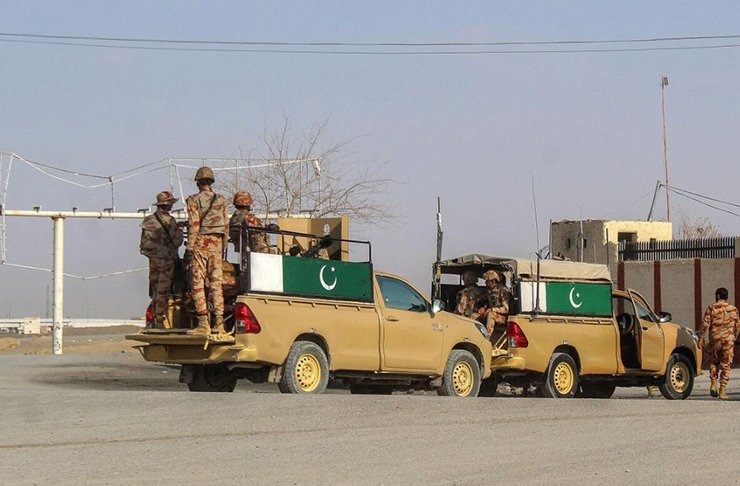
This elevates the importance of alternative routes that connect Afghanistan with Indian markets through sea-land combinations. High-value Afghan exports that can move by air or via western corridors become strategically significant. For New Delhi, engagement with Afghanistan therefore acquires greater weight not merely as commerce, but as insulation against coercive chokepoints. Yet prudence remains essential. A weakened Pakistan is not automatically a stable Pakistan, and regional disruption can just as easily complicate connectivity as enhance it.
The larger lesson is stark. Policies built on tactical expediency generate strategic liabilities. The cultivation of non-state actors as instruments of leverage may offer short-term gains. Over time, it corrodes institutional coherence and invites blowback. Pakistan’s western crisis is not an accident of timing. It is the culmination of shortcuts accumulated over time.
The larger lesson is stark. Policies built on tactical expediency generate strategic liabilities. The cultivation of non-state actors as instruments of leverage may offer short-term gains. Over time, it corrodes institutional coherence and invites blowback. Pakistan’s western crisis is not an accident of timing. It is the culmination of shortcuts accumulated over time
Correcting the course will require more than just forceful rhetoric. The way forward demands something that has been lacking in this relationship: doctrinal humility. Pakistan must let go of the lingering belief that militant networks can be selectively controlled. Establishing uniform standards for dealing with armed non-state actors, credible border management, and ongoing diplomatic efforts are essential foundations for stability. Air strikes alone will not achieve it.
Afghanistan, too, faces a choice. Allowing territory to serve as a launch pad for anti-Pakistan militancy risks perpetual confrontation and economic suffocation. Sovereignty is strengthened not only by resisting external force but by denying space to destabilising actors.
The mountains along the Durand Line have a long memory. They have witnessed empires overestimate their leverage and insurgents overestimate their endurance. Pakistan’s present reckoning is less dramatic but no less consequential. A doctrine once celebrated as strategic foresight has matured into structural vulnerability.
Strategic depth promised insulation. It has delivered exposure. Until that illusion is abandoned in favour of consistent and transparent state policy, Pakistan’s western frontier will remain not a buffer, but a wound that repeatedly reopens.

The author, a PVSM, AVSM, VSM has had an illustrious career spanning nearly four decades. A distinguished Armoured Corps officer, he has served in various prestigious staff and command appointments including Commander Independent Armoured Brigade, ADG PP, GOC Armoured Division and GOC Strike 1. The officer retired as DG Mechanised Forces in December 2017 during which he was the architect to initiate process for reintroduction of Light Tank and Chairman on the study on C5ISR for Indian Army. Subsequently he was Consultant MoD/OFB from 2018 to 2020. He is also a reputed defence analyst, a motivational speaker and prolific writer on matters of military, defence technology and national security. The views expressed are personal and do not necessarily carry the views of Raksha Anirveda
