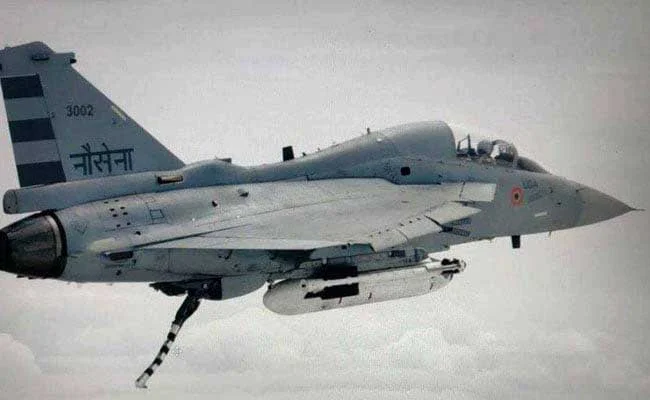
New Delhi. The naval variant of the indigenous Light Combat Aircraft (LCA) Tejas became the first aircraft in India to successfully perform an “arrested landing”, in what is being billed as a major step in the programme to make the jet ready for service with the Navy.

The nimble multirole fighter jet used a hook mounted on its fuselage to snare a wire to rapidly come to a halt after landing at a test facility.
The ability to halt at a very short distance is a key feature needed for operations on board an aircraft carrier where the landing area is limited.
The test on September 13 at Goa’s Shore-Based Test Facility replicates the conditions on an aircraft carrier where fighter jets have to snag a wire on the deck of the ship in order to abruptly stop within the length of the narrow deck.
Two Light Combat Aircraft-Navy (LCA-N) prototypes are being tested.

An “arrested landing” on the deck of an aircraft carrier is a feat achieved by only a handful of fighter jets developed in the US, Russia, the UK, France and, more recently, China.
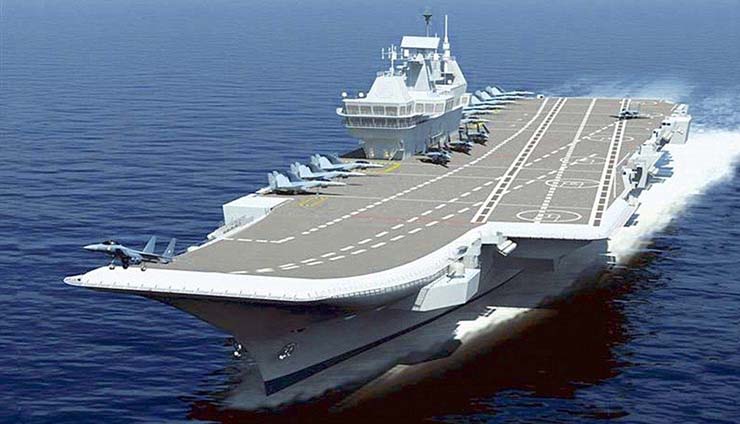

Achieving this successfully, over and over again at the test facility in Goa, will validate one of the most important design features on the LCA-N – its ability to handle the incredible stresses of making an “arrested landing” on the deck of an aircraft carrier.
Only after the shore tests are successful can naval test pilots leading the development effort on the LCA-N prototypes graduate to the next step – making an actual landing on India’s only operational aircraft carrier, INS Vikramaditya.
Key members of the LCA-N development team say they have flown 60 sorties in May-June at the Goa test facility.
To eventually make an approach onto the deck of INS Vikramaditya, LCA-N engineers and pilots need to be confident that the fighter can slam down onto the deck of a carrier at a ‘sink rate’ (rate of descent) of approximately 7.5 metres per second (1,500 feet per minute) without being damaged.

Engineers and pilots in the project are certain that they are on track to meet their landing certification target.
One of the major technical concerns that could impact the development of the LCA-N is that the arrestor gear on INS Vikramaditya, the mechanical system used to rapidly slow down an aircraft as it lands, has key design differences from the gear installed at the test facility in Goa.
Those involved in the project are hopeful that this does not impact the project but they will not be certain until they actually land on the ship.