
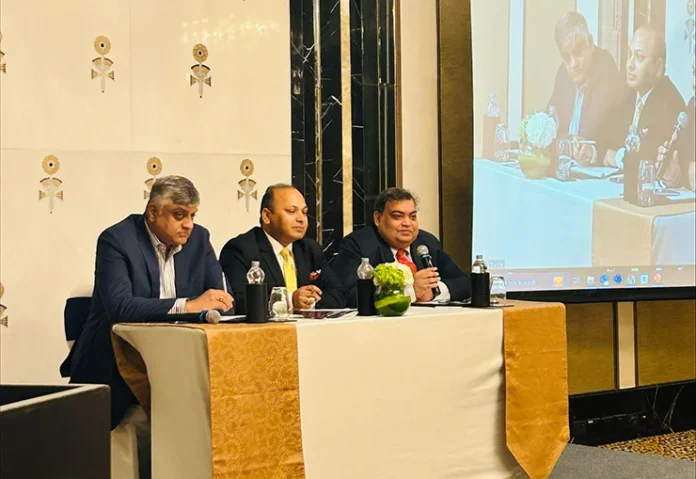
Mumbai: Arthur D. Little, the renowned international strategy and management consulting firm, announced July 26 the release of its comprehensive industry report titled “India in Space: A USD 100 Billion Industry by 2040”. The report provides an in-depth analysis of the Indian space industry and identifies opportunities that could help the sector reach its maximum potential.
The potential for growth in the global space industry is immense, with the addressable market projected to reach a staggering USD 1 trillion by 2040 as per various analysts. India’s space market is around USD 8 billion today and has been growing at an annual growth rate of 4% in recent years. The Indian government aspires for the country’s space sector to account for 9% of the global industry by 2030. With its current trajectory, India’s space economy could reach USD 40 billion by 2040. However, India has the potential to claim a much larger share of the global space economy, amounting to a staggering USD 100 billion addressable opportunity by 2040.

India’s journey in space began with the establishment of the Indian Space Research Organisation (ISRO) in 1969. Over the past two decades, India has made significant strides in the Space 4.0 era, launching a total of 381 international satellites for 34 different countries. The Indian government’s commitment to encouraging private participation has yielded remarkable results, with new-age space startups in India securing an impressive USD 112 million in funding in 2022 alone.
What is Space 4.0?
The convergence of technology, private capital, and deregulation has fuelled increased commercialization and involvement of various space actors globally, particularly private companies. Space start-ups are now transitioning from investment-backed development to business-supported operations, facing many technical, economic, and regulatory hurdles in this new era.
Commenting on the report, Barnik Chitran Maitra, Managing Partner, Arthur D. Little, India & South Asia said, “The Indian space industry is on the cusp of a major transformation with increasing government expenditure on space, rapidly growing investment in the country’s private space sector, and government’s policies encouraging commercial space ventures. India presents a very lucrative market with many opportunities for private players, and the Indian Space Research Organisation is a great ambassador for India in Space.”
The report highlights the key challenges that lay ahead. These include the lack of local manufacturing capabilities for certain components, funding inadequacies, the need for a clear and comprehensive regulatory framework, and increasing competition from foreign players.

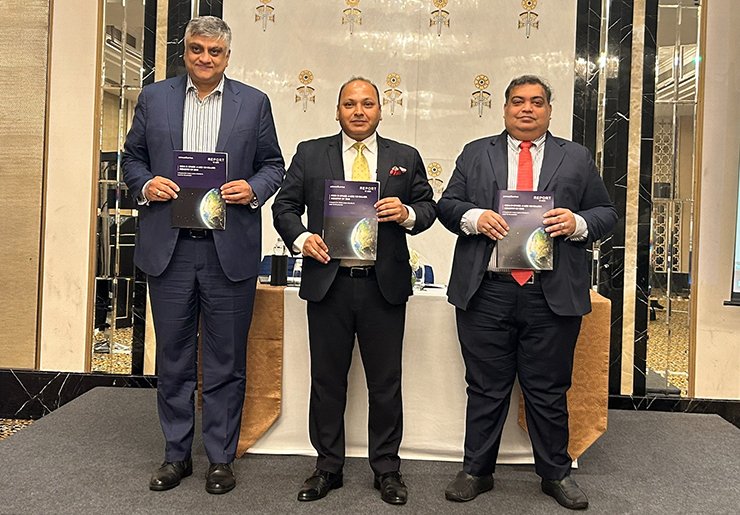
To enable India’s space sector to unlock its full potential, ten key imperatives have been identified. These include establishing clear and comprehensive regulations, attracting foreign investments, strengthening manufacturing capabilities, implementing formal support programs for start-ups, capitalising on near-term opportunities, establishing accelerator and incubation centres, leveraging foreign expertise through collaborations, pursuing joint missions with other space agencies, establishing dedicated research and development centres for emerging space themes, and accelerating skill development.
By embracing these imperatives, India can position itself as a global powerhouse in the space industry, driving innovation, economic growth, and international collaborations. Four major trends mentioned in the report emerged as strategic turning points within the industry comprising the mass adoption of commercial satellite services, the development of commercial space stations, the in-space extraction and exploitation of resources, and the weaponisation of space. The journey to reach the stars is challenging, but with determination, strategic planning, and concerted efforts, India can carve its path towards an extraordinary space future.

“India needs to encourage widespread adoption of satellite internet services and capitalize on its existing strengths in satellite and launch vehicle manufacturing. India should develop capabilities in high-potential sectors such as space mining and in-space manufacturing, venture into new space activities like space tourism and space entertainment and innovate in the realm of ‘green space’. We are confident that this report will encourage relevant stakeholders to tap into opportunities in the Indian space market and present them with meaningful avenues of growth and collaboration while helping India realize its vision of becoming a global space powerhouse,” added Barnik Chitran Maitra.
At the forefront of innovation since 1886, Arthur D. Little has been an acknowledged thought leader in linking strategy, innovation, and transformation in technology-intensive and converging industries.