

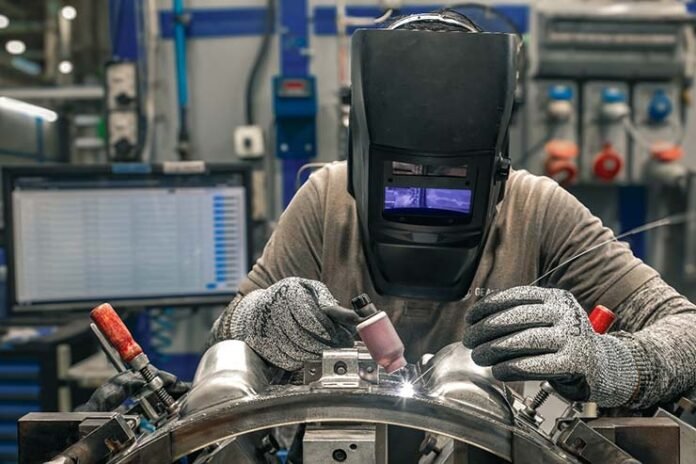
Aerospace veteran Srinivasan Dwarakanath has the reserved demeanor of a university professor. But get him talking about high-precision manufacturing for the global aviation world in India and Dwaraka, as his friends call him, gets excited. He should know what’s cooking: He’s spent more than two decades working for an airframer — in developing technology and building suppliers.
“We are at an inflection point,” he says of aerospace engineering in India. “I have not ever seen so much inbound interest for manufacturing from global original equipment manufacturers (OEMs) and small and medium companies.” Dwaraka, who is the director general of the Aerospace India Association, predicts that India’s exports will grow its aerospace manufacturing and services revenues tenfold in 10 years, to $20 billion a year.

India, with its sophisticated technological foundation and manpower, is ready for aerospace. For a long time, the country has been a destination for software and design services. With a surge in demand for planes from airline companies — India is projected to double its passenger jet fleet size by 2030 — it now makes good business sense to run in-country manufacturing and repair operations.
GE Aerospace was quick to recognise India’s manufacturing potential when it set up its Pune facility in 2015. Since then, the site has steadily evolved into a high-capability operation. In the past two years alone, GE Aerospace has committed $44 million to its India-based facilities to introduce advanced manufacturing processes, expand automation, and strengthen the production of critical engine components.
This momentum is supported by a strong local ecosystem. More than 300 suppliers now work with the Pune facility, contributing to the wider network of more than 2,200 GE Aerospace suppliers across India. As a result, the sourcing of castings, manifolds, and subassemblies from Pune has grown significantly, positioning the site as an essential contributor within GE Aerospace’s global network of more than 80 factories.
More than 300 suppliers now work with the Pune facility, contributing to the wider network of more than 2,200 GE Aerospace suppliers across India. As a result, the sourcing of castings, manifolds, and subassemblies from Pune has grown significantly, positioning the site as an essential contributor within GE Aerospace’s global network of more than 80 factories
To illustrate GE Aerospace’s manufacturing journey in India, we interviewed four suppliers to track how their engineering capabilities and scale have grown through their work with GE Aerospace — and in ways previously unimaginable. This also means, importantly, that their shop-floor teams have learned the value of safety and quality in aerospace manufacturing.

Capability Growth Curve
When GE Aerospace started scouting for suppliers in 2014–15 for its multimodal factory in Pune, an obvious candidate was Raghu Vamsi Machine Tools in Hyderabad. The company, helmed by Vamsi Vikas Ganesula, had experience working with companies in oil and gas and aerospace.
GE Aerospace was looking for end fittings — specialised connectors used to join tubes in fuel or gas transfer systems. Such fittings need to be secure and reliable under high pressure and harsh weather conditions.

Raghu Vamsi supplies GE Aerospace with connectors in sizes ranging from 0.25 inch to 7.5 inches in diameter, with thickness ranging from 10 to 50 microns. “There’s a degree of complexity and capability that we have traversed as a GE Aerospace partner. It’s not just about growth but about evolving together,” says Preeti Vamsi, director of Raghu Vamsi Machine Tools.
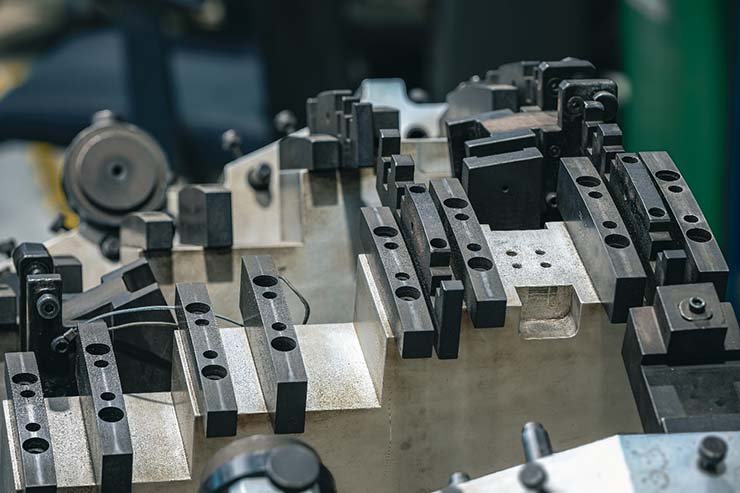
This kind of growth in engineering capability is not unique in the GE Aerospace ecosystem. Take Saakshi Medtech and Panels: Its work with GE Aerospace’s Pune facility dates back 10 years, having evolved from supplying vibration-monitoring panels to performing industrial X-rays for some of the company’s legacy business products.
“Each time, we got support from GE Aerospace for design, development, and manufacturing,” says Aniket Vijay Latkar, Saakshi’s managing director. “For the drives and controls order, we had GE Aerospace executives from the US visit us multiple times.”
Saakshi’s growth in capability demonstrates the success of GE Aerospace’s efforts to develop strong partnerships with its supplier ecosystem in India. Take, for instance, the process of laser cutting and deburring of components that get welded into a manifold that eventually sits in a GE Aerospace commercial jet engine. Explains Latkar: “When you laser-cut, you burn the material and leave a little bit of molten metal at the edge. Size increases, tolerance gets affected, overall functioning deteriorates. You want to apply the exact amount of [laser] power to minimise the molten edge. After running sample after sample, when you get the closest sample possible, the programmes get locked in the machine.” Output from this process has grown 10 times in six months, he adds.
Bengaluru-based JK Maini Global Aerospace has nearly five dozen engineers in its new product development team. This specialist team developed 150 new products last year and has a target of 365 this year — one new product a day, says Managing Director Gautam Maini. “Three of four of these are engine parts, the rest structural,” he adds. With the help of GE Aerospace, JK Maini had breakthroughs, such as development of a dry film lubricant. “We grew our relationship with GE Aerospace threefold just in the last three years,” Maini says. “We went up the value chain to machined castings and forgings and are able to deliver finished products across the globe.”
Godrej Aerospace, another local partner and part of the Godrej Enterprises conglomerate, has set up a design team for line replaceable units (LRUs), discrete aircraft parts such as electronics or landing/flap actuators — and has its eye on developing its own intellectual property (IP), says Executive Vice President and Business Head Manek Behramkamdin.
There can be no compromise in the safety and quality specifications of the parts produced. This is enshrined in the GE Aerospace culture as the SQDIP principles: safety, quality, delivery, inventory, and productivity
“As a long-standing supplier to global OEMs like GE Aerospace, we have consistently strengthened our portfolio across brackets, complex tubings, and high-precision fabrication,” Behramkamdin says. “These categories demand deep engineering expertise and a strong understanding of flight-critical requirements, which has shaped our culture of precision and reliability. Building on this foundation, we have now set up a dedicated LRU design team to develop line replaceable units with a clear focus on creating IP. This move allows us to engage earlier in the value chain, support our customers with more integrated solutions, and contribute meaningfully to the next phase of India’s aerospace growth.”
Safety and Customer Responsiveness
There’s an oft-repeated saying in the aviation world: You can’t park a plane at 30,000 feet in the sky. It’s an idea that underscores the importance of safety and quality in the aerospace industry. There can be no compromise in the safety and quality specifications of the parts produced. This is enshrined in the GE Aerospace culture as the SQDIP principles: safety, quality, delivery, inventory, and productivity.
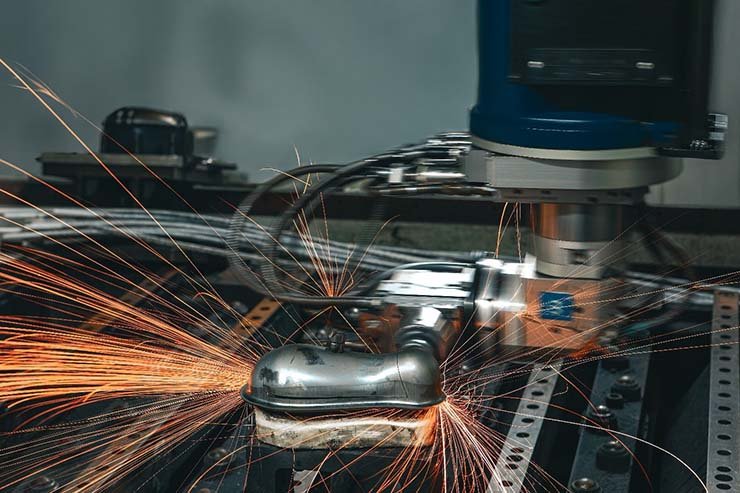
Preeti Vamsi of Raghu Vamsi agrees that in the manufacturing world, that can be a challenge. “We hire from ITIs [industrial training institutes] and diploma colleges and train them,” she says in reference to training people, especially for the shop floor. “This is knowing the ‘how to do’ it. But bringing about the culture of quality — this is the tough part.”
Partners recognise the advantage: Once the culture of safety and quality takes hold, it becomes second nature to workers on the shop floor, enabling them to reduce waste and increase productivity.
The Future Begins Now
The Indian aerospace ecosystem is clearly on the cusp of big changes — and GE Aerospace can rightfully claim credit for readying its partners in the country, not just for its own requirements but also for the global aerospace industry.
The next pivot in each supplier’s journey is toward more complex parts and subassemblies, which will help them scale the value chain. With growing demand for aviation in India and local engineering talent trained and primed for the stringent safety and quality requirements of aerospace manufacturing, the sector is set to push the envelope in the next decade.

