

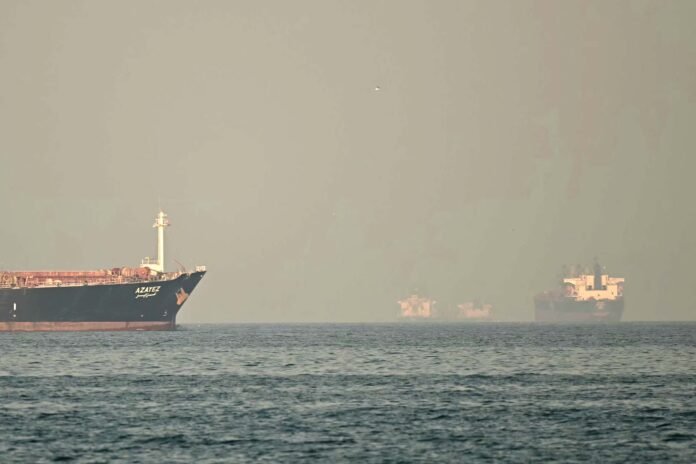
Paris: European NATO allies pushed back against demands by US President Donald Trump to help reopen the Strait of Hormuz by force, weeks after Iran shut down the majority of shipping through the critical trade artery in response to the American-Israeli war against the country.
British Prime Minister Kier Starmer said the United Kingdom “will not be drawn into the wider war,” while German Defence Minister Boris Pistorius said “this is not our war.” Kaja Kallas, the European Union’s foreign policy chief, said member states have no appetite to expand their maritime-security operation in the Red Sea to the Strait of Hormuz, the gateway to the Persian Gulf.

Iran declared the strait closed to traffic on March 2, following the start of strikes against the country by the US and Israel two days earlier. While saying the US doesn’t need anyone’s help, Trump has simultaneously called on allies to aid in securing navigation in the waterway, reportedly going as far as to threaten consequences for the NATO alliance if European countries reject those demands.
“The feeling is, this is not Europe’s war,” Kallas told Reuters in an interview. “Of course we are allies with America, but we don’t really understand their moves recently. We haven’t been consulted, and we don’t really understand, what are the objectives of this war.”
The US has several options to counter Iranian mines. These are some key assets. The US Navy decommissioned its only four minesweepers in the Middle East last year, but still maintains other countermine capabilities it can deploy.
The EU’s foreign-policy chief said there is no willingness on the part of member states to change the mandate of the bloc’s naval mission, tasked with securing navigation in the Red Sea, and “nobody is ready to put their people in harm’s way in the Strait of Hormuz.”

Iran has attacked more than a dozen commercial vessels with drones, missiles and small boats in the strait since the start of the conflict, while multiple media reported the country has started laying sea mines, citing US intelligence.
The Strait of Hormuz is relatively narrow, around 50 kilometres wide at some points, well inside the range of Iranian coastal attacks.

Around 20% of the world’s oil consumption transits via the waterway, and Brent crude oil futures have jumped to more than $100 a barrel following the closure, causing anxiety among economists and policymakers about the impact on the global economy.
Trump in recent days explicitly linked US involvement in NATO and support to Ukraine to the efforts by allies with what he called “a very small endeavour, which is just keeping the Strait open.” The president told the Financial Times that “if there’s no response or if it’s a negative response I think it will be very bad for the future of NATO.”
French President Emmanuel Macron has said he is working on a mission of European and non-European partners to escort shipping to “gradually” reopen the waterway, but only once the hottest phase of the conflict is over.
Setting up a mission of warships accompanying tankers through the dangerous passage would be a “complex undertaking,” requiring collaboration with “all stakeholders in the maritime transport sector,” including insurers, Macron said at defence Cabinet meeting here.
“We are not a party to the conflict,” Macron said. “And so France will never take part in operations to open or liberate the Strait of Hormuz in the current context.”
France has sent around half of its fleet of major surface combatants, including the aircraft carrier Charles de Gaulle, to the Middle East to protect navigation, French citizens and allies in the region, though the country has emphasised the deployment is strictly defensive in nature.

