

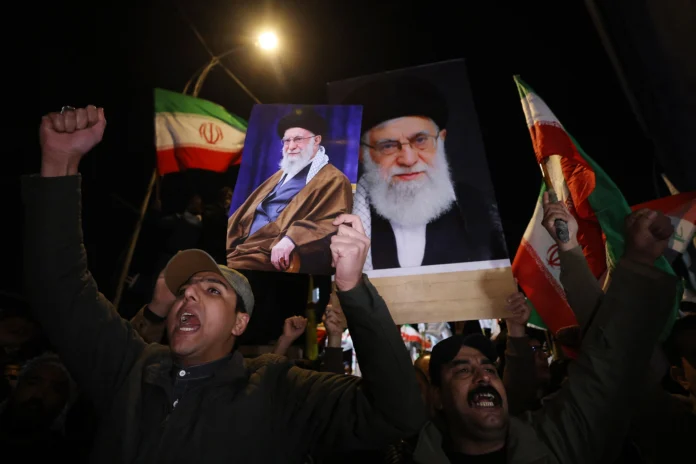
The assassination of Iran’s Supreme Leader, Ayatollah Khamenei represents a watershed moment in modern espionage. While initial reports from Western intelligence circles hail the strike as a “backdoor success” and a masterpiece of cooperation between the Central Intelligence Agency (CIA) and the Institute for Intelligence and Special Operations (Mossad), the unfolding reality on the ground suggests a familiar and troubling pattern. This operation, characterised by surgical precision and a high-value target, appears to have prioritised immediate tactical “disruption” over a sober, long-term strategic vision. It serves as a modern case study in how intelligence agencies, driven by the allure of a “clean hit,” often underestimate the systemic blowback that follows the removal of a central political figure.
In the world of intelligence, “The Foggy Mirror” refers to a cognitive bias where an agency’s technical success—such as intercepting a secure communication or locating a hidden target—is mistaken for a deep understanding of the target’s society. The CIA’s history in the Middle East is marked by this recurring friction. Tactical wins create an illusion of control, leading to short-term thinking that can eventually compromise broader national interests. When analysts focus too heavily on the “how” of an operation, they often neglect the “why” and the “what next,” leading to a disconnect between the mission’s success and the region’s subsequent stability.

The earliest and most profound example of this disconnect occurred in 1953. The CIA and British intelligence orchestrated Project Ajax to overthrow Prime Minister Mohammad Mosaddegh, a democratically elected leader who had moved to nationalise the Iranian oil industry. At the time, the tactical assessment was focused on preventing a Soviet tilt and securing energy interests. The operation was executed through a “spectacle” of manufactured dissent, utilising bribes and local agitators to create the appearance of a popular uprising. While the CIA successfully reinstated the Shah, the strategic cost was immense and arguably ignored for decades. By subverting a democratic process, the United States sowed the seeds of a deep-seated anti-Western sentiment. This historical friction eventually provided the ideological fuel for the 1979 Islamic Revolution. The subsequent 444-day hostage crisis and the catastrophic failure of the 1980 rescue mission, Operation Eagle Claw, were direct consequences of a tactical win that failed to account for Iranian national identity and the long-term resentment of foreign interference.
Perils of the Power Vacuum
The same pattern emerged during Operation Iraqi Freedom (OIF) in 2003. The CIA’s ability to track and facilitate the removal of Saddam Hussein was a feat of operational efficiency. However, the agency’s planning suffered from a “short-termism” that assumed a Western-friendly democracy would naturally fill the void left by a collapsing autocracy. The intelligence community failed to provide a realistic roadmap for the day after the statue fell. The decision to implement “de-Ba’athification” and disband the Iraqi military between 2003 and 2004 serves as a primary example of failing to assess ground realities.
The assumption that the Supreme Leader’s death would trigger an immediate pro-Western uprising appears to have been a significant miscalculation of the Iranian social climate
By removing the very structures that held the country’s diverse sectarian groups together, the US inadvertently created a massive power vacuum. By 2006, this oversight led to a brutal civil war and provided an opening for Iran to expand its regional influence by supporting Shia militias. The CIA’s failure to recognise that the Ba’ath Party was as much a social network as a political one led to a strategic quagmire that lasted over a decade, proving that a military victory is hollow without a sociological one.
The Libyan Intervention
In 2011, the CIA supported the intervention to oust Muammar Gaddafi in Libya. The tactical assessment suggested that removing the “mad dog of the Middle East” would empower a transitional council to lead the country toward stability. Again, the intelligence was focused on the immediate goal of regime change while overlooking the complex tribal allegiances that Gaddafi had spent forty years manipulating and balancing. Following his death in October 2011, the country did not stabilise; instead, it fractured into warring factions. The resulting chaos allowed extremist groups to flourish in a lawless environment, leading directly to the September 2012 attack on the US consulate in Benghazi. The loss of Ambassador J. Christopher Stevens and CIA personnel underscored a hard reality: removing a dictator without a plan for the resulting vacuum is a high-risk gamble that rarely yields a high-reward outcome.

Intelligence Blinders and Analytical Bias
The recurring theme in these historical failures is not a lack of effort, but “intelligence blinders.” When an operation offers a massive, “movie-style” win—like the removal of a high-value target—the desire for that win can warp the analytical process. In the lead-up to the 2003 Iraq War, the “gamble” on Weapons of Mass Destruction (WMDs) was a result of this distorted perception. Analysts often feel pressure to provide “actionable” intelligence that supports a preferred policy path, leading to a neglect of dissenting voices who might warn of sectarian violence or cultural blowback. This bias often results in an underestimation of “street power”—the organic, often religious-driven movements that do not follow Western political logic. In many cases, the CIA’s focus on high-level leaders ignores the resilience of the mid-level cadres who actually sustain a movement’s ideology and operations on the ground.
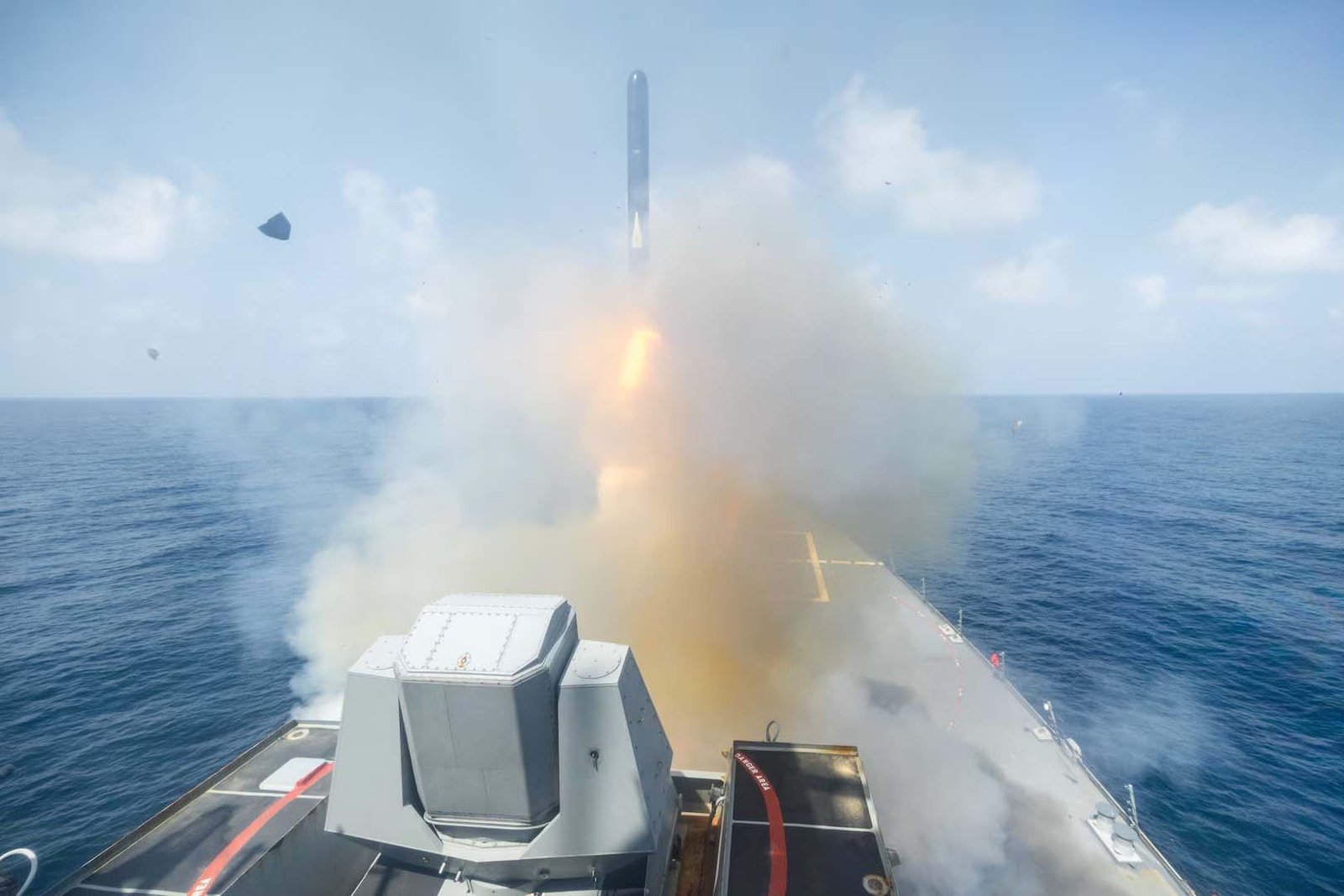

Evaluating “Epic Fury”
The recent operation targeting Khamenei, executed on February 28, 2026, reflects these same systemic pressures. Intelligence officers spent years mapping the “pattern of life” of the Iranian leadership, achieving a level of surveillance that was technically flawless. However, the assumption that the Supreme Leader’s death would trigger an immediate pro-Western uprising appears to have been a significant miscalculation of the Iranian social climate.
The US has been met with an “unexpected and surprising” regional response that has heightened threats to maritime security and global energy prices
Instead of a public rally in support of a new government, the Iranian security apparatus, led by the Islamic Revolutionary Guard Corps (IRGC), initiated a pre-planned and structured succession. The expected power vacuum did not materialise. Instead, the US has been met with an “unexpected and surprising” regional response that has heightened threats to maritime security and global energy prices. While the strike was a tactical success, the strategic aim of stabilising the region or curbing Iranian influence has, thus far, yielded the opposite result.
Takeaways
To break this cycle, the intelligence community must prioritise “sustainability” over “speed.” A successful model for this exists in Operation Neptune Spear (2011). The mission to kill Osama Bin Laden was successful not just because of the surgical precision of the United States Naval Special Warfare Development Group (DEVGRU), but because the CIA spent months analysing every possible failure point, including the potential for a diplomatic break with Pakistan and the long-term impact on Al-Qaeda’s structure. True intelligence is not just knowing where a target is; it is knowing what happens to the world the moment that target is gone. Without this shift, the agencies will continue to win the battles of today while losing the peace of tomorrow.

The writer is a national security analyst specialising in intelligence and strategic affairs. He has worked extensively with national security and foreign policy think tanks of repute, and has written for publications including The Telegraph, The Print, Organiser, and Fair Observer. He has also been a guest contributor to the School of International Studies at Jawaharlal Nehru University (JNU).
