

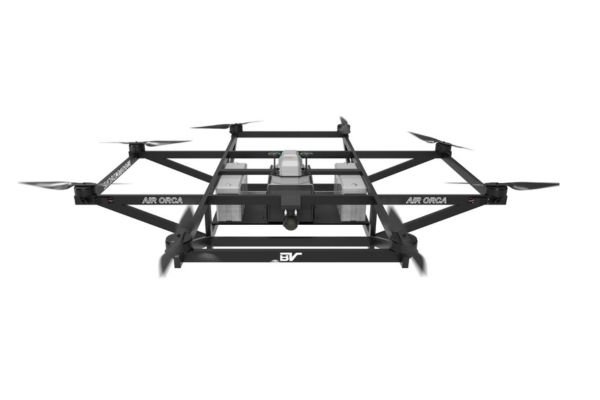
New Delhi: BonV Aero, the Indian aerospace firm, is working to introduce hard-kill counter-drone systems in the country, a technology designed not merely to silence an unauthorised aircraft but to intercept and remove it from the sky. The company said such systems are intended for deployment at airports, places of worship, government buildings, and military installations.
The push comes against a backdrop of drone sightings at some of India’s most closely guarded locations. The Shree Jagannath Temple in Puri, the Ram Mandir complex in Ayodhya, and Hindustan Aeronautics Limited facilities in Bengaluru have all recorded drone activity in restricted airspace. Naval establishments in Mumbai have also reported alerts. In most cases, the aircraft was not brought down, and the person operating it was not traced.

According to BonV Aero, the pattern points to a structural problem with how counter-drone systems at protected sites currently work. Most rely on jamming, which disrupts the radio link between a drone and its controller. The approach has value. Signal disruption remains the primary response in most counter-drone deployments. However, no single system is foolproof. Some unmanned platforms can continue flying on pre-programmed routes even when communication links are disrupted. In such cases, the ability to physically neutralise the aircraft becomes necessary as a final safeguard.
“Repeated drone breaches at restricted locations show that disruption alone is not enough. India’s counter-UAS framework must include the ability to physically neutralise an unauthorised drone once it enters protected airspace,” said Satyabrata Satapathy, Co-Founder and Chief Executive Officer, BonV Aero.
BonV Aero is planning to introduce efficient counter-drone interceptor systems designed to physically stop or neutralise hostile drones after they have been detected and tracked. That includes the highly potent net-launcher technology, an interception method that has been operationally tested in conflict environments.
The efficiency of this novel idea can be gauged by its ability to engage swarms of drones simultaneously, fighting a multi-pronged battle to keep our skies safe. The company said it is exploring how these systems can be localised within India’s defence production framework, making the country a base for manufacturing rather than simply a market for imports.

Across the Indo-Pacific, the Middle East, and parts of Europe, governments are revisiting counter-UAS doctrine as drone capability advances and the incidents multiply. What distinguishes India’s position is the scale and sensitivity of the sites already breached and the pace at which the threat is advancing, added Satapathy.

