


India’s capital defence allocations in the past two decades clearly points towards a gradual shift. Moving beyond service-centric debate toward a threat-based and theatre-integrated framework for defence planning, it raises a valid question – whether such redistribution represents necessary strategic adaptation or risks gradual erosion of India’s land deterrence capacity. Drawing on defence budget trends, parliamentary reports, and lessons from contemporary conflicts—particularly the Russia–Ukraine war—it can be argued that land power remains decisive in India’s geography, even as air and maritime capabilities gain increasing relevance. The core challenge is not inter-service competition but structural imbalance: manpower-heavy force design, revenue-capital distortion, and incomplete theatre integration constrain modernisation. While proposing a threat-based, theatre-driven allocation model supported by indigenous industrial capacity and calibrated maritime ambition, the article concludes that though India is not presently losing its land edge, sustaining credible deterrence through 2035 will require integrated reform, fiscal realism, and strategic clarity across domains.
From Decisive Victory to Strategic Drift (1971–2019)
The 1971 war marked the peak of India’s military power in South Asia. The formation of Bangladesh transformed the political landscape of the subcontinent and showed that India was better at fighting wars than Pakistan (Ganguly, 2001). For more than 30 years after that, the probability of full-scale conflict appeared to decline. However, this drop was not the product of reconciliation but the result of strategic adaptation.

Pakistan changed its strategy for asymmetric conflict under the shield of nuclear deterrence after successive conventional setbacks (1947-48, 1965, 1971, and Kargil in 1999) (Tellis, 2008). Proxy warfare has become the primary instrument of pressure in Jammu and Kashmir since 1989. Terrorist attacks in major cities in India reinforced this strategy.
This shift had two long-lasting effects. First, it kept the Indian Army busy with counter-insurgency and high-altitude deployment missions, and secondly, it reduced politician’s appetite for large-scale conventional mobilisation.
While Indian Armed Forces maintained numerical strength, structural reforms slowed. The cycles of modernisation were put on hold. In 2012, the Ministry of Defence (MoD) admitted that the Capital procurement often lagged operational requirements. During this period, China was more of a worry in the background rather than an immediate operational driver. In 2020, that assumption changed dramatically.
The China Inflection and the Return of High-Altitude Deterrence
The 2020 standoff along the Line of Actual Control (LAC) had a big impact on India’s security calculus. The confrontation showed that China didn’t consider the border as a permanent problem, but as a dynamic pressure mechanism.

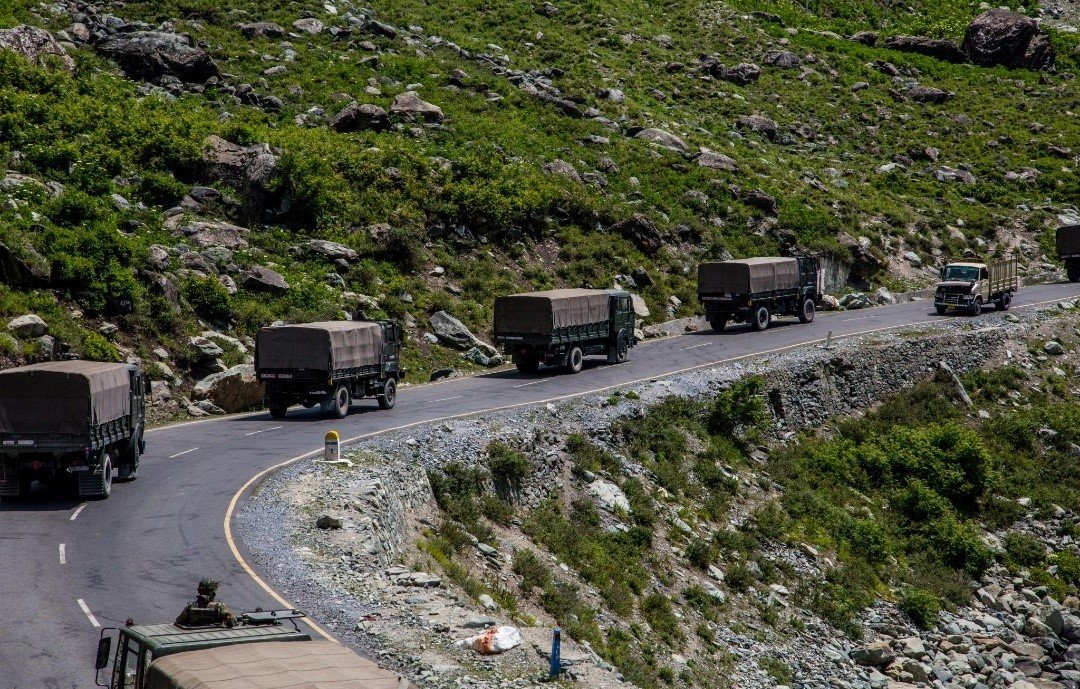
China has some built-in advantages:

- Tibet has better roads and other infrastructure,
- Integrated Western Theatre Command,
- Rapid mobilisation and combined arms capability,
- Rocket Force precision strike systems, and
- Improved ISR and cyber capabilities (MoD, 2023).
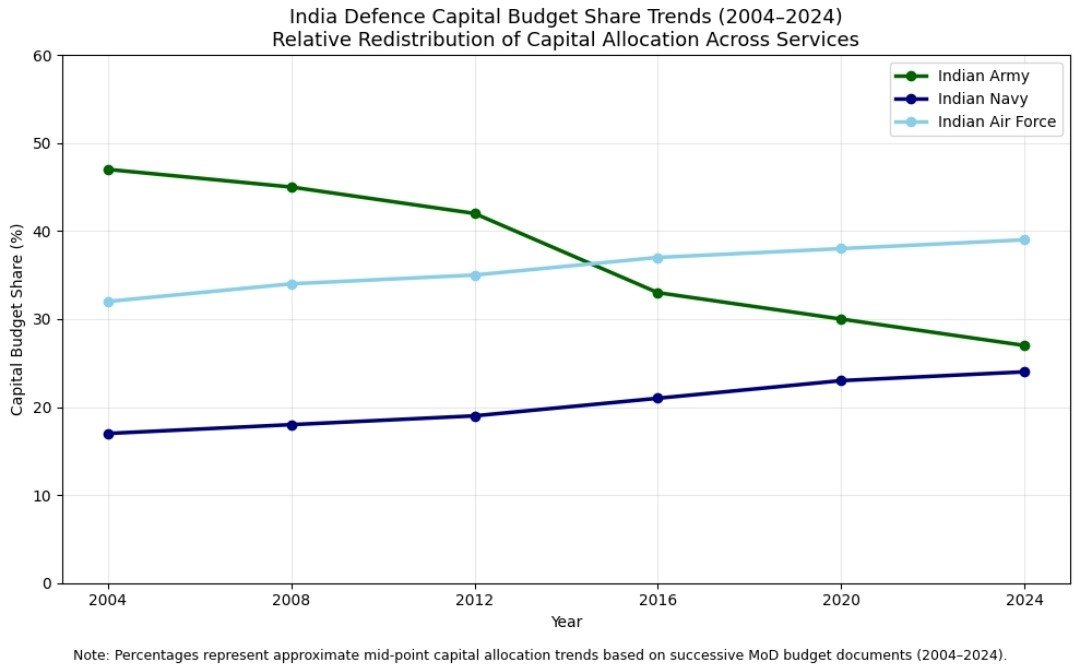
India’s defence modernisation stands at a pivotal moment shaped by the rise of China, persistent hostility from Pakistan, and growing strategic fluidity across its eastern periphery, including Bangladesh, Nepal, and Myanmar. Over the past two decades, India’s capital defence allocations have gradually shifted from the Army toward the Air Force and Navy, reflecting maritime imperatives and air-domain requirements driven largely by China’s expanding capabilities
This meant that India could no longer rely on a defensive posture alone for credible deterrence. It required sustained forward deployment, infrastructure acceleration, air mobility integration, and enhanced surveillance. Unlike Pakistan, China combines continental assertiveness with maritime expansion. Thus, India faces not merely a two-front problem – but a multi-domain challenge.
The Parliamentary Standing Committee on Defence (GoI, 2018-2023) has repeatedly noted concerns regarding modernisation delays, ammunition stocking, and force preparedness.
The 2020 crisis accelerated infrastructure development along the LAC and led to a new debate on force restructuring. Yet, it also highlighted fiscal constraints. India’s defence budget is still just a third of China’s defence budget (SIPRI, 2023). Symmetry is neither feasible nor necessary. Setting priorities and strategic asymmetry are highly crucial.
The Eastern Edge: Bangladesh, Nepal, and Myanmar
India’s strategic environment now includes more than simple open enemies. The grey zone increasingly lies in its immediate neighbourhood.
- Bangladesh: Strategic Balancing in Action: Bangladesh has kept its diplomatic ties with India strong, which has been good for both countries. China is currently its biggest trading partner and a major defence supplier (SIPRI, 2023). The fact that Bangladesh Navy is procuring submarines from China and building infrastructure through Belt and Road (BRI) initiatives, reflects Dhaka’s diversified partnerships. Bangladesh is not hostile, but the strategic depth around the Siliguri Corridor, which is India’s sole limited approach to the Northeast, is becoming more important for solving problems on multiple fronts.
- Nepal: Political Flux and Strategic Leverage: China has been able to help build crucial infrastructure in Nepal because the country’s politics is unpredictable and volatile (Pant, 2019). While India and Nepal retain deep civilisational ties but diplomatic tensions and boundary disputes have underscored the fragility of assumptions about automatic alignment. For India, the Northern frontier is not merely a military boundary; it is a geopolitical corridor influenced by regional competition.
- Myanmar: Instability and Northeast Implications: Since 2021, Myanmar has been unstable, which makes India’s security situation in the Northeast complicated. Insurgent movement and sanctuary have kept the border between India and Myanmar unstable. China is engaging in infrastructure projects and economic corridors that adds another layer of complexity (Haokip, 2022). Because of this, India’s Eastern theatre needs to address not only for conventional adversaries but for instability spill-over, too.
Strategic Synthesis
India’s security environment today can be defined by four structural realities:
• China is the primary strategic competitor,
• Pakistan remains a persistent asymmetric challenger,
• The Eastern periphery is fluid, not fixed, and
• The Indian Ocean is increasingly contested.
This isn’t a classic two-front scenario. It is a multi-vector strategic geometry. In such an environment, debates about capital allocation between the Army, Air Force, and Navy should be based on threat assessment, not on institutional narratives.
Two Decades of Capital Allocation—Trends, Tensions, and Interpretations
The debate over whether the Indian Army is losing its capital edge must begin with evidence. Over the past two decades, India’s defence budget has undergone a gradual redistribution. The Ministry of Defence’s Annual Reports and the Union Budget show that precise figures vary annually, and the trend remains consistent.
- Early 2000s: Army got about 45-50% of the capital budget.
- Mid-2010s: Army’s share declined to 35-40%.
- Early 2020s: Army’s share stabilised around 25-30%.
- The Air Force’s share rose to 38-40%.
- The Navy’s share gradually increased to the mid-20% range.
The graph above shows how capital shares have changed over time.
- The Army’s relative capital share has slowly declined.
- The Air Force shows gradual upward prioritisation.
- The Navy reflects incremental maritime strengthening.
The 1971 war marked the peak of India’s military power in South Asia. The formation of Bangladesh transformed the political landscape of the subcontinent and showed that India was better at fighting wars than Pakistan. For more than 30 years after that, the probability of full-scale conflict appeared to decline. However, this drop was not the product of reconciliation but the result of strategic adaptation
But when you want to comprehend something, you need to think about how it happened. Platforms for air and sea are very expensive. If you buy just one fighter plane or bring in a submarine, the percentage allocation can alter a lot. The Army is taking longer to modernise, and it is adding new artillery units, infantry gear, and tactical vehicles. Thus, percentage share alone does not automatically equate to strategic neglect.
But the trend does raise one legitimate question: Is the Army’s modernisation keeping pace with China’s rapid land force transformation?
Revenue Burden and the Manpower Constraint
A fundamental structural challenge lies not in persuasion but in force composition. The Indian Army remains manpower heavy, with over one million active personnel. Additionally, much of the defence budget is spent on items like salaries, pensions, and maintenance (GoI, 2023).
The Comptroller and Auditor General (CAG) has often voiced concerns regarding capital-modernisation delays and revenue-capital imbalance (CAG of India, 2017). This leads to three issues of concern, i.e.
- Capital Compression,
- Delayed platform replacement cycles, and
- Reduced flexibility for rapid technological adaptation.
The Agnipath scheme, which started in 2022, aims to make long-term pension obligations fairer and improve the capital-modernisation ratio. However, force structure transformation is gradual.
The Indian Army was structured for prolonged continental defence in the 20th century. The 21st century needs a leaner, technology-integrated ground force. Without manpower rationalisation and technology substitution, capital adequacy will remain constrained. This is a structural dilemma—not a leadership inadequacy.
Lessons from the Russia-Ukraine War for Indian Force Design
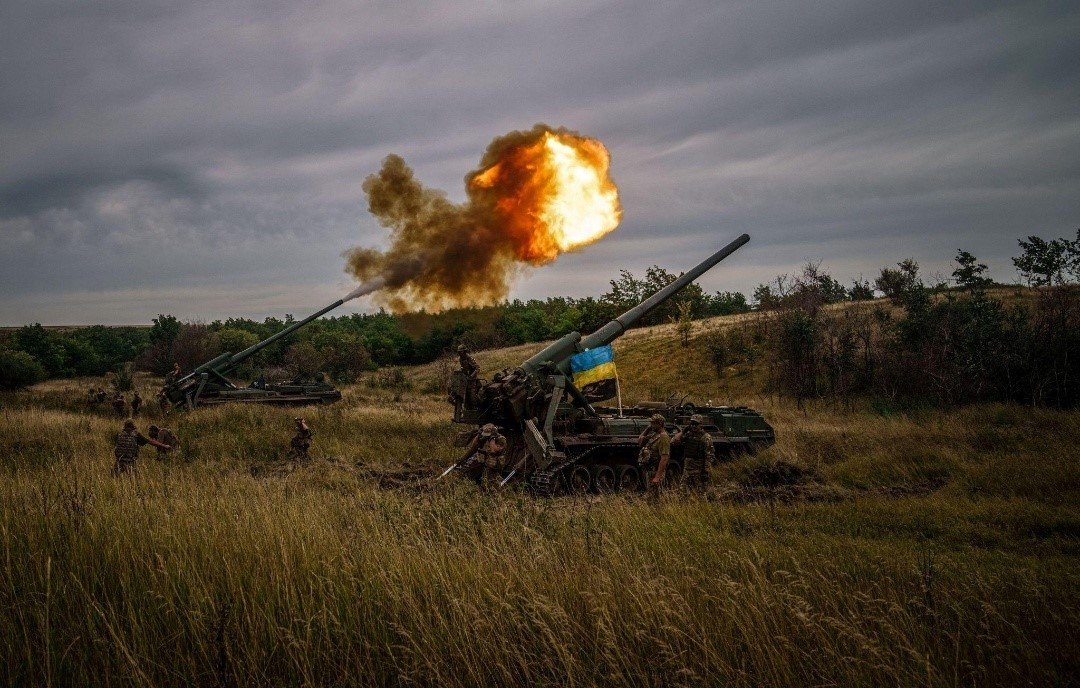
The in-going conflict between Russia and Ukraine serves as a contemporary testing ground for high-intensity conventional warfare. India should learn these vital lessons:
- Land Remains Decisive. Despite missile strikes and air campaigns, control of land remains central (Freedman, 2023). For India, with contested Himalayan boundaries, this reinforces the enduring relevance ground forces.
- Artillery Dominance and Ammunition Depth. Artillery has been the single largest casualty-producing system. Ammunition stocks are becoming a form of strategic currency. Parliamentary Standing Committee on Defence has repeatedly emphasised the need for adequate war wastage reserves (GoI, 2022).
- Drone-Centric Warfare. Loitering munitions, quad-copter ISR, and networked targeting have reshaped battlefield transparency. India has accelerated drone induction, but scale and domestic manufacturing capacity require further expansion (IDSA, 2023).
- Air Power Limitations. Neither Russia nor Ukraine achieved uncontested air superiority. Ground-based air defence systems significantly constrain air dominance. For India, this implies that investment in integrated air defence networks may yield higher returns rather than pure platform expansion.
- Logistics and Industrial Depth. War endurance depends on domestic production capacity. Ukraine’s reliance on Western supply chains and Russia’s mobilisation of defence industry underscore the strategic importance of indigenous manufacturing (SIPRI, 2023).
The 2020 standoff along the Line of Actual Control (LAC) had a big impact on India’s security calculus. The confrontation showed that China didn’t consider the border as a permanent problem, but as a dynamic pressure mechanism
India’s Aatmanirbhar Bharat defence push is therefore strategically essential, not politically symbolic.
Interim Assessment: Is the Land Edge Eroding?
At present, India retains significant land deterrence capability:
• Artillery modernisation (e.g. M777, K9 Vajra induction),
• Infrastructure acceleration along the LAC,
• Integrated Battle Group (IBG) concepts under development, and
• Enhanced airlift capability.
However, China’s rapid mechanisation, ISR integration, and Rocket Force expansion necessitates sustained technological catch-up by India. The risk is not sudden collapse of deterrence. The risk is a gradual relative technological lag. Thus, the land-power debate must move beyond percentage share arguments and toward capability adequacy analysis.
Maritime Imperatives Without Strategic Overreach
China’s maritime expansion is neither speculative nor symbolic. The People’s Liberation Army Navy (PLAN) is now the world’s largest by hull numbers (Office of the Secretary of Defence [OSD], 2023). Chinese vessels operate with increasing frequency in the Indian Ocean Region (IOR), supported by port access arrangements across the littoral.
India’s maritime vulnerabilities are structural:
- Nearly 90% of trade by volume moves by sea,
- Energy imports are sea-dependent, and
- Critical chokepoints (Hormuz, Malacca) are external to Indian control.
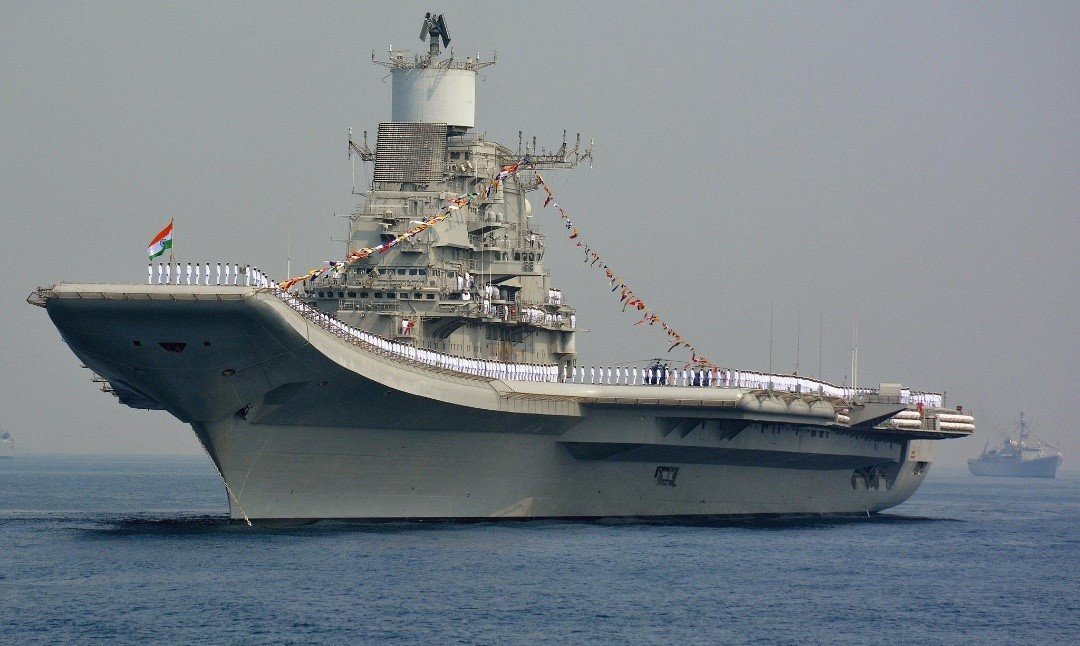
Therefore, naval modernisation is not discretionary — it is economically existential. However, maritime ambition must remain calibrated. The debate over carrier expansion versus submarine emphasis reflects a deeper strategic choice: sea control or sea denial? Given fiscal constraints and China’s larger defence budget, India’s comparative advantage may lie in:
- Submarine fleet expansion,
- Anti-access/area-denial capability,
- Maritime domain awareness, and
- Integrated missile and coastal defence grids.
As the Indian Maritime Security Strategy (Indian Navy, 2015) notes, the objective is not global projection but secure periphery dominance. Thus, maritime strengthening should continue — but aligned with economic sustainability.
Jointness, Theatre Commands and Capability Clusters
The central weakness in India’s historical force planning has not been allocation, but integration. For decades, capital procurement was service-centric. The creation of the Chief of Defence Staff (CDS) and Department of Military Affairs signalled recognition that jointness is no longer optional (Government of India, 2020). The success of future modernisation depends on three structural reforms:
India could no longer rely on a defensive posture alone for credible deterrence. It required sustained forward deployment, infrastructure acceleration, air mobility integration, and enhanced surveillance. Unlike Pakistan, China combines continental assertiveness with maritime expansion. Thus, India faces not merely a two-front problem – but a multi-domain challenge
- Theatre Command Integration: Integrated theatre commands can align procurement with operational requirements. Instead of services competing for platforms, capability should serve theatre objectives.
- Capability Cluster Budgeting: Rather than funding “tanks” or “aircraft” budgeting should prioritise:
- Precision strike ecosystems,
- Integrated air defence networks,
- ISR and drone grids,
- Secure communication backbones, and
- Ammunition reserves.
This reduces duplication and enhances joint war-fighting.
- Technology Substitution for Manpower: India cannot indefinitely sustain high manpower and high capital modernisation simultaneously. The transformation must shift toward:
- Unmanned systems,
- AI-enabled targeting,
- Autonomous logistics, and
- Battlefield networking.
As Ladwig (2022) argues, reform is less about numbers and more about organisational adaptation. Without integration, budget redistribution debates will persist without resolution.
A Balanced Allocation Model and Strategic Takeaways
The central question raised in this analysis is, whether India is losing its land edge? The answer, at present, is NO. However, three risks remain:
- Relative technological lag in land systems versus China,
- Capital compression due to revenue-heavy structure, and
- Maritime expansion outpacing fiscal absorption capacity.
A calibrated long-term capital equilibrium may stabilise around:
- Army: 30-35%.
- Air Force: 35-38%.
- Navy: 25-28%.
This assumes:
- Continued manpower rationalisation,
- Indigenous production acceleration,
- Theatre-based procurement discipline, and
- Sustained economic growth.
The Indian Army was structured for prolonged continental defence in the 20th century. The 21st century needs a leaner, technology-integrated ground force. Without manpower rationalisation and technology substitution, capital adequacy will remain constrained. This is a structural dilemma—not a leadership inadequacy
But percentages alone are insufficient. The deeper transformation must include:
- Threat Hierarchy Clarity. China remains the primary long-term strategic competitor. Budgeting must reflect this reality.
- Land Deterrence Modernisation. Artillery depth, drone integration, and ISR dominance are essential to prevent relative erosion.
- Ammunition Sovereignty. War endurance depends on domestic production scale.
- Sea Denial Over Prestige Projection. Submarine and missile emphasis may offer greater strategic return than expansive carrier fleets.
- Air Integration as Operational Glue. Air mobility, surveillance, and integrated air defence must bridge land and maritime domains.
- Neighbourhood Stabilisation as Force Multiplier. Diplomatic engagement with Bangladesh, Nepal, and Myanmar reduces military burden.
- Fiscal Realism. Defence modernisation must align with GDP growth trajectory. Overextension weakens deterrence credibility.
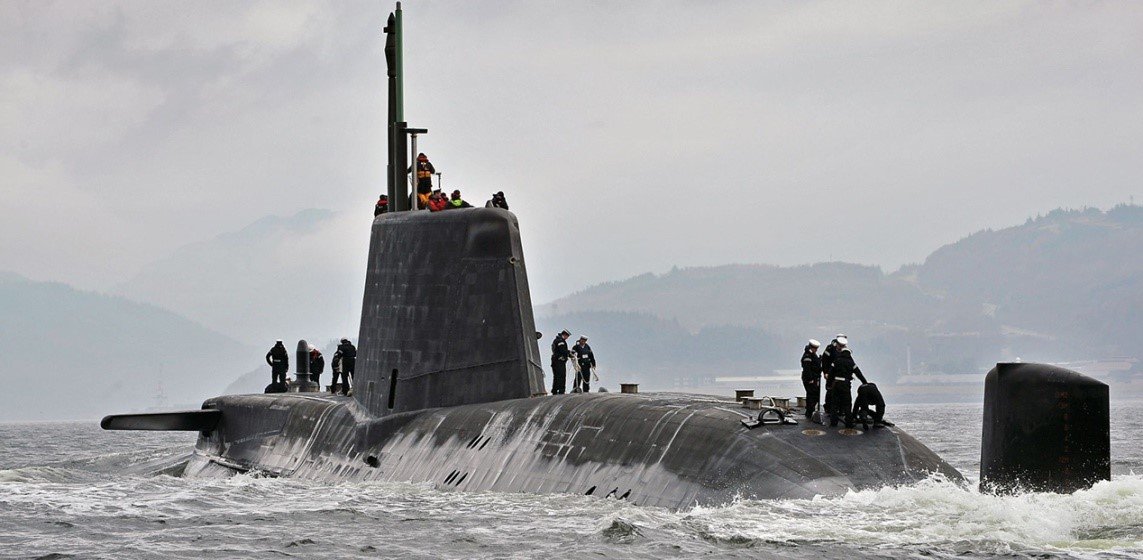
Harmonising Geography, Threat and Economy
Overall, India occupies a uniquely exposed geopolitical position — continental and maritime, nuclear and conventional, developmental and aspirational. Land remains decisive in territorial defence. Air power determines tempo and deterrence. Sea power secures economic survival.
The debate must therefore move beyond service competition. India’s challenge is not choosing between land, air, or sea. It is harmonising all three within fiscal reality. The next decade will determine whether India evolves into a balanced continental-maritime power — or struggles with structural asymmetry.
If reform continues, integration deepens, and procurement aligns with threat modelling, India will not lose its edge. It will refine it.

Lt Gen Rajeev Chaudhry (Retd) writes on contemporary national and international issues, strategic implications of infrastructure development towards national power, geo-moral dimension of international relations, and leadership nuances in a changing social construct. The views expressed are of the author and do not necessarily reflect the views of Raksha Anirveda
