

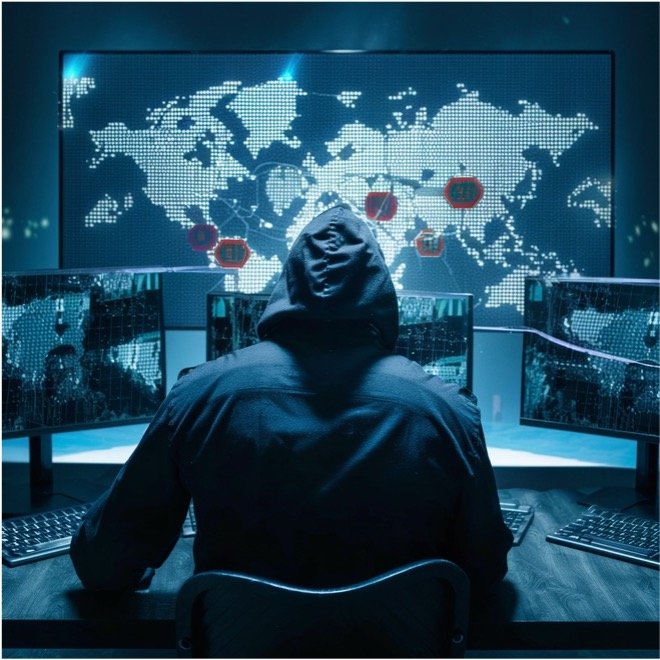
The complex Human mind has evolved to think, understand and create many things that have made life easier and better. Be it technology, science, healthcare, art or sports, humans are today at the crossover point of outsourcing this essential faculty of human intelligence to machines. Artificial Intelligence (AI) has lately taken the world by storm. AI is increasingly used across many domains and continues to evolve. There are many ethical concerns and debates on the good and bad types of AI. Humanity faces many threats today, and the concept of violence, hostile actions and even warfare is changing. AI is a multifaceted tool that can both aid and pose a threat in this new paradigm.
Chemical, Biological, Radiological, and Nuclear (CBRN) threats are changing, and there is a need to be more aware, detect threats before they manifest and react faster to prevent casualties and real damage. Many tools, sensors and means have been developed over the last few decades to optimally meet this challenge. The convergence of AI with CBRN security marks a pivotal moment in global safety and technological governance. While AI offers unprecedented capabilities to detect, prevent, and respond to CBRN threats, it also introduces new vulnerabilities, especially when misused or poorly regulated.

As nations race to harness AI’s potential, the challenge lies in balancing innovation with robust safeguards. AI brings forth many new avenues to use towards negating CBRN threats. AI is transforming CBRN protection by enhancing detection, surveillance, and response capabilities. AI-powered tools can analyse data from multiple sources to identify threats, predict potential incidents, and optimise resource allocation during emergencies. Furthermore, AI can be misused to develop or deploy new CBRN weapons, highlighting the need for careful risk management and mitigation strategies.
The fast and radical pace of change in the biotechnology, biomanufacturing, and AI sectors compounds existing regulatory challenges. It is therefore imperative that AI technology governance must be adaptive and evolving to respond to rapid or unpredictable technological advancements.
The Good AI: Technology to Protect
AI can be used effectively in many positive ways to enhance CBRN security. The primary areas of such use are :
- Surveillance and Intelligence about CBRN threats or possible incidents
- Early real time detection, analysis, and identification of threats, including Situational awareness, Hazard mapping and Decision support
- Assisting in ideal protective measures and developing best response strategies and optimal response procedures
- Generating and executing mission continuity and mitigation measures
- Supplementing expert medical management of casualties and suggesting prophylaxis means
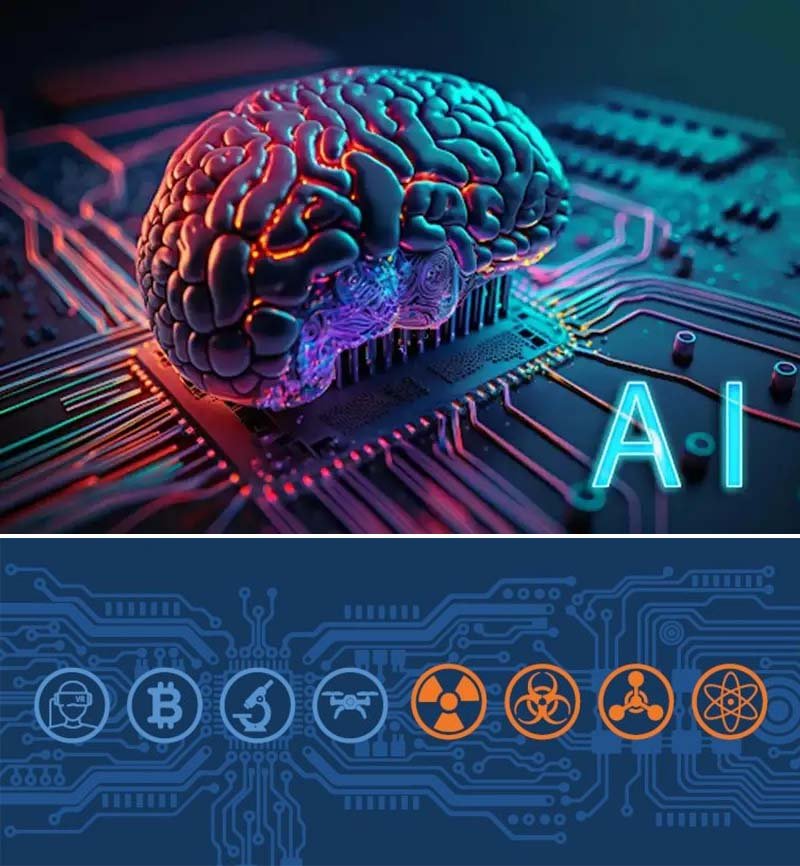

CBRN Surveillance and Intelligence. Identifying, analysing and predicting possible emergence of CBRN threats can be done with the help of AI. Sources and intelligence agencies in foreign countries and key high-risk domestic infrastructures and installations can feed leads and observations into the AI system for further analysis and threat prediction. Optimal use of features like predictive modelling can churn out threat manifestation contingencies and preventive/response options. AI-powered analytics platforms can process vast streams of data from IoT networks to pick out patterns, predict threat scenarios, and recommend optimal countermeasures. Machine learning algorithms are trained to distinguish between false positives and actual CBRN threats, reducing unnecessary alerts and improving operational efficiency.
The convergence of AI with CBRN security marks a pivotal moment in global safety and technological governance. While AI offers unprecedented capabilities to detect, prevent, and respond to CBRN threats, it also introduces new vulnerabilities, especially when misused or poorly regulated
In addition, AI surveillance can scan news reports and social media posts of leaks, releases, and possible spreads of toxic materials to help predict and identify CBRN threats. AI can collate such threats and grade or prioritise them for further action. Predictive Modelling ability of AI can also suggest next steps and preventive measures before the threats can truly manifest. It can be a big help in detecting and tracking darknet clandestine CBRN material trade and detecting terrorist motives, patterns and modus operandi towards CBRN attacks. AI systems can be used to analyse images and videos from surveillance systems, potentially detecting unusual activity or anomalies that could indicate a CBRN incident.

Automated Threat Assessment can be achieved by the use of Natural Language Processing (NLP). NLP tools can scan scientific publications and online forums to identify emerging threats or suspicious research trends. AI can be used effectively to scan corporate reports, laboratory activities, trade, and warehousing inventories and deduce the type of activity and possible threat manifestation. It can also help detect trade in dual-use goods and clandestine weaponisation possibilities. AI-driven tools can analyse large datasets from diverse sources to identify patterns, assess risks, and predict high-risk scenarios, improving threat assessment capabilities.
Another good use of AI coupled with sensors, detectors and gauges is in the industrial sector and laboratory processes to monitor, predict and help correct process disruptions and material or machine integrity and likely malfunctions. AI-powered sensors and machine learning algorithms can detect anomalies in air, water, and soil—flagging potential chemical or radiological leaks faster than traditional methods. This can go a long way in averting dangerous, toxic situations.
It should, however, be noted that AI systems are using machine language to a greater extent and need large computing capabilities, which makes the systems bulky and power-guzzling.
Improved Detection and Surveillance. Modern CBRN sensors and detectors are networked and share their outputs with control stations. AI algorithms can pick these outputs and analyse data from sensors, drones, and other sources to rapidly detect CBRN agents, while sifting the identification from myriad field interferences like smoke, fuel exhausts, industrial airborne debris, pollutants and other environmental contaminants. AI can separate these identifications, deduce possible sources and provide early warnings for optimal, rapid protective measures and postures.
Based on the sensor output analysis and inputs from realtime metrological inputs, AI can determine threat levels and develop a realtime and dynamic hazard map predicting the spread of contamination. This will enable timely and effective responses. It can even suggest best response procedures and protective measures and guide the teams till situation is normalised.
AI can analyse historical data, real-time information, and predictive models to assess the potential severity and impact of a CBRN incident. This information can be used to develop more effective response strategies and allocate resources efficiently. AI can also be used to simulate potential incident outcomes, helping first responders prepare for different scenarios.
AI tools can be used to identify vulnerabilities in critical infrastructure, requiring robust cybersecurity measures to mitigate these risks. This will help strengthen and streamline processes, control mechanisms, and develop better monitoring techniques for early threat detection. AI-powered tools can be applied for detecting chemical leaks, biological contaminants, and radiological threats at borders, ports, airports, cargo hubs and in bio surveillance efforts. AI-driven epidemiological models can be integrated with environmental monitoring networks to detect unusual biological activity or chemical signatures, potentially signalling an attack or accidental release and even initiate suitable countermeasures.
The fast and radical pace of change in the biotechnology, biomanufacturing, and AI sectors compounds existing regulatory challenges. It is therefore imperative that AI technology governance must be adaptive and evolving to respond to rapid or unpredictable technological advancements
Autonomous drones and robots equipped with AI can enter contaminated zones, assess damage, and even neutralise threats without risking human lives. AI-based response assist applications on mobiles and portable computerised systems and process control computers can help response forces to accurately identify releases, symptoms, and indications to direct their response optimally. They can give out hazard spread mechanics, safety distances, immediate first aid/mitigation measures and quick decontamination techniques. AI can assist in developing predictive models, supporting decision-making, and enhancing overall situational awareness in CBRN incidents. Such applications are already being used by first responders.
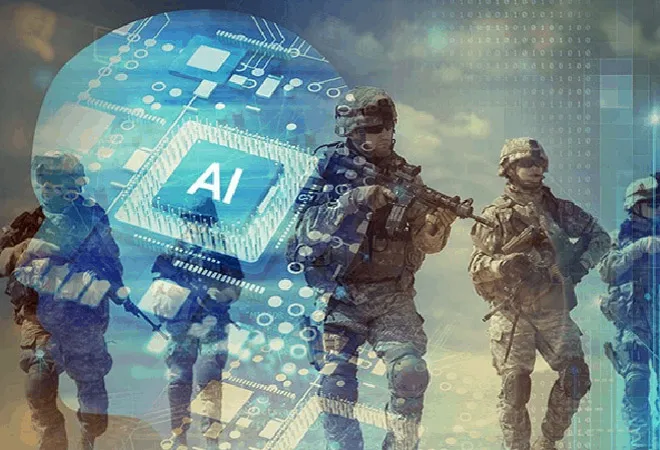
Enhanced Response and Protection Against CBRN Threats. New technologies are constantly developing and have helped protect mankind and the environment to a great extent. However, with the advent of better protection means, there has also been a rise in new kinds of threats. AI algorithms can generate threat scenarios, detect new types of toxic threats that may yet be invisible and help suggest better means of protection.
AI-powered decision support systems can provide real-time guidance to first responders, helping them make informed decisions during a CBRN incident. AI can optimise resource allocation, such as the deployment of protective gear, decontamination agents, and medical supplies. AI can also be used to automate tasks like decontamination procedures and post-incident analysis.
AI can suggest design improvements and quantum jumps in protective gear development to optimise protection. A right mix of biochemical means with nano-technology can help develop better personal and collective protection. Wearable devices, self-decontaminating suits and paints, better modular shelters using AI-generated lighter and stronger materials are all in the possible realm now. Projection of protection by electronic means to thwart an incoming or advancing toxic threat, self-deploying directed neutralising mechanisms shall help prevent the threats from reaching their intended targets. Structural enhancements and design tweaking by AI tools can help improve protection levels in critical infrastructures.
Medical Management and AI. Doctors and Paramedics are lifesavers. The expertise of doctors and paramedics is improving with more knowledge of how the human body works and responds to various situations and drugs. This can be greatly enhanced using AI tools to harness the power of global medical knowledge and vast historical data to enhance onsite protocols. This is especially so when CBRN incidents demand mass casualty management. AI can be a big help in Triage at the incident site. It can also harness available medical aid like ambulances, paramedics and medics by effective networking and allocate victims to healthcare facilities based on Triage prioritisation.
Based on sensor output analysis and inputs from realtime metrological inputs, AI can determine threat levels and develop a realtime and dynamic hazard map, predicting the spread of contamination. This will enable timely responses. It can even suggest best response procedures and protective measures and guide the teams until the situation is normalised
The availability of expertise may be limited due to locations, timings and other parameters. At such times, AI algorithms can enhance available knowledge and assist in optimal treatment, focused resource allocation and effective casualty management. Approved AI-assisted tools can also be used by first responders and volunteers using specialised applications for immediate first aid and relief.
Mission Continuity and Mitigation. Mission continuity post a CBRN strike or incident is essential for quick restoration. AI tools can source data on incident scenarios and possible outcomes and measures to prevent or overcome the fallout. Options can be generated for mission continuity with recommendations for the most optimal one(s). The same can get factored into Situational Awareness and Decision Support Software to aid Commanders and decision makers to progress with operations. AI can generate contingency plans and create a decision matrix for implementation.
Mitigation, especially short-term and long-term needs careful analysis of the ground situation, victim symptoms, recovery mechanics and infrastructural effects. Mitigation procedures and means can be optimised using AI tools to develop mitigation plans for varied exposure levels, contaminated zones and developing illnesses.
AI tools are in widespread use in the Defence industry. Some current use AI tools and their applications in the US for CBRN security are given in Appendix A.
Appendix A
EXAMPLES OF AI APPLICATIONS IN THE US FOR CBRN SECURITY
AI tools and algorithms are already being used in the CBRN field. Apart from the research and manufacturing areas, here are some applications of AI tools in CBRN threat mitigation.
- OpenAI’s early warning system for LLM-aided biological threat creation: Aims to identify potential threats before they materialise. Useful for bio threat prediction.
- BRACE (Benchmark and Red team AI Capability Evaluation) framework: Evaluates AI models for CBRN and cyber capabilities, helping identify potential risks.
- CWMD’s (Countering Weapons of Mass Destruction Office at US Homeland Security) report on AI and CBRN: Assesses the potential for AI misuse in CBRN threats while also considering AI’s benefits in countering these threats. A comprehensive report on AI use and pitfalls.
- AI-driven sensors and robotic platforms: AI-driven sensors and robotic platforms equipped with advanced technologies like computer vision and spectroscopy have proven highly effective in detecting CBRNE agents. These systems use AI algorithms to analyse sensor data in real time, enabling rapid identification of hazardous materials.
- Hazard Prediction and Risk Assessment During CBRNE Incidents:Machine learning (ML) models trained on historical incident data play a crucial role in hazard prediction and risk assessment during CBRNE incidents. These models analyse past events, environmental conditions, and material properties to predict how hazardous substances will disperse in real time. They can also guide personnel through safe evacuation routes and placement of containment barriers or decontamination units.
- AI-based optimisation tools: Such tools have significantly improved the efficiency of resource deployment during CBRNE incidents. These tools use algorithms to analyse the availability and location of personnel, equipment, and protective gear, ensuring that resources are allocated where they are needed most.
- AI-powered Threat Detection: AI-powered tools for detecting chemical leaks, biological contaminants, and radiological threats at borders, waterbodies and in bio surveillance efforts.
- AI-driven epidemiological models and environmental monitoring networks for detecting unusual biological activity.
- AI-powered predictive maintenance for CBRN defence equipment.
The Bad AI: A Catalyst for CBRN Misuse
While AI has many applications in preventing, responding and mitigating a CBRN strike or incident, there are also the flipsides of wrongful use of AI. While AI offers significant benefits in CBRN protection, it is necessary to look at ethical issues like data privacy, potential biases in algorithms, and the continued need for human oversight. It is also important to ensure that AI systems are developed and used responsibly, considering the potential for misuse and unintended consequences.
AI-powered decision support systems can provide real-time guidance to first responders for informed decisions during a CBRN incident. AI can optimise resource allocation, such as the deployment of protective gear, decontamination agents, and medical supplies. AI can also be used to automate tasks like decontamination procedures and post-incident analysis
Clandestine Data Sourcing. Most models and incorporated datasets are in the hands of private or academic organisations. With the impetus from various governments to include private R&D and academia in a race to develop better AI models, access is easy. Terrorists and non-state actors can easily access such models and put them to malicious use. Use of AI to find and trade CBRN material on the dark net is a grave possibility.
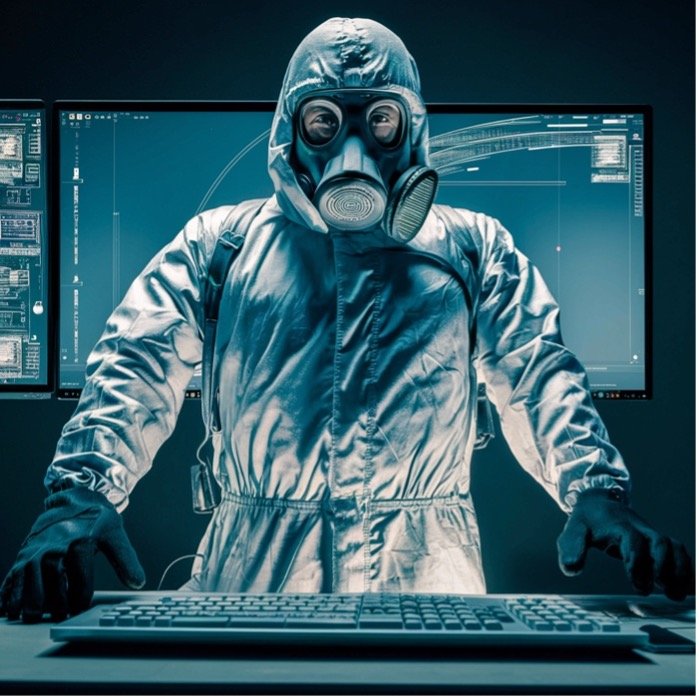
Democratisation of Dangerous Knowledge: AI in Biological, Chemical and Pharmaceutical Research.
Knowledge of AI and its emerging tools is being openly proliferated. The internet and research publications of many IT agencies are spewing out AI knowledge at a fast pace. AI models trained on chemical synthesis or biological design can be repurposed to generate toxic compounds or engineer pathogens. AI is gaining momentum in research on biological sciences and disease identification. It is also being used in genetic research and to develop biochemical substances for advancing healthcare. Reverse use of such technologies can give rise to potentially dangerous new strains of pathogen.
Tools developed for drug discovery or agricultural research may be exploited to create chemical weapons or genetically modified bioweapons, raising new Dual-use dilemmas. In June 2023, as a class activity at MIT, students were instructed to ask a Large Language Model (LLM) to identify four viruses or bacteria that had the potential to cause the next pandemic. The students were then able to extract further information from the LLM chatbot on how to develop these threats in a laboratory, source materials from suppliers, and other related details.
A lot of AI use is already seen in simplifying chemical processes and developing chemical compounds. AI tools can identify harmful substances in pharmaceutical products and help make them safer. However, the same technology can be used to generate new, highly toxic chemical compounds. Some of these can be beyond the current restriction lists given out by the OPCW.
There are flipsides of wrongful use of AI. It is necessary to consider ethical issues such as data privacy, potential biases in algorithms, and the continued need for human oversight. It is important to ensure that AI systems are developed and used responsibly, considering the potential for misuse and unintended consequences
As AI technologies enable new entrants into the CBRN space, a lack of experience with safety and security protocols could raise the risk of even well-intentioned actors accidentally releasing chemical or biological agents or other adverse research outcomes. The case of Collaborations Pharmaceuticals, Inc and Spiez Laboratory Switzerland is explained in Appendix B.
Appendix B
GENERATION OF NEW TOXIC CHEMICALS
As part of Spiez Laboratory’s mission to protect against CBRN threats, it organises ‘convergence’ conferences every 2 years to identify emerging threats to the international control of biological and chemical weapons. In preparation for a conference held in 2021, Spiez Laboratory contacted Collaborations Pharmaceuticals. The biotech company was asked to consider how scientists could use AI drug-design tools, which are intended to benefit human health, for harm instead. The laboratory invited them to present their cutting-edge work, but also to reflect on the potential for misuse in order to discuss the potential implications, in particular for the chemical and biological weapons conventions.
All it took was a minor edit to Collaborations Pharmaceuticals’ code. Suddenly, an algorithm for designing drugs to treat Alzheimer’s disease was suggesting thousands of chemical structures for nerve agents instead. Scientists at the company were shocked. It took less than six hours for drug-developing AI to invent 40,000 potentially lethal molecules. With very little effort, they had just made a machine for designing new chemical weapons.
Normally, they use these generative models and toxicity data sets to drive the molecules away from toxicity. After changing the code to select for toxicity, scientists let the algorithm run. The next day, they found the program had suggested thousands of compounds with predicted toxicities at the same level as or worse than the toxicity of VX, a deadly nerve agent.
The ease with which Collaborations Pharmaceuticals generated potential new toxic compounds raised big questions among conference goers and beyond. All the researchers had to do was tweak their methodology to seek out, rather than weed out, toxicity. The AI came up with tens of thousands of new substances, some of which are similar to VX, the most potent nerve agent ever developed. Shaken, they published their findings in the March 2022 journal Nature Machine Intelligence. But while experts debate how significant the threat of AI-designed chemical weapons is, they already agree that questions around dual use — the use of something for both beneficial and harmful purposes — in chemistry need broader consideration.
Another area of concern is cloud laboratories and benchtop DNA synthesis machines. These are roughly at-home DNA printing, just like 3D printers. Simultaneous proliferation of access to benchtop DNA synthesis alongside democratisation of knowledge can create a dangerous storm of bio risks.
Attack Paradigms and Targeting Contingencies. The risks of AI tools, the dual-use nature of the basic science information involved, and inconsistent access to relevant CBRN expertise make it the right mix for devising and developing attack models and targeting options. Clandestine use of such AI-generated data models can assist Non-State Actors and Terrorists to carryout predictive analysis of targeted nation or population preparedness and response and develop contingencies to overcome these. Such potent tools in the hands of hostile elements can be devastating.
Many military applications use autonomous AI systems today. Such tools are sourced from private companies working with the government. The integration of AI into military systems raises concerns about autonomous decision-making in deploying CBRN payloads — potentially without human oversight. In January 2024, an exercise was conducted by researchers from Georgia Tech, Stanford, and Northeastern University that examined how AI systems would react to military threats in fictional scenarios. The study used 5 LLM-based agents in ‘war-gaming’ scenarios, and in this exercise found that models were more likely to escalate conflict and, in some cases, advocated for the use of nuclear weapons.
Disrupting or altering CBRN System Processes. Cyber Warfare and AI can infiltrate into CBRN system processes and control mechanisms. AI tools can then change control parameters and disrupt or disable processes. It can also alter control or threshold settings by mimicking actual settings, thereby causing chaos and malfunctions with grave consequences. All while remaining under detection thresholds.
The Balance Question
Governments and the AI industry need to carefully analyse the effect that AI would have on the offence-defence balance (the Good vs Bad AI). Many countries are already debating whether AI is going to increase offensive (hostile) CBRN capabilities more relative to defensive ones. This is a big strategic question before anyone advocating for more AI integrations into critical military or defensive systems.
AI’s role in CBRN security is not just a technological issue — it’s a moral and strategic imperative. As we stand at the crossroads of innovation and risk, the path forward demands vigilance, collaboration, and a commitment to using AI not as a weapon, but as a shield. The future of global safety may well depend on how wisely we wield this powerful tool
Conclusion
Science and technology are growing at a very fast pace. The Internet has extended access to such technologies to anyone interested. With technological advances in traditional machine-learning and the development of LLMs, possible AI-related CBRN threats are expected to increase in scope and intensity. AI is a tremendously powerful dual-use technology, and there is an emergent and dire need for collaboration between researchers, academia, policymakers, and industry in CBRN-related fields. There is already a growing concern to develop legislation, controls, and safety measures to channelise AI for the good of mankind.
The integration of AI into CBRN response represents a paradigm shift in protecting frontline forces and response teams. By addressing cognitive, behavioural, and psychosocial aspects of health, AI can enhance the resilience, performance, and well-being of those who confront these extreme hazards. AI’s role in CBRN security is not just a technological issue — it’s a moral and strategic imperative. As we stand at the crossroads of innovation and risk, the path forward demands vigilance, collaboration, and a commitment to using AI not as a weapon, but as a shield. The future of global safety may well depend on how wisely we wield this powerful tool.

The writer is an 1981 batch Cavalier, has been a Key Adviser to the Government of India (MoD and MHA) on CBRN Security. He has been a Key CBRN Expert for the EU CBRN Risk Mitigation Centres of Excellence initiative in Eastern and Central Africa. A Visiting Faculty at select Indian and overseas universities, prolific writer and a speaker in international seminars and conferences on CBRN subjects, he holds a PhD in CBRN Security and Incident Management. He has authored a pioneering book titled “Toxic Portents” on ‘CBRN Incident Management in India’. Presently he is a freelance CBRN Security and Risk Mitigation Professor and Consultant based at Pune, India. His personal website https://chebiran.com has more details
