


In a landmark announcement at the dawn of the year, India’s Ministry of Defence declared 2025 as the ‘Year of Reforms’, a pivotal initiative aimed at accelerating the modernisation of the armed forces. Defence Minister Rajnath Singh articulated the vision succinctly: “It will lay the foundation for unprecedented advancements in defence preparedness, ensuring India’s security and sovereignty amid the challenges of the 21st century.” This declaration set the tone for a year marked by structural overhauls, technological leaps and strategic recalibrations, positioning India as a significant player in the global security environment.
The reforms covered streamlined procurement processes, enhanced jointness among services, and a robust push towards indigenisation under the Aatmanirbhar Bharat initiative. Capital acquisitions surpassed ₹2 lakh crore, with a significant emphasis on domestic manufacturing and exports, reflecting a shift from import dependency to self-reliance. As the year comes to a close, it’s worthwhile to examine the key highlights, drawing on insights from industry leaders and operational milestones.

Structural Reforms: Forging a Future-Ready Force
The Year of Reforms prioritised transforming the Indian Armed Forces into a technologically advanced, combat-ready entity capable of multi-domain operations. Central to this was the acceleration of theaterisation — a major reform concept to integrate the Army, Navy and Air Force under single commanders for specific geographical areas (theatres) to create unified, efficient joint forces for modern warfare, replacing siloed, single-service commands. This improved coordination optimised resources and achieved better strategic outcomes by pooling assets for dynamic deployment. While proposed for decades, it aims to address inefficiencies, enable combined planning and create synergy, as seen in other nations like China.
The Year of Reforms prioritised transforming the Indian Armed Forces into a technologically advanced, combat-ready entity capable of multi-domain operations. Central to this was the acceleration of theaterisation, a major concept to integrate the Army, Navy and Air Force for specific geographical areas
While full implementation faced hurdles — such as inter-service coordination challenges — the groundwork laid in 2025 promises to resolve longstanding silos. Singh, addressing the Chanakya Defence Dialogue in November 2025, emphasised the necessity of these changes amid rising security threats, citing improved border infrastructure and counter-terrorism readiness as tangible outcomes.
Procurement reforms were a cornerstone, with timelines reduced and private sector involvement amplified. The Defence Ministry approved deals worth over ₹2 lakh crore, including 31 MQ-9B drones from the US (valued at ₹30,000 crore), 156 Light Combat Helicopters (LCH) Prachand from Hindustan Aeronautics Limited (HAL) at ₹62,700 crore, 307 Advanced Towed Artillery Gun Systems (ATAGS) and Nag Missile Systems. These acquisitions underscored a focus on unmanned systems, high-altitude warfare and precision strikes, with technology transfers ensuring long-term indigenous capabilities.
Budgetary allocations reflected this ambition, with a proposed 20 per cent increase for 2026 to bolster modernisation. Defence production reached ₹1.51 lakh crore, with Defence Public Sector Undertakings (DPSUs) contributing 71.6 per cent, highlighting their role in operations like Sindoor. Initiatives such as the ₹1 lakh crore Research, Development and Innovation (RDI) fund and GST rationalisation further catalysed innovation, making Indian products more competitive globally.

Human resource transformation was equally vital, with emphasis on skill development and veteran welfare. The launch of EKAM (AI as a Service), Prakshepan, an AI Handbook for Military Leaders, Digitalisation 3.0, and a Green Hydrogen Microgrid in Ladakh at the Chanakya Dialogue highlighted the integration of emerging technologies. Chief of Defence Staff (CDS) General Anil Chauhan stressed resilience, jointness and self-reliance as the bedrock of India’s defence ecosystem.
Procurement reforms were a cornerstone, with timelines reduced and private sector involvement amplified. The Defence Ministry approved ₹2 lakh crore worth of deals, including 31 MQ-9B drones from the US, 156 LCH Prachand from HAL, 307 ATAGS and Nag Missile Systems
UAVs: From Vulnerabilities to Dominance
The year 2025 emerged as a watershed for India’s unmanned aerial vehicle (UAV) sector, propelled by operational urgencies and technological requirements. Operation Sindoor, a calibrated response to asymmetric threats including the Pahalgam terror attacks, underscored the dual role of drones in national security and exposed vulnerabilities. Involving indigenous platforms like Nagastra-1 and SWITCH, the operation demonstrated India’s growing prowess in counter-drone warfare, neutralising Pakistani UAVs with minimal damage inflicted.

 Ankit Mehta, CEO & Co-Founder of ideaForge Technology Ltd, reflected on the year’s impact: “The year 2025 made one thing clear: UAVs are transforming both national security and enterprise operations domestically as well as globally. From Operation Sindoor to everyday missions led by security forces, industries and state agencies, drones consistently delivered reliable intelligence where it mattered most. Also, after Operation Sindoor, electronic warfare resilience has become a baseline requirement for the Indian forces operating in border areas. This has been evident with the increased procurement activities, budget allocations and order inflows. Driven by geopolitical exigencies, this year, the UAV demand surged sharply in the Indian defence sector, after a muted 2024.”
Irrespective of the market conditions, ideaForge has been investing in indigenisation and technology development, in areas they believe are the inevitable directions for the country’s strategic autonomy and this technology. This has paid off well since the demand has started to rebound in the first quarter of 2025 through Emergency Procurement’s cycle 5 (EP5) and now EP6. The company’s long-term domestic and global partnerships helped ideaForge expand its impact across defence, governance and industry at large. Achieving ‘Fit For Indian Military Use’ certification for SWITCH and NATO codification for SWITCH and Q6 platforms were important milestones, cementing the company’s standing as a credible player in cutting-edge UAV technology. Successful trials and defence orders for the Zolt drone have once again proved how important it is to persistently invest in developing tech that delivers next generation capability to customers.
Mehta pointed out that government and institutional support accelerated deployments. “The announcement of the ₹1 lakh crore RDI fund signals that the government is serious about strengthening R&D in the country and developing cutting-edge technologies. Rationalisation and clarification on GST rates further help consolidate the progress that the industry has made and will make Indian products more competitive. Increased focus on cybersecurity and country of origin checks becoming a standard part of the army’s procurement requirements have given indigenous players further confidence that their efforts in developing indigenous and secure tech will be recognised and appreciated by customers.”
As we enter 2026, the industry is entering a new phase where performance, reliability, resilience and autonomy will become baseline expectations, said Mehta. “Leveraging the existing and new AI capabilities is going to become crucial as we go forward in the next few years because there is a need in the market for a lot more autonomous operations on drones in the future. And that is particularly required because with all the electronic warfare and counter-drone systems that are going to be more prevalent on the ground today, the need for drones to do missions while being completely radio silent is going to go up,” he said.
Mehta’s insights highlight the surge in demand, with the Indian Army planning to induct up to 100,000 UAVs, restructuring units for drone integration. Post-Sindoor, orders exceeded ₹5,000 crore for indigenous drones, emphasising electronic warfare resilience and cybersecurity.
From Setbacks to Expansion
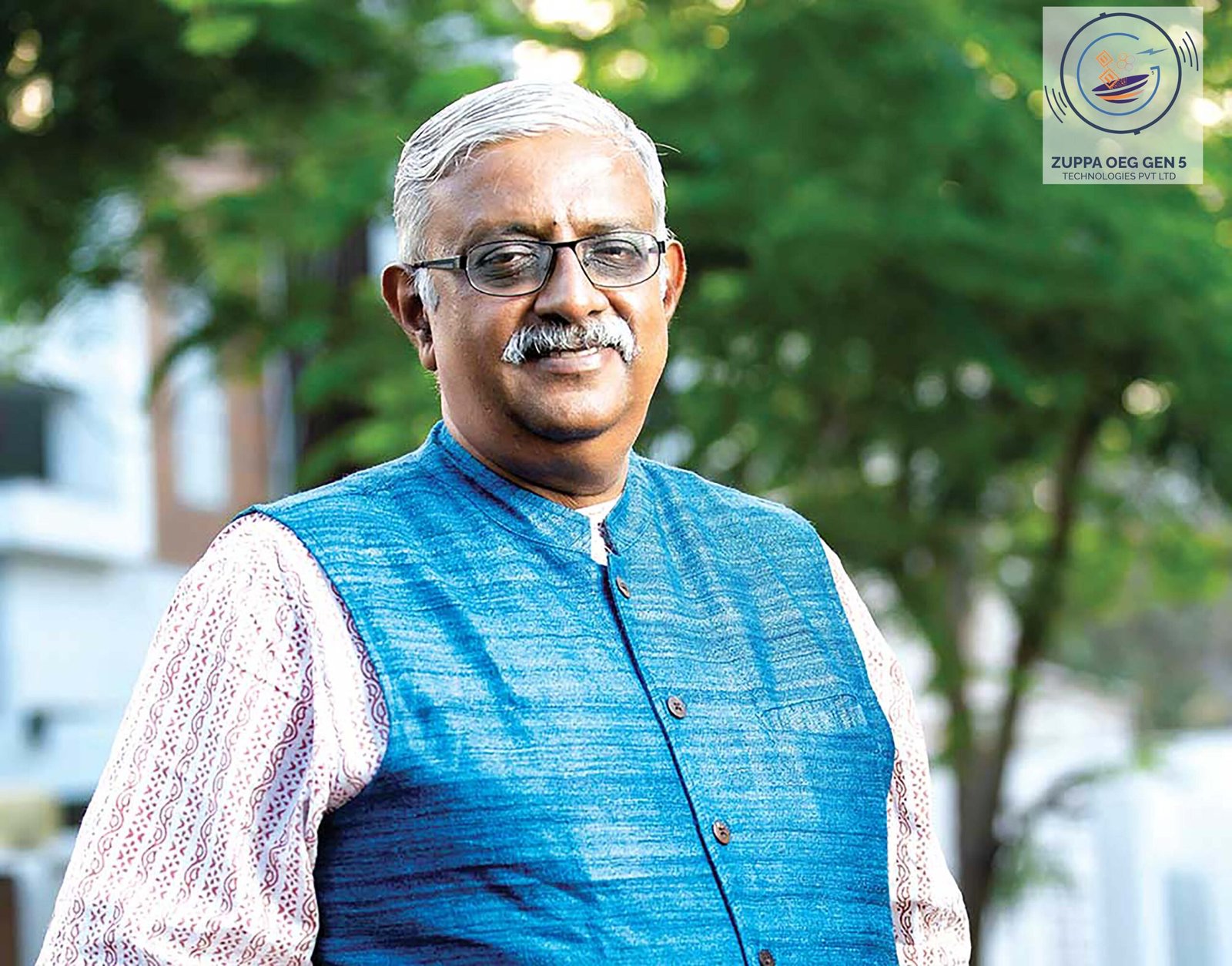 However, there have been setbacks that revealed cyber gaps, prompting a renewed focus on indigenisation. Sai Pattabiram, Founder and Managing Director of Zuppa Geo Navigation Technologies, noted: “The Indian drone sector faced major setbacks in 2025, including the hacking of a tactical drone and the Manipur bombings, revealing significant cyber vulnerabilities and highlighting drones as dual-use technologies. These incidents exposed gaps during Operation Sindoor, pushing defence policymakers to seek solutions that address both operational security and technological resilience.”
This has led to a strong emphasis on indigenisation and aiming to reduce reliance on foreign-sourced components and foster innovation within India. Globally, NATO countries are facing similar challenges and are also investing in cybersecurity and indigenous development for drones. These developments of the past year present an excellent opportunity for India to realise its global drone hub ambitions.
It was a watershed year for Zuppa. With a Rs 12 crore investment led by accomplished former entrepreneurs, it achieved successful STQC (Standardisation Testing and Quality Certification) cybersecurity testing and cleared military standard testing, earning Zuppa the recognition as a deep drone tech leader post Operation Sindoor.
The company’s reach now spans multiple Indian Army corps and commands, which trust its secure, self-reliant solutions. By tackling cybersecurity and Chinese supply chain challenges for the Indian Army, Zuppa has unlocked major global opportunities, especially among NATO countries facing similar drone threats.
The year 2025 emerged as a watershed for India’s unmanned aerial vehicle (UAV) sector, propelled by operational urgencies and technological requirements. Operation Sindoor underscored the dual role of drones in national security and exposed vulnerabilities
“Our ambition for 2026 is to expand Zuppa’s global footprint across NATO nations, building on our momentum in India and setting new standards for security and innovation,” says Pattabiram.
Pattabiram’s perspective aligns with broader trends, where firms like Raphe mPhibr raised $100 million to develop long-endurance drones, reducing reliance on Chinese components. Collaborations, such as with Russia for high-power UAV engines, further bolstered capabilities for kamikaze and loitering munitions.
The sector’s growth was evident at Aero India 2025, where swarm drones and AI-integrated UAVs were showcased, with over 550 startups contributing to a projected $23 billion market by 2030. Decisions against additional foreign procurements, like Heron MK II, post-Sindoor, reinforced the indigenous push.
Aerospace Advancements: Soaring Towards Self-Reliance
India’s aerospace sector witnessed exponential growth in 2025, with manufacturing projected to double by 2030 and the overall market reaching $70 billion. Aero India 2025, held in Bengaluru, served as a global hub, featuring 70 aircraft, 90 nations and live demonstrations of next-gen fighters, UAVs and AI systems. The event aligned with defence export goals of $5 billion annually, showcasing deals like Flying Wedge Defence & Aerospace’s autonomous UAV exports. The company has signed an MoU with the Government of Andhra Pradesh to build India’s first full-spectrum 500-acre autonomous combat aircraft manufacturing and testing facility.
India’s aerospace sector witnessed exponential growth in 2025, with manufacturing projected to double by 2030 and the overall market reaching $70 billion. Aero India 2025, held in Bengaluru, served as a global hub, featuring 70 aircraft, 90 nations and live demonstrations of next-gen fighters, UAVs and AI systems
Indigenous milestones included HAL’s Prachand helicopters and advancements in AI-driven predictive maintenance. Startups like Sarla Aviation initiated air taxi testing, signalling urban mobility innovations. Global trends, such as Airbus and Boeing’s predictions for 40,000 new commercial jets, positioned India as a manufacturing partner.
 Agnishwar Jayaprakash, Founder and Director of Garuda Aerospace, captured the year’s essence: “2025 has been a defining year for the defence and aerospace sector, marked by strong progress in indigenous capability building, technology adoption and industry maturity. The year saw meaningful advances in drone platforms, aerospace manufacturing and the integration of advanced technologies into operational systems. What stood out was the sector’s growing confidence, moving beyond experimentation to scalable, reliable solutions. While challenges around speed, supply chains and talent development remain, the collective focus on quality, safety and long-term sustainability has strengthened the ecosystem. The momentum built in 2025 sets a solid foundation for the next phase of growth, innovation and global competitiveness.”
 Complementing this, Rithika Agnishwar, Co-Founder and Director of Garuda Aerospace, added that the past year reflected steady evolution across the defence and aerospace landscape, with greater emphasis on execution, collaboration and operational readiness. “Companies invested in building robust platforms, improving manufacturing efficiencies, and aligning solutions with real-world requirements. Innovation continued to play a central role, particularly in unmanned systems and aerospace technologies, while partnerships across industry and academia gained momentum. At the same time, the sector recognised the importance of scale, skilled talent and resilient supply chains to sustain growth. Overall, 2025 reinforced the sector’s potential to deliver high-impact solutions and laid the groundwork for consistent, long-term advancement,” Rithika said.
These views resonate with the aerospace and defence sub-sector’s ₹2,915 crore in deals, outpacing other segments. The Make in India initiative promoted collaborations, with Noida-based firms leading in complex assemblies.
Strategic Affairs: Navigating Geopolitical Turbulence
In the arena of strategic affairs, 2025 tested India’s multi-alignment policy amid escalating tensions with China and Pakistan. Border standoffs and proxy threats necessitated a pivot from reactive to proactive postures, with Operation Sindoor showcasing the country’s denial and domination strategies. Globally, India maintains balanced relations with major powers, advancing FTAs while preserving autonomy.

Lt Gen Ashok Bhim Shivane provided a forward-looking perspective: “India must stride into 2026 not reacting to crises, but as the shaper of its battlespace by denial and domination. We must look at a battlespace with interconnected external threats and internal faultlines.”
He pointed out two key weaknesses of reactive strategic disposition and siloed functioning, and how to overcome them. “Against China’s grey-zone grind and Pakistan’s proxy stabs, our military must pivot from grit to dominance; owning sensors, seekers, propulsion, AI-fused C5ISR and cyber teeth that deny foes any edge. No more ‘Make in India’ by ‘Made in China;’ we must create an indigenous defence ecosystem for precision strikes, resilient nets and narrative shields.”
Lt Gen Ashok Bhim Shivane provided a forward-looking perspective: “India must stride into 2026 not reacting to crises, but as the shaper of its battlespace by denial and domination. We must look at a battlespace with interconnected external threats and internal faultlines”
Lt Gen Shivane added: “A National Security Strategy must be unfurled for jointness, procurement speed and denial deterrence into pre-emptive steel. The battle space assets must be integrated before theatre integration. Also, reclaiming Kautilyan foresight, we must break Macaulay’s chains for Viksit Bharat’s mental sovereignty. The year 2026 demands ownership of time, technology, terrain and triumph. Finally, it is society which is the target, the arena and the protectors. We need a National Citizens Security Culture and an Integrated Internal Security Grid.”
Shivane’s call for an indigenous ecosystem and societal involvement echoes the year’s reforms, addressing challenges like US tariffs and ideological shifts in foreign policy. India’s role in the Global South remained pivotal, navigating conflicts in Gaza and Ukraine while enhancing deterrence.
Outlook: Towards Viksit Bharat 2047
As 2025 comes to a close, the Year of Reforms has fortified India’s defence posture, with indigenisation, innovation and strategic foresight as enduring legacies. The integration of AI, cybersecurity and unmanned systems positions the nation for exponential growth in aerospace and defence. Yet, challenges persist — supply chain resilience, talent gaps and geopolitical volatilities demand sustained momentum.
Looking to 2026, autonomy and global expansion will define the trajectory. With exports targeting ₹210 billion and a comprehensive National Security Strategy on the horizon, India stands poised to shape its battlespace, ensuring security and sovereignty in the 21st century. The reforms of 2025 are not merely milestones but the foundation for a Sashakt, Surakshit and Viksit Bharat.

–The writer is a globally cited defence analyst based in New Zealand. The views expressed are of the writer and do not necessarily reflect the views of Raksha Anirveda
