
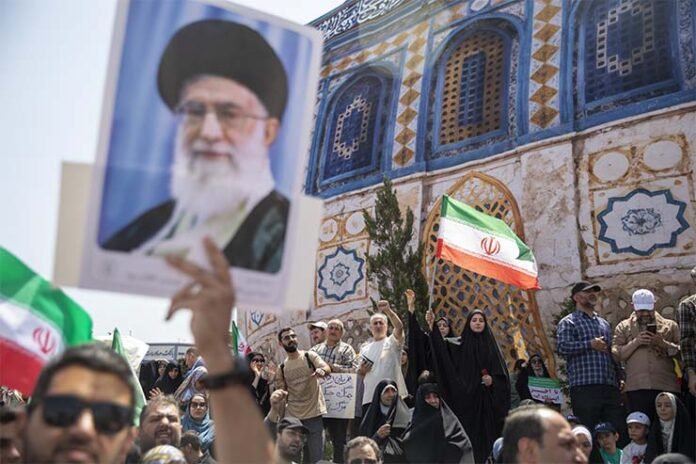
The death of Ayatollah Ali Khamenei during active confrontation removes the single stabilising arbiter in Iran’s strategic system. What follows is not closure but structural uncertainty. His absence alters the calculus through which Tehran has historically absorbed pressure and calibrated retaliation.
Operation Epic Fury was designed as coercion without occupation. Its purpose was to degrade nuclear and missile capabilities, disrupt command coherence. It relied on precision and the assumption that calibrated pain would produce recalibration rather than escalation. That assumption rested implicitly on a known decision-maker at the top. That model assumes rational hierarchy and disciplined escalation control.

Khamenei’s authority was unique because it fused theology with statecraft. He could authorise retaliation and still define its ceiling. He could authorise proxies yet prevent them from dragging Iran into open war. His authority absorbed internal contradiction. The system beneath him was powerful, but he defined its limits. That centrality reduced ambiguity inside the system, even when it amplified tension outside it.
Succession is when systems expose who truly holds power. Iran’s constitutional pathway for transition exists, but moments of uncertainty rarely follow text; they follow control. The Shah’s son may surface, yet the real variable lies within the state’s security architecture. The practical balance of power may tilt decisively towards the Islamic Revolutionary Guard Corps. The IRGC is not an auxiliary institution. It commands missile forces, oversees strategic industries, shapes intelligence operations and maintains deep ties across the proxy network that extends from Lebanon to Yemen. If authority consolidates within its upper ranks, Iran’s strategic centre of gravity may move from clerical arbitration to institutional securitisation. A security-dominant succession would privilege deterrence signalling over political flexibility. This would make the region more volatile and the stand-off strikes giving way to a proxy war of more intense dimension.
Instability in Iran’s eastern provinces would place India’s Chabahar investment under renewed strategic scrutiny. Strategic autonomy in such an environment demands diversification and balanced diplomacy, not declarative positioning. Strategic petroleum reserves and payment diversification mechanisms will become immediate instruments of resilience
Leadership transitions under external pressure historically produce overcompensation rather than restraint. The desire to demonstrate strength can be intense in environments of external pressure. Even limited, carefully calculated retaliation can escalate risks during the process of solidifying leadership legitimacy. History cautions against assuming that removing a leader automatically produces moderation.
The post-2003 collapse of Iraq showed how removing the apex of a centralised system can dissolve coercive cohesion. Iran’s hybrid theocratic-security structure is more institutionalised, but institutionalisation can harden under siege. Economic hardship, youthful discontent, and fringe grievances in Kurdish and Baloch regions create a backdrop that can be either suppressed or inflamed by changes in leadership.

The energy dimension magnifies every miscalculation. The Strait of Hormuz remains one of the world’s most sensitive chokepoints. Iran lacks the capacity to shut it indefinitely against coordinated naval presence, but disruption is feasible. Even a temporary disruption would transmit shockwaves through markets and alliances alike. Securing maritime arteries becomes a signalling contest as much as a naval one. Stability in shipping lanes translates into stability in alliances. Energy security is increasingly central to global powerplay and influence.
Russia and China will calculate the developments in light of their own interests. Moscow has power in defence cooperation. The energy calculus of Beijing hinges on the survival of Iranian exports. Neither would act directly, but both can influence the strategic environment indirectly through technology transfers, intelligence sharing or calculated naval presence
India cannot afford to view this turbulence as a distant theatre. For India, this is not distant turbulence. Sustained crude volatility would complicate fiscal planning, strain inflation management and distort growth projections. Instability in Iran’s eastern provinces would place India’s Chabahar investment under renewed strategic scrutiny. Strategic autonomy in such an environment demands diversification and balanced diplomacy, not declarative positioning. Strategic petroleum reserves and payment diversification mechanisms will become immediate instruments of resilience.

Uncertainty is aggravated by the broader geopolitical environment. Russia and China will calculate the developments in light of their own interests. Moscow has power in defence cooperation. The energy calculus of Beijing is attached to the survival of the Iranian exports. Neither would act directly, but both can influence the strategic environment indirectly by means of technology transfers, intelligence sharing or calculated naval presence. What can be seen as a bilateral confrontation carries with it multilateral undertones. In great power competition, indirect influence often matters more than overt intervention. Their objective will not be escalation, but leverage.
Within Iran, the psychological dimension is equally important. External pressure often consolidates domestic cohesion in the short term. The narrative of resistance to foreign coercion has long been central to the Republic’s identity. Leadership uncertainty amid confrontation could intensify that narrative rather than dilute it. Hardline elements could argue that only a visibly strengthened deterrent guarantees survival. Narrative consolidation often precedes policy hardening.
Within Iran, the psychological dimension is equally important. External pressure often consolidates domestic cohesion in the short term. The narrative of resistance to foreign coercion has long been central to the Republic’s identity. Hardline elements could argue that only a visibly strengthened deterrent guarantees survival. Narrative consolidation often precedes policy hardening
Supporters of Epic Fury maintain that prior strategies of sanctions and incremental engagement allowed Iran’s capabilities to mature without decisive consequences. In their view, sharp and visible degradation was necessary to restore credibility. Critics counter that credibility also depends on the clarity of the objective. Is the aim behavioural moderation or structural transformation? Without a defined political horizon, coercion risks becoming a tactic in search of a strategy. Coercion without political end-state clarity risks strategic drift.
Modern conflicts seldom conclude with formal closure. They taper through signalling, exhaustion and recalibration. Coercive demonstration establishes credibility. Indirect channels define thresholds. Overt exchanges diminish while structural rivalry endures. Termination here is managed equilibrium, not resolution.
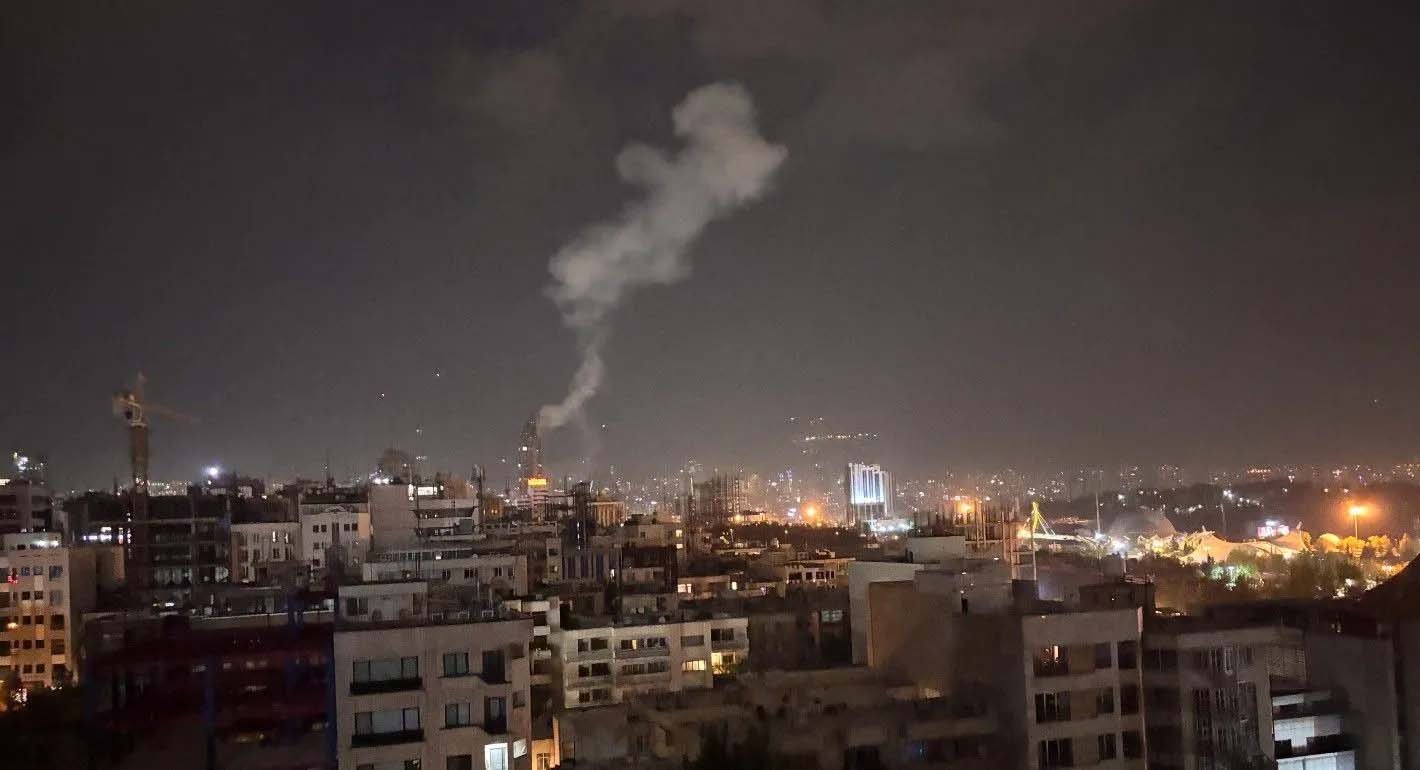
The missile and proxy dimensions illustrate the fragility of control. Iran’s dispersed missile arsenal retains the capacity to test defensive systems through saturation. Proxy networks, even if disrupted, possess residual autonomy. Leadership transition could either tighten coordination or produce fragmented initiative. Both scenarios complicate escalation management. Centralised command can choose timing carefully. Fragmentation introduces escalation without authorisation.
Regional actors must prepare for protracted volatility rather than an episodic crisis. Maritime domain awareness must be strengthened. Energy sourcing must accelerate beyond incremental diversification. Diplomatic channels with all major capitals should remain open and active. In moments of systemic stress, resilience matters more than rhetoric.
The decisive variable remains the character of post-Khamenei authority. If succession produces consolidation, Operation Epic Fury may achieve its intended recalibration. If it generates competition within the security establishment or emboldens maximalist doctrine, the region could enter a prolonged phase of controlled hostility. Security competition within the establishment would magnify the escalation risk.
Regional actors must prepare for protracted volatility rather than an episodic crisis. Maritime domain awareness must be strengthened. Energy sourcing must accelerate beyond incremental diversification. Diplomatic channels with all major capitals should remain open and active. In moments of systemic stress, resilience matters more than rhetoric
Khamenei’s legacy was not moderation in the Western sense. It was calculated endurance. He understood that survival required both resistance and restraint. Whether his successors inherit that balance is uncertain. Institutions forged in conflict memory tend to default to firmness.
Air power can compress events into days. Political succession unfolds over months and years. Between those timelines lies the decisive margin in which deterrence either stabilises or deteriorates. The coming period will reveal whether Iran’s system absorbs the shock and recalibrates, or whether the vacuum at the top hardens positions on all sides.
Leadership transitions in resilient states do not automatically lead to collapse. They can also generate rigidity. The outcome will depend on the result of the current clash, whether it results in a quick correction or leads to a more entrenched rivalry.
The present moment is less about the spectacle of strikes than about the architecture of authority that follows. If succession consolidates discipline, recalibration remains possible. If it fragments the command, controlled hostility could harden into a durable confrontation. Judicious signalling and clarity of objective will determine whether this crisis narrows or expands beyond its original design.
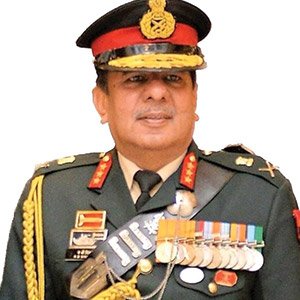
The author, a PVSM, AVSM, VSM has had an illustrious career spanning nearly four decades. A distinguished Armoured Corps officer, he has served in various prestigious staff and command appointments including Commander Independent Armoured Brigade, ADG PP, GOC Armoured Division and GOC Strike 1. The officer retired as DG Mechanised Forces in December 2017 during which he was the architect to initiate process for reintroduction of Light Tank and Chairman on the study on C5ISR for Indian Army. Subsequently he was Consultant MoD/OFB from 2018 to 2020. He is also a reputed defence analyst, a motivational speaker and prolific writer on matters of military, defence technology and national security. The views expressed are personal and do not necessarily carry the views of Raksha Anirveda
