


When GE Aerospace’s GE90 widebody engine was introduced in 1995, it came equipped with the first polymer composite fan blades ever in a commercial jet engine. Thirty years later, GE Aerospace remains at the leading edge of the technology, expanding its use across three separate commercial engine programmes that have entered service since then.
Starting with the GE90 engine, the replacement of titanium-based fan blades with 22 lightweight composite fan blades significantly reduced the engine’s total weight. This not only helped deliver improved fuel efficiency but also was integral to the engine’s then-world-record-setting performance in thrust. The reduced weight of the carbon fiber material is also, in part, what enables the large fan diameter of both commercial engines — 128 inches on the GE90 and 134 inches on the GE9X.

Over time, the polymer matrix fan blades have been found to be more durable than their titanium predecessors. To date, they have collectively accumulated more than 300 million hours of flight time among all the commercial engine platforms they help to power.
“The introduction of the polymer matrix composite fan blade stands as one of the most consequential material innovations in the history of commercial jet engines,” says Nicholas Kray, chief consulting engineer for composite design at GE Aerospace. “It was a game changer for jet engine efficiency — and for durability too.”
The Birth of Polymer Matrix Composites
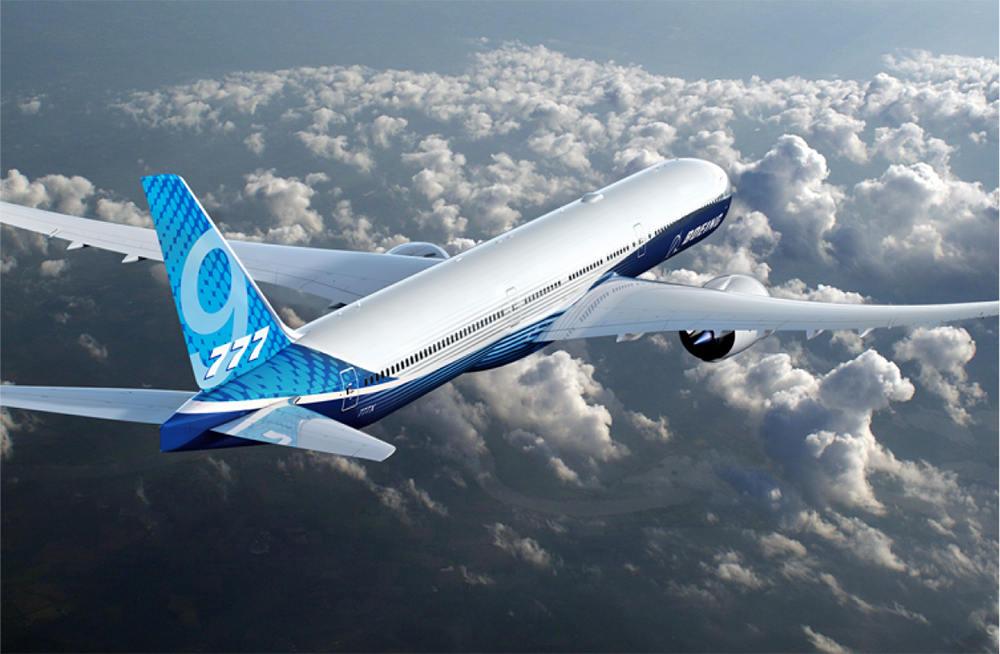
GE Aerospace is on the cusp of introducing the successor to the GE90 engine, the GE9X engine, which will power the new Boeing 777X commercial jet. The company’s newest widebody engine benefits from decades of advancements and progress with polymer matrix composites.
In general, GE Aerospace fan blade composites are composed of carbon fibers woven into polymer resin matrices that engineers shape so that the material properties can respond to specific forces and conditions. This fiber matrix combination makes the blades lighter and more resistant to fatigue.

After the introduction of the GE90 engine, GE Aerospace engineers adapted the carbon fiber polymer composite fan blade and added a composite containment case to the GEnx engine, which was introduced in 2004 and powers two-thirds of the Boeing 787 Dreamliners currently in operation.

Over the ensuing decade, CFM International, a 50-50 joint company between GE Aerospace and Safran Aircraft Engines, designed a composite fan blade and containment case for the LEAP engine, which entered the narrowbody market in 2016.
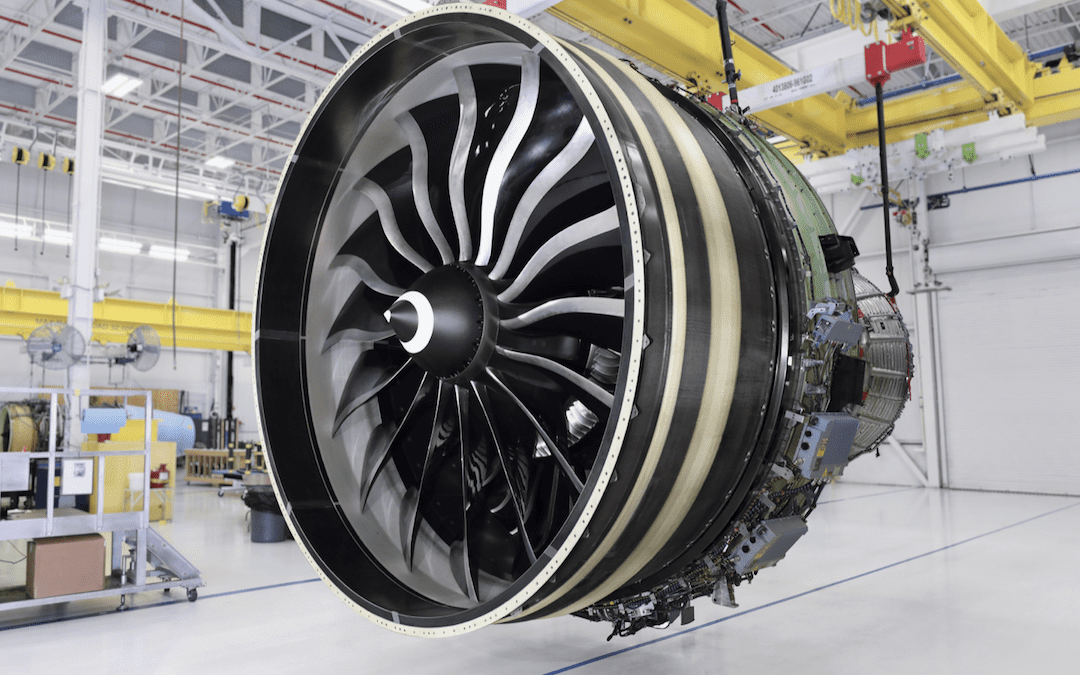
The GE9X engine represents the most advanced design so far to use the composite fan blade and case. For instance, the front fan on the GE9X engine requires only 16 fan blades, while the GE90 engine has 22. This was enabled principally by the improvements the company has been able to make in 3D design.
GE9X Engine and the Road to RISE
The composite fan blade is now poised to enter a whole new journey with the upcoming entry into service of the GE9X engine on the Boeing 777X. But GE Aerospace’s decades of development, learning, and advanced supercomputing studies with the composite fan blade are also accelerating and informing the CFM RISE programme, a suite of demonstrator technologies aimed at producing at least a 20% improvement in fuel efficiency compared with today’s commercial engines.
In the Open Fan, or unducted, design of the RISE programme’s demonstration engine, a key focus is designing the fan blades to be as quiet as, or even quieter than, their ducted engine predecessors. GE Aerospace and CFM engineers continue to leverage their expertise in composite technology, evident in such proven products as the GE90 and GEnx engines, to influence the Open Fan design, including advanced internal architecture calculated to optimise weight and efficiency. For example, they’ve expanded the use of polymeric composites to other regions of the engine, such as spinners, fairings, and internal cases, resulting in optimal weight improvements.
“The runway for innovation just keeps going and going with the application of carbon-fiber composites,” says Kray. “It’s an innovation that not only has made history; it’s poised to continue to lead the way in shaping the future of commercial jet engines.”
Source: GE Website

