

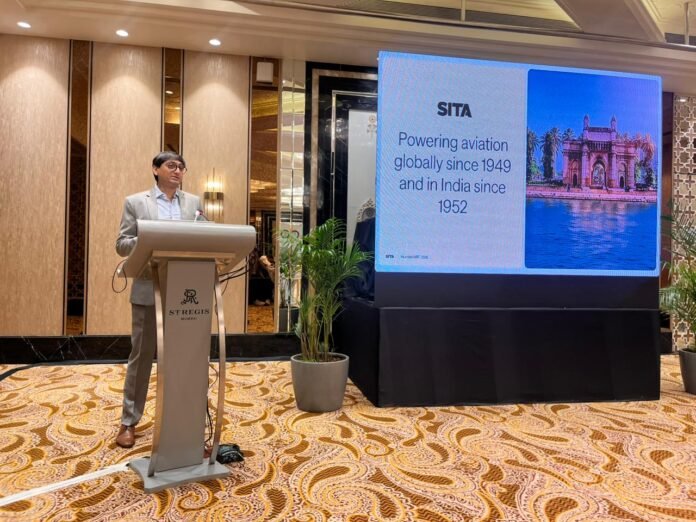
Mumbai: As India enters a decisive phase of aviation expansion, SITA, which has powered global air transport since 1949 and operations in India since 1952, is strengthening its digital aviation ecosystem to support rising passenger volumes, changing traveller expectations, and large-scale airport modernisation. With SITA technology supporting almost every passenger journey worldwide, the company continues to enable seamless, secure, and sustainable travel across airports, airlines, borders, and mobility partners.
SITA operates with a global workforce of more than 5,700 employees and serves over 2,500 customers. Its technology footprint spans over 1,000 airports, 18,000 aircraft, and more than 70 governments. The company enables 45 percent of global air transport data exchange and supports over 4,800 biometric touch-points worldwide, helping airports and governments achieve real-time operational visibility while delivering consistent passenger experiences.

Changing Passenger Expectations and Industry Investment
Insights from SITA’s 2025 Passenger IT and Baggage Reports show a clear shift in traveller priorities toward convenience, trust, and sustainability. Passengers are increasingly willing to pay for faster airport processing, end-to-end baggage tracking, and digital identity-enabled journeys. In parallel, airlines and airports are increasing investments in digital infrastructure. Airlines are expected to invest US$ 8.9 billion, while airports plan investments of US$ 37 billion globally to advance biometrics, cloud-based systems, automation, and real-time operations.
SITA’s portfolio supports these priorities through biometric Smart Path solutions, digital border systems, cloud-enabled passenger processing, modern baggage platforms, and airport management systems. These capabilities are becoming increasingly important as global air travel is projected to cross 8 billion passengers by 2040, with growth expected to outpace physical infrastructure expansion.

India’s Digital Aviation Scale-Up
India is now the world’s third-largest aviation market, recording 411 million air travellers and 174 million origin-destination passengers, with aviation contributing USD 53 billion to national GDP. Digital transformation plays a critical role in sustaining this growth.
SITA is currently supporting one of India’s largest aviation technology deployments. Cloud-based passenger and baggage solutions are being implemented across up to 50 Airports Authority of India airports and are expected to scale to more than 3,500 touchpoints. SITA also supports 61 airports across India with CUPPS, CUSS, and BRS platforms, enables over 65 airlines to meet Government of India API requirements, employs more than 1,135 staff nationwide, operates a 24/7 Global Command Centre in Delhi, and undertakes local manufacturing in line with the Make in India initiative.

Supporting New-Generation Airports
SITA is closely involved in India’s next wave of airport development through future-ready digital systems. Navi Mumbai International Airport is integrating 22 SITA self-bag-drop units to enable automated passenger processing from the start of operations. Mumbai International Airport continues to use SITA passenger processing and operational systems. In addition, an Airport Management System deployed across six Adani airports enables real-time data sharing, collaborative decision-making, and integrated management of gates, counters, and airfields. Jewar, also known as Noida International Airport, is aligned to adopt similar scalable digital and biometric systems as passenger demand increases.
With 17 airports already enabled under DigiYatra and 10 more planned, India is moving steadily toward a biometric-led travel environment. SITA’s long-term vision of a single check-in and walk-through journey supports India’s transition to trusted digital identities, automated borders, real-time baggage tracking, and connected onward travel. As passenger volumes rise and sustainability targets tighten, SITA’s digital systems are helping India scale aviation operations in a secure, efficient, and sustainable manner.


