
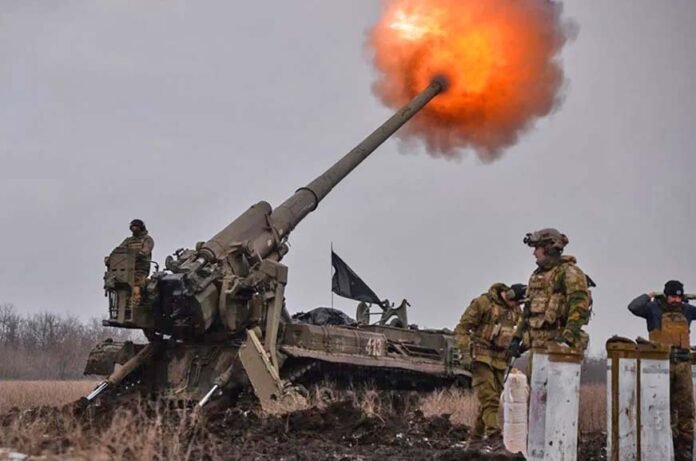
The potential triggers that could have contributed to the Russian invasion of Ukraine are mostly based on historical context and geopolitical factors. The geopolitical positioning and the geostrategic location of nations in the international system shape international politics. The geographic positions of the United States, China, and Russia constitute major power centres; any change in the power distribution amongst these three shifts the balance of power in the international system.
Added to this are the historical factors. Nationalistic sentiment, historical narratives, and the desire to reclaim what Russia perceives as historically Russian territories played a significant role in Russia’s ongoing military action in Ukraine. Russian geopolitical ambitions and strategic interests have historically considered Ukraine as part of its sphere of influence. There is an inherent desire in the Russian leadership to maintain influence and control over Ukraine to secure strategic interests in the region.

Russian President Putin has overtly criticised the dissolution of the Soviet Union as a “catastrophe,” declaring that his two-decade-long rule in Russia has sought to rebuild Russia’s power base and sphere of influence over former Soviet states. Nations like Belarus, Georgia, and Ukraine geographically act as natural buffer states against Europe.
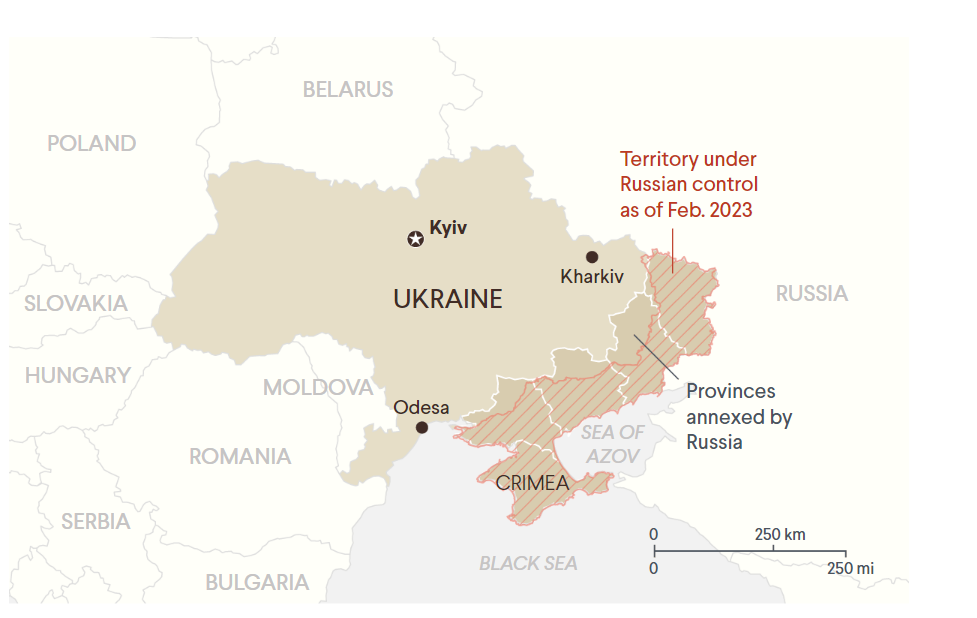
Furthermore, Ukraine’s aspirations to join NATO and the EU have long been viewed by Russia as a threat manifestation to its security and strategic position, acting ostensibly as an expansionist strategy towards gaining an ascendent military posture against Russia. The possibility of Ukraine strengthening ties with Western alliances pushed Russia to take assertive actions to prevent this perceived encroachment.
Ukraine’s initial steps towards seeking NATO membership are one of the primary factors for the Russian invasion of Ukraine in February 2022. The eastward expansion of NATO is specifically the reason that inflamed Russian President Putin. He could not tolerate a weak Ukrainian government turning away from Russia and playing to the unreliable and non-dependable assertions of the Western nations to integrate Ukraine with NATO. This is particularly true as the Russian contentions related to NATO expansion have centred around two claims: firstly, that the inclusion of former Warsaw Pact member states into NATO has dishonoured the pledge of refraining from expanding eastward; and secondly, that the West has deliberately sought to pull Ukraine into NATO.
The Russian perspective regarding the enlargement is related to the failure of the Western promises of no NATO expansion up to the Russian periphery
Additionally, the political instability or a weak central government in Ukraine was considered by Russia as an opportune moment to intervene. Russia cited the need for political stability and the safety and security of the Russian-speaking populations or ethnic Russians residing in Ukraine as the primary motives for its intervention. This can further be associated with the tensions in the Eastern Ukrainian districts, particularly in Donetsk and Luhansk, which have been a source of contention.

The armed conflict in Eastern Ukraine which began in 2014 has resulted in more than 14,000 people losing their lives. Since 2014, the Ukrainian government has countered Russian-supported separatists to maintain control over the two major industrialised regions of Donetsk and Luhansk, also known as Donbas. Aggressive conflict between Ukrainian governmental forces and Russian-backed separatists in 2014-2015 came to an end with the most urbanised part of the Donbas territory occupied by the Donetsk and Luhansk People’s Republics.
Also, between September 2014 and February 2015, Russia, Ukraine, France, and Germany signed several negotiations known as the Minsk agreements. This eventually led to the stopping of the forward movement of troops and decreased fighting substantially.

Energy Geopolitics and Transit Routes
Another significant aspect of this withered relationship between Russia and Ukraine is the transit route for Russian oil and gas. Ukraine was historically a crucial transit route for Russian gas exports to Europe. However, following the expiration of the 2019 transit agreement on January 1, 2025, the dominance of Russian gas transit through Ukraine has effectively ended. While some volumes flowed during the initial years of the conflict at a rate of 35–40 million cubic meters per day (mcm/d), these figures dropped drastically as Europe sought to decouple from Russian energy.
The Ukrainian gas transmission system is linked with four EU member states, namely Poland, Slovakia, Hungary, Romania, and Moldova. Between 2022 and 2024, six EU nations—Slovakia, Austria, Italy, Hungary, Slovenia, Croatia—and Moldova received Russian gas through this Ukrainian transit corridor. It remains ironic that for much of the conflict, Russian oil and gas continued to flow through Ukrainian pipelines.
Before this conflict began in 2022, Europe had relied on Russian gas for almost 40-45 percent of its imported gas, and about a quarter of its oil reached Europe through these pipelines. Russia has since tried to arm-twist Europe into removing the sanctions imposed by cutting its oil and gas supplies. Europe has, in turn, tried to decouple itself from Russian energy. However, the historical flow of oil and gas tells a story related to the after-effects of the old system as well as the various clauses of contract law, market reality, and political expediency.
Critical Analysis and the NATO Factor
However, this brings us to two principally significant questions that need to be analysed critically in terms of this ongoing conflict between Russia and Ukraine. Firstly, the reasons for the initiation of the conflict, and secondly, how this conflict can be terminated with immediacy by developing propinquity amongst nations through the systemic rationale of multilateral dialogues to save further destruction of men, material, and overall infrastructure by both Russia and Ukraine?
The historical flow of Russian oil and gas through Ukrainian pipelines tells a story related to the after-effects of the old system as well as the various clauses of contract law, market reality, and political expediency
The factor related to NATO enlargement being the major triggering factor has already been discussed. However, it is important to highlight that the Soviet disintegration was followed by successive instances of NATO membership being granted to Poland, Hungary, the Czech Republic, Estonia, Latvia, Lithuania, Bulgaria, Romania, Slovenia, Slovakia, Albania, Croatia, Montenegro, and North Macedonia. Additionally, following the 2022 invasion, Finland (2023) and Sweden (2024) officially joined the alliance. This thereby justifies Russian apprehensions of NATO enlargement and resembles a domino effect that transformed the NATO-Russia border.
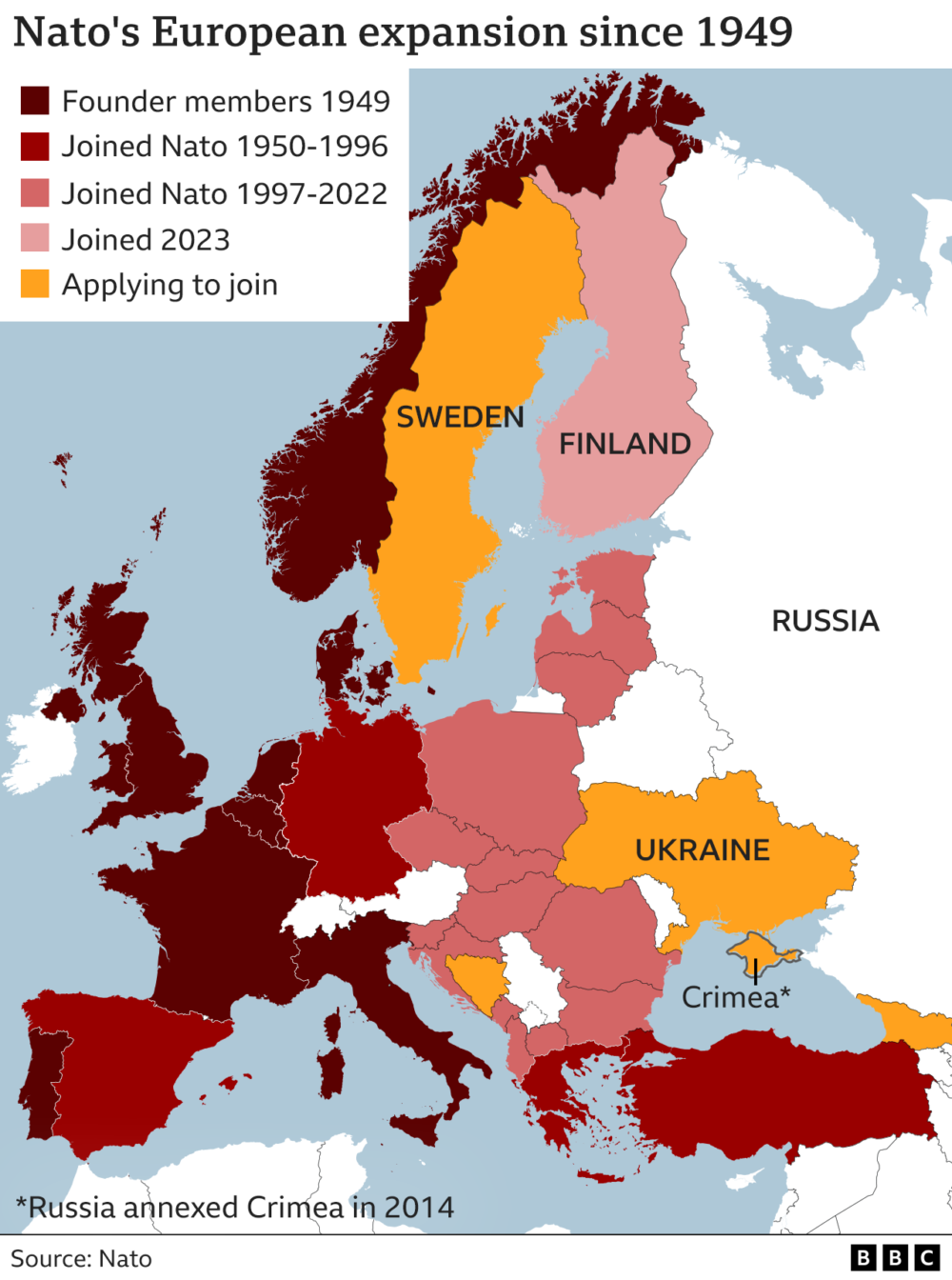
Russia has time and again communicated its apprehensions and subsequent dissatisfaction regarding this NATO enlargement during diplomatic meetings and encounters. So, the ongoing conflict initiated by Russia against Ukraine can be interpreted as the Russian reaction. The Russian perspective regarding the enlargement is related to the failure of the Western promises of no NATO expansion up to the Russian periphery.
It is a plausible argument to make that the American exploitation of a weakened Russian power after the dissolution of the Soviet Union—and the subsequent overpowering and antagonising of Russia—partly but significantly led to this conflict. “While for the West, NATO’s expansion is seen as ‘the enlargement of a security community,’ Russians perceive it as an assertive move of the West”. However, it is primarily the American military infrastructure getting closer to Russian borders which antagonised the Russians. In the present circumstances, the prospect of Finland and Sweden becoming NATO members originated from Swedish and Finnish threat perceptions vis-à-vis Russia, especially heightened by the current Russia-Ukraine conflict. While Ukraine remains an aspiring member rather than a full member, its inclusion into the Western security orbit has resulted in the Russia-Ukraine conflict that, in turn, has resulted in some neutral states becoming NATO member nations.

Lt Gen S K Gadeock is a distinguished military leader, global strategist, and scholar who served as the Commandant of the Defence Services Staff College. A decorated veteran and former Logistics Advisor to the Botswana Defence Force, he has held numerous high-ranking appointments including Director General of the Amity Institute of Defence & Strategic Studies. Serving on the Advisory Board of Raksha Anirveda, he is a prolific writer and motivational speaker.
