

New Delhi: India currently has 55 satellites in orbit and the number is going to be increased to three times in another three to four years, said ISRO Chairman.
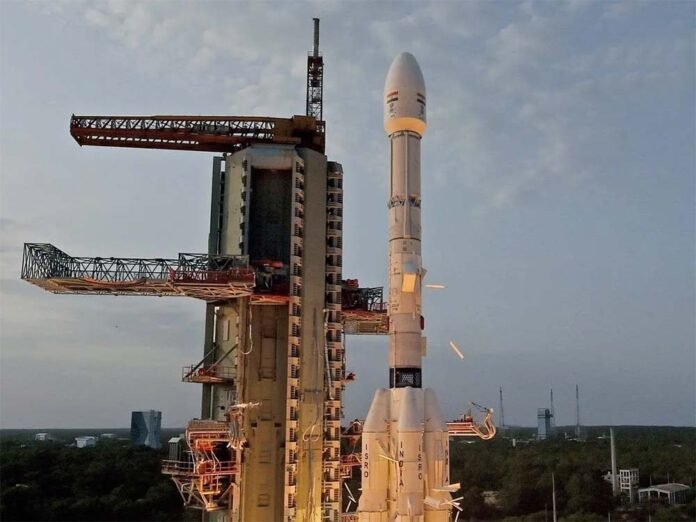
The Indian Space Research Organisation (ISRO) is currently working on developing a rocket that is as tall as a 40-storey building, designed to launch an unprecedented 75,000 kg (75-ton) satellite into low Earth orbit.

This ambitious project was announced by ISRO Chairman V Narayanan during his convocation address at Osmania University in Hyderabad. He highlighted that this new rocket represents a giant leap from the rocket capabilities of the past, citing the first launcher developed under Dr APJ Abdul Kalam, which had a lift-off mass of 17 tons and could place just 35 kg into orbit. In contrast, the envisioned rocket will be able to place 75,000 kg into orbit, reflecting major advancements in India’s space launch capabilities.
For 2025, ISRO has a robust line-up of projects including the launch of a new NAVIC satellite—a part of India’s autonomous regional navigation system aimed at providing accurate positioning services both for civilian and strategic uses.
ISRO is also developing the N1 rocket and is planning to place a 6,500 kg US communication satellite into orbit using Indian launch vehicles.
Additionally, ISRO intends to launch the Technology Demonstration Satellite (TDS) and GSAT-7R, an Indian military communication satellite designed specifically for the Indian Navy to replace the existing GSAT-7 (Rukmini) satellite. GSAT-7R is expected to enhance naval communication capabilities considerably.

Currently, India has 55 satellites in orbit, but this number is expected to triple within the next three to four years, rising to around 165 satellites to meet the growing demand for satellite-based services. This dramatic increase underscores India’s expanding presence and capabilities in space technology and satellite applications, including communication, navigation, and military purposes.
ISRO Chairman Narayanan is also steering efforts toward building India’s own space station by 2035, with the first module planned for launch in 2028, signalling a long-term vision for India’s comprehensive space infrastructure.

In recognition of his pivotal contributions to India’s space program, V Narayanan was awarded the honorary degree of Doctorate of Science at the Osmania University convocation by Telangana Governor Jishnu Dev Varma.
Overall, these developments reflect ISRO’s ongoing drive to push technological boundaries and expand India’s footprint as a major spacefaring nation.
To summarise, ISRO is working on a cutting-edge, 40-storey-tall rocket capable of launching a 75,000 kg satellite into low Earth orbit, aiming to triple India’s satellite count from 55 to about 165 in several years, and is advancing several key projects including NAVIC satellites, the N1 rocket, and military communication satellites like GSAT-7R, marking a significant leap in India’s space capabilities and ambitions.

