

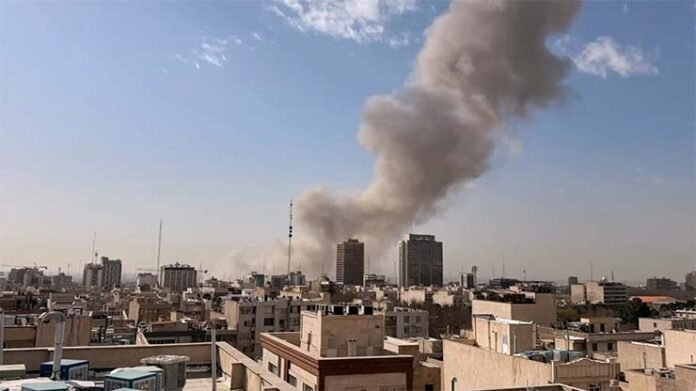
Tel Aviv: Gulf states like the UAE, Qatar, Kuwait, Bahrain, Saudi Arabia, and Jordan that have been attacked by Iranian missiles and armed drones after the US – Israel attack on Iran on February 28 have not responded in any way.
The Iranian missiles and armed drones were launched to hit US Army sites in these countries, but caused heavy damage in some of the Gulf states.

On March 2, there was a major escalation in the Iranian campaign against Gulf States. An Iranian Shahed-136 drone struck Saudi Aramco’s Ras Tanura refinery in Saudi Arabia, causing a small, isolated fire that was quickly brought under control.
Saudi Aramco halted operations at the facility as a precaution, with no casualties reported. This attack is described as retaliation amid escalating US-Israel-Iran tensions.
The armed forces of these Arab states failed in intercepting the Iranian threats that caused the death of one civilian death in Abu Dhabi from debris.
Israeli sources said that these countries prioritise regional stability and economic interests over direct confrontation with Iran, avoiding a wider Gulf war that could disrupt oil exports and global trade. Some of the Iranian missiles and armed drones were intercepted by US defence systems deployed in these countries.

The Iranians attacked these Gulf states because they hosted US bases and coordinated intercepts with US forces, indicating that they relied on Washington for security instead of taking unilateral reprisals.
Gulf officials have called for moderation in the midst of continuing nuclear discussions, and public pronouncements have centered on the “right to respond” while focusing on diplomacy. Oman has stepped in as mediator.

Dr Yoel Guzansky, a senior researcher and the Head of the Gulf Research Field at the Institute for National Security Studies (INSS) told Raksha Anirveda that the Gulf states feel inferior in face of the Iranian war machine.
“On paper they have armed forces, but this inferiority complex restrains them from acting militarily. These are the prevailing rules of the game in the Gulf,” he stated.

-The writer is an Israel-based freelance journalist. The views expressed are of the writer and do not necessarily reflect the views of Raksha Anirveda
