


Tel Aviv: Iran is worried by the growing defence cooperation between the US and Israel and has warned Gulf States not to cooperate. The warning follows the recent joint exercises of the Israel and US navies in the Gulf and the recent ballistic missiles defence exercise conducted by the US and Israel.
According to the Iran International website, Tehran has issued a warning to regional countries about ties with Israel as signs emerged that a new nuclear deal might be delayed at least until November.

Chief of staff of the Iranian armed forces, Gen. Mohammad Bagheri issued a warning on September 7 to regional countries hosting US troops and bases on social media, reported by the official government news website IRNA. He said that the “terrorist American armed forces” have reduced forces in the Persian Gulf and have relegated the defence of those dependent on it to “Zionist child-killer army” through CENTCOM.
According to the website operated from London by Iranians opposing the Tehran regime, Bagheri went on to say that Tehran has warned regional countries, meaning Persian Gulf Arab states, to cooperate with Iran for enhancing security, and has told them Iran will expand its air and naval presence and intensify military exercises, including drone and missile drills.
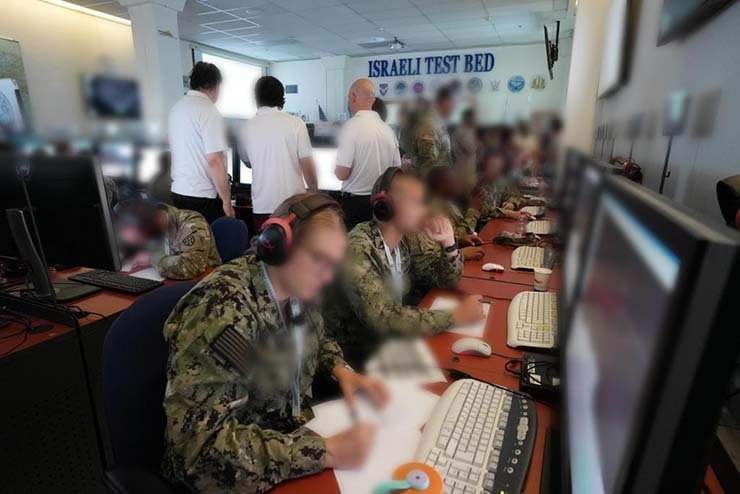
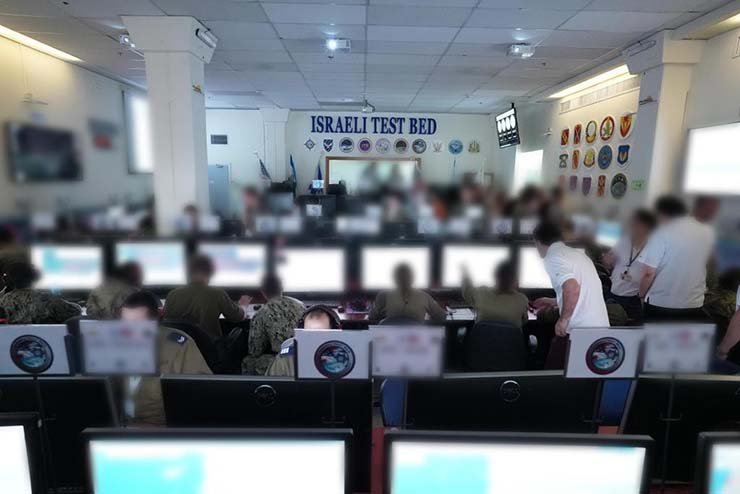
Israeli sources said that the Iranian warning is mainly the result of a joint US – Israeli exercises of ballistic missiles defence. In late July, the Israel Missile Defense Organization (IMDO), together with the US Missile Defense Agency (MDA), the Israeli Air Defense Command, and the US Air and Missile Defense Task Force carried out a joint simulation training exercise in Elbit Systems’ Battle Lab.
According to the Israeli ministry of defence, the joint simulation training exercise continues the tradition of excellent cooperation between the countries’ armed forces in order to improve the soldiers’ competency level for tactics, techniques, and procedures and strengthen coordination between the forces. During the simulation training exercise, the Israeli forces operated the Arrow, David’s Sling, and Iron Dome air defence systems. The American forces operated the Patriot, Aegis, and THAAD systems.

The Israeli Test-Bed (ITB) battle lab, developed by Elisra (a subsidiary of Elbit Systems), is capable of simulating Israeli and American air defence systems, all in one shared space, and can display and record real-time data that assist in comprehensive debriefings of the scenarios.
“This exercise represents another step in our extensive cooperation with the American air and missile defence forces,” said Moshe Patel, Head of the IMDO. “The combination of the different systems significantly improves our forces’ readiness to face evolving threats on several fronts simultaneously. The battle lab, which was developed at Elbit Systems by the IMDO and the MDA over the past thirty years, is constantly adapting to meet the challenges posed by our dynamic arena.”

Commander of the Mission Control Centre for Allied Procedures in the Aerial Defense Array, Brig. Gen. (Res.) Doron Gavish said that the strategic cooperation between forces is a significant component for maintaining and improving defence capabilities in the face of shared threats.
“This joint exercise is an important element in training combat forces in the field. The exercise took place in central Israel this year and has been supported by the IMDO for years. The Israeli Air Force Air Defense Command participated in the joint exercise with forces from the European Command and, for the first time, our American partners at the US Central Command. The exercise was deemed very successful and constitutes an important tool to improve our readiness processes and the IDF Central Command’s transition to joint activity with CENTCOM on both strategic and operational levels.”
Israeli Defence Minister, Benny Gantz released a statement saying that the relationship between Israel and the US continues to grow stronger in face of the region’s increasing threats and challenges, in order to maintain our security and regional stability.
“I applaud the successful test and the continued progress in Israel’s air defence capabilities. Following my visit to CENTCOM headquarters last week, I welcome the new cooperation between CENTCOM and IDF forces. Combining forces, sharing knowledge, and strengthening the air defence of the Middle East is a message to our enemies and to our partners – we are strong together, and we are ready to stand together against any challenge – from the air, land, sea, and the cyber arena.”
Uzi Rubin, former head of the Israeli missile defence directorate in the ministry of defence said that the potential for joint operation of Israeli and American systems designed to intercept ballistic missiles exists. “The Americans demanded from the beginning of the Arrow program that all our air defence systems will be compatible with the American systems and that is the situation “that includes the systems operated be the US army and navy”, Rubin said.
He pointed to the fact that the US has an X band long range radars deployed in southern Israel and connected to the Israeli early warning systems.
In parallel with its race to the bomb, Iran is accelerating the development of long range ballistic missiles. Israeli experts agree that even if Iran has a bomb, there is no danger that it will use it. This is because Tehran knows that the Israeli retaliation is expected to be very “massive”.
According to the foreign media, Israel has at least one submarine on station near Iran, armed according to these reports with nuclear weapons. So while the Iranian nuclear capability will create a nuclear deterrent, the Iranian ballistic missiles program is creating a real imminent threat that Israel is doing a big effort to get protected from.
Last year, Iran’s state-affiliated Tehran Times issued a threat to Israel, publishing a map of the country riddled with red markers of potential targets that will be hit if Israel acts militarily against this country’s nuclear program. The map on the front page of the Iranian daily was printed under the headline “Just one wrong move”. The article alongside of the map said, “An intensification of the Israeli military threats against Iran seems to suggest that the Zionist regime has forgotten that Iran is more than capable of hitting them from anywhere.”
Israel experienced attacks by ballistic missiles. During the Gulf war, Iraq launched 42 Scud missiles into Israel from January 17 to February 23, 1991. The Iraqi attack was performed with inaccurate missiles and therefore were “statistical” aimed at big cities in Israel. It caused damage and some casualties.
The new advanced Iranian ballistic missiles, are accurate and sources here assess that they will first target Israeli air force bases. The map in the Iranian daily was published days after satellite images showed that Iran is preparing the test of what is referred to as a satellite launcher. Israeli experts say that this is another step in the development of this country’s long-range ballistic missile capability.
While using the technology of what the Iranians call “space launchers” to upgrade their ballistic missiles technology, they have an operational arsenal of long-range ballistic missiles. Uzi Rubin says that the Iranians have bought North Korean technology and based on it, developed the Khorramshar ballistic missile with a range of 2000 km.
“This ballistic missile which is 13 meters long and powered by liquid fuel can carry a warhead with a max weight of 2 tons.” The Israeli expert added that the Iranians have another long range ballistic missile powered by solid fuel. This missile, the Sejil has a range of 2000 km and can carry a warhead weighing up to 2000 kg.
“The Iranian long range ballistic missiles are a real imminent threat that is being upgraded continuously,” Rubin said.
Israel defence sources said that the Iranian space program is directly connected to its long-range ballistic missiles program and should be an issue of big concern like this country’s nuclear program.
While the US and Israel make efforts for a possible future defence operation against Iranian ballistic missiles, Israel develops additional interceptors. The current effort is to complete the development of the Arrow- 4 ballistic missiles interceptor. This interceptor will have control winglets to make it capable against hypersonic missiles.
The design of the Arrow 4 is aimed at dealing with new threats posed mainly by the Iranian long range ballistic missiles.
The Arrow Weapon System is a major element of Israel’s multi-layered missile defence array. It includes advanced radar systems, developed and produced by IAI subsidiary, ELTA. It also includes a BMC system developed by Elbit Systems, and a Launch Array including interceptors produced by MLM (a subsidiary of IAI). Defense industries Rafael and Tomer are also involved in the development and production of the Arrow interceptor.

-The writer is an Israel-based freelance journalist. The views expressed are of the writer and do not necessarily reflect the views of Raksha Anirveda
