

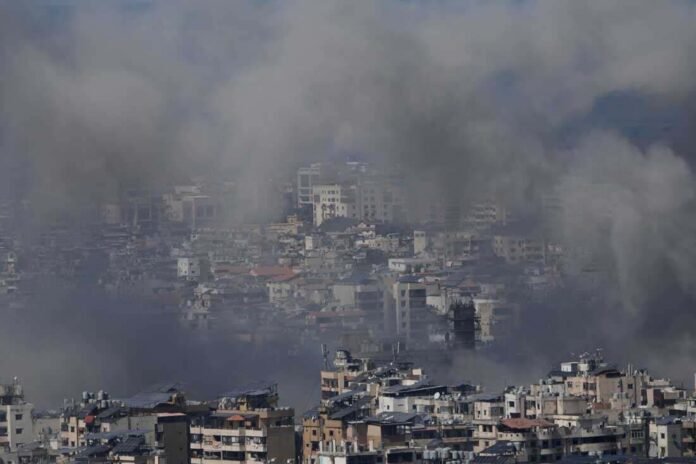
Whatever one may say about India and its stand on the current tension in the Middle East region, the Iran war has, in no uncertain terms, exposed weakness of the country’s external policy. From March 1 to 3, Prime Minister Narendra Modi made telephonic calls to the UAE President, the Saudi Crown Prince, the King of Bahrain, the Sultan of Oman, the Crown Prince of Kuwait and Qatar’s Sheikh and condemned attacks on their respective countries and violation of their sovereignty and territorial integrity.
Prime Minister Modi even gave a ring to Israeli Prime Minister Benjamin Netanyahu and King of Jordan Abdullah II on March 2 and conveyed deep concern at the evolving situation in the region but avoided talking to Iranian President Dr Masoud Pezeshkian despite the fact that the Persian country faced attacks from the US-Israel combine.

India imports about 60% of its LPG consumption from the Gulf countries. Of them, Qatar accounts for nearly 45% of India’s LNG imports and the rest from other Gulf countries, including the UAE and Saudi Arabia. PM Modi’s conversation with the Iranian leadership in this background has been seen as a confused and overwhelmingly delayed effort
India on a Sticky Wicket
It took 13 days for India’s Ministry of External Affairs to express grief over the death of scores of school children in Iran. On February 28, the first day of the US-Israel war with Tehran, 175 people, most of them children, were killed in the America-led attack on Shajareh Tayyebeh girls’ elementary school in Minab city in Iran.
“As far as the question of the school children you talked about is concerned…as I have said, we have issued several statements on the ongoing conflict. We have underlined the need for prioritising the safety of all children. We regret the precious lives lost and express our grief in this regard,” said MEA Spokesperson Randhir Jaiswal on March 12.
On the same day, Prime Minister Modi also talked to the Iranian President— a good 13-days after the war was imposed on Tehran by the US and Israel in the name of regime change. “Had a conversation with Iranian President, Dr Masoud Pezeshkian, to discuss the serious situation in the region. Expressed deep concern over the escalation of tensions and the loss of civilian lives as well as damage to civilian infrastructure,” PM Modi wrote on X. This is seen as a major development in the diplomatic world.
But it took place when the domestic situation in India started convulsing under the weight of the energy crisis. Due to Iran’s closure of the Strait of Hormuz, supply of oil and gas to India was hampered. Around 90% of gas imports and 45% of crude oil come from the Strait of Hormuz. However, what added to India’s pain, in particular, was that Qatar halted production of gas after Iran targeted the Gulf country’s gas fields.

India imports about 60% of its LPG consumption from the Gulf countries. Of them, Qatar accounts for nearly 45% of India’s LNG imports and the rest from other Gulf countries, including the UAE and Saudi Arabia. PM Modi’s conversation with the Iranian leadership in this background has been seen as a confused and overwhelmingly delayed effort.
Undoubtedly, the Iran war has thrown a challenge before India on its foreign policy front. In the region, while Iran is a BRICS member, so are Saudi Arabia and the UAE. BRICS has yet to issue a statement on the war. Though Iran has urged India, which is currently the BRICS chair, to issue a statement on behalf of the group, condemning the US and Israel strikes against Iran and the killing of Supreme leader Ali Khamenei, still, India has so far stayed away from doing so in an apparent bid to avoid taking sides in the ongoing war
Skewed Position on Middle East
There has already been hue and cry on the killing of Iran’s Supreme leader Ayatollah Ali Khamenei and India’s hesitation to condemn it. India condoled his death five-days after his killing in a joint US-Israel attack in Iran on February 28. Foreign Secretary Vikram Misri on behalf of the Government of India signed the condolence book at the Iranian Embassy in New Delhi.

Undoubtedly, the Iran war has thrown a challenge before India on its foreign policy front. In the region, while Iran is a BRICS member, so are Saudi Arabia and the UAE. BRICS has yet to issue a statement on the war. Though Iran has urged India, which is currently the BRICS chair, to issue a statement on behalf of the group, condemning the US and Israel strikes against Iran and the killing of Supreme leader Ali Khamenei, still, India has so far stayed away from doing so in an apparent bid to avoid taking sides in the ongoing war.
But the question is whether India has, in reality, maintained neutrality in the ongoing war. How would one see Prime Minister Modi’s telephonic conversations with leaders of the Gulf countries and Jordan and condemning attacks on their territories?
It is true that these countries are not only homes to 9.6 million Indians, but also key to India’s energy security. Besides, they have made substantial investments in various sectors in India. For example, under the Bilateral Investment Treaty, which was signed by India and the UAE in 2024, the Gulf country has committed to invest $75 billion in India’s infrastructure.
The moot question is whether India has, in reality, maintained neutrality in the ongoing war. How would one see Prime Minister Modi’s telephonic conversations with leaders of the Gulf countries and Jordan and condemning attacks on their territories?
The UAE is planning to develop a Special Investment Region in Dholera in Gujarat. This Special Investment Region envisions development of an international airport, a pilot training school, a maintenance, repair and overhaul (MRO) facility, a greenfield port, a smart urban township, railway connectivity, and energy infrastructure. Saudi Arabia, Oman, Bahrain, Kuwait and Qatar have also invested in India while all together enjoying healthy trade relations with the South Asian country.
Lapse in Diplomatic Maturity
Despite this, India would have shown diplomatic maturity and refused to be swayed by any kind of emotions it exhibited while condemning attacks on Saudi Arabia, UAE, and other Gulf nations. However, to balance India’s position in the region, External Affairs Minister Dr S Jaishankar held telephonic talks with his Iranian counterpart Abbas Araghchi.
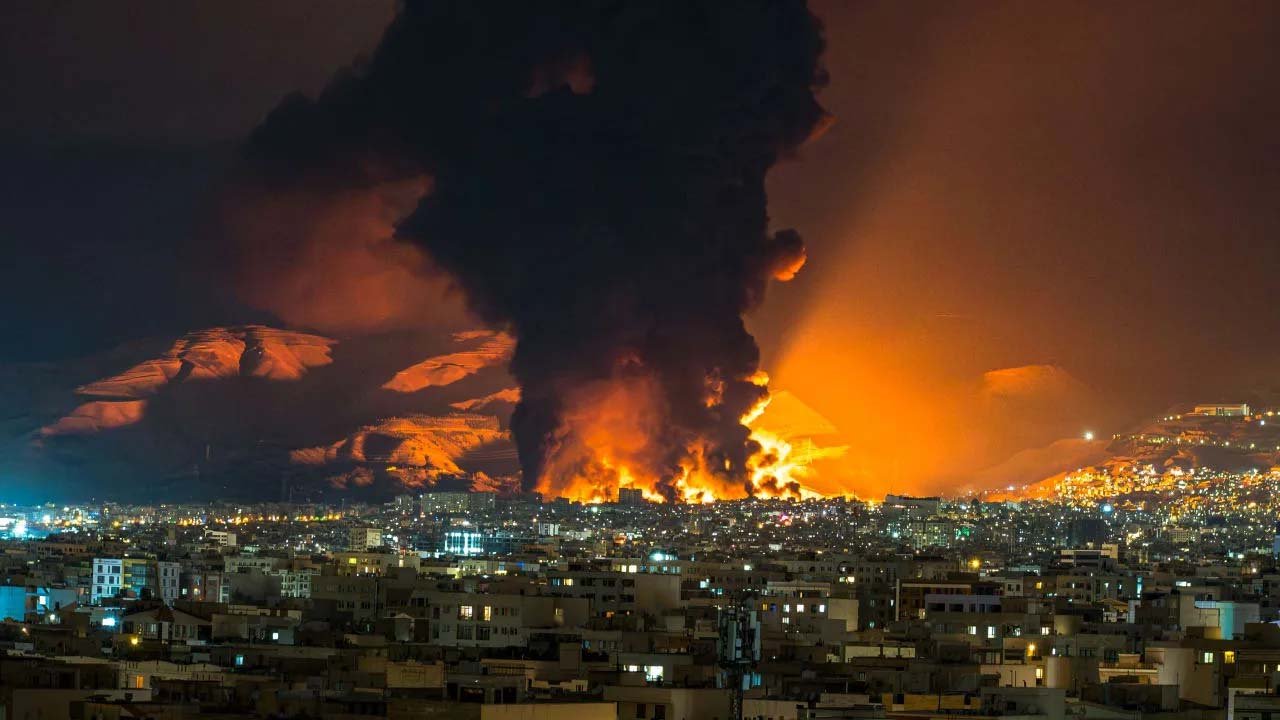
“Had a telecon with Iranian FM Seyed Abbas Araghchi this evening. Shared India’s deep concern at the recent developments in Iran and the region,” Dr Jaishankar said in his post on X on February 28. Till March 13, he held telephonic conversations with the Iranian Foreign Minister as many as four times. Still no direct condemnation of attacks on sovereignty and territorial integrity of Tehran.
On March 11, India on the other hand, co-sponsored a GCC resolution at the UNSC along with 134 countries and demanded immediate cessation of all attacks by the Islamic Republic of Iran against GCC countries and Jordan. The resolution was passed with 13 UNSC members voting in favour while Russia and China abstained. It also condemned “any actions or threats by the Islamic Republic of Iran aimed at closing, obstructing, or otherwise interfering with international navigation through the Strait of Hormuz.”
This episode has shown how, in the fast-changing geopolitical landscape, India has chosen to accommodate the sensitivities of its friends and partners, even as it remains rigid in preserving its longstanding positions of strategic neutrality in the region
This episode has shown how, in the fast-changing geopolitical landscape, India has chosen to accommodate the sensitivities of its friends and partners, even as it remains rigid in preserving its longstanding positions of strategic neutrality in the region.
Overall, the ongoing Iran war has placed India in an uncomfortable diplomatic position, exposing the limits of its much-touted strategic autonomy. New Delhi’s cautious and delayed responses suggest that its foreign policy is increasingly being shaped by immediate economic and energy concerns rather than by a consistent strategic doctrine. While safeguarding national interests and maintaining relations with Gulf partners is undoubtedly important, diplomacy also demands balance, clarity, and timeliness.
India has traditionally prided itself on pursuing an independent foreign policy and maintaining cordial relations with all sides in West Asia. However, the recent episode indicates that this balance is becoming increasingly difficult to sustain amid shifting geopolitical alignments and competing economic interests.
If India wishes to retain credibility as a responsible and influential global actor, it will have to demonstrate greater diplomatic coherence, act with greater promptness in moments of crisis, and ensure that its commitment to strategic neutrality is not perceived as selective or inconsistent.

–The writer is a senior journalist with wide experience in covering international affairs. The views expressed are of the writer and do not necessarily reflect the views of Raksha Anirveda
